


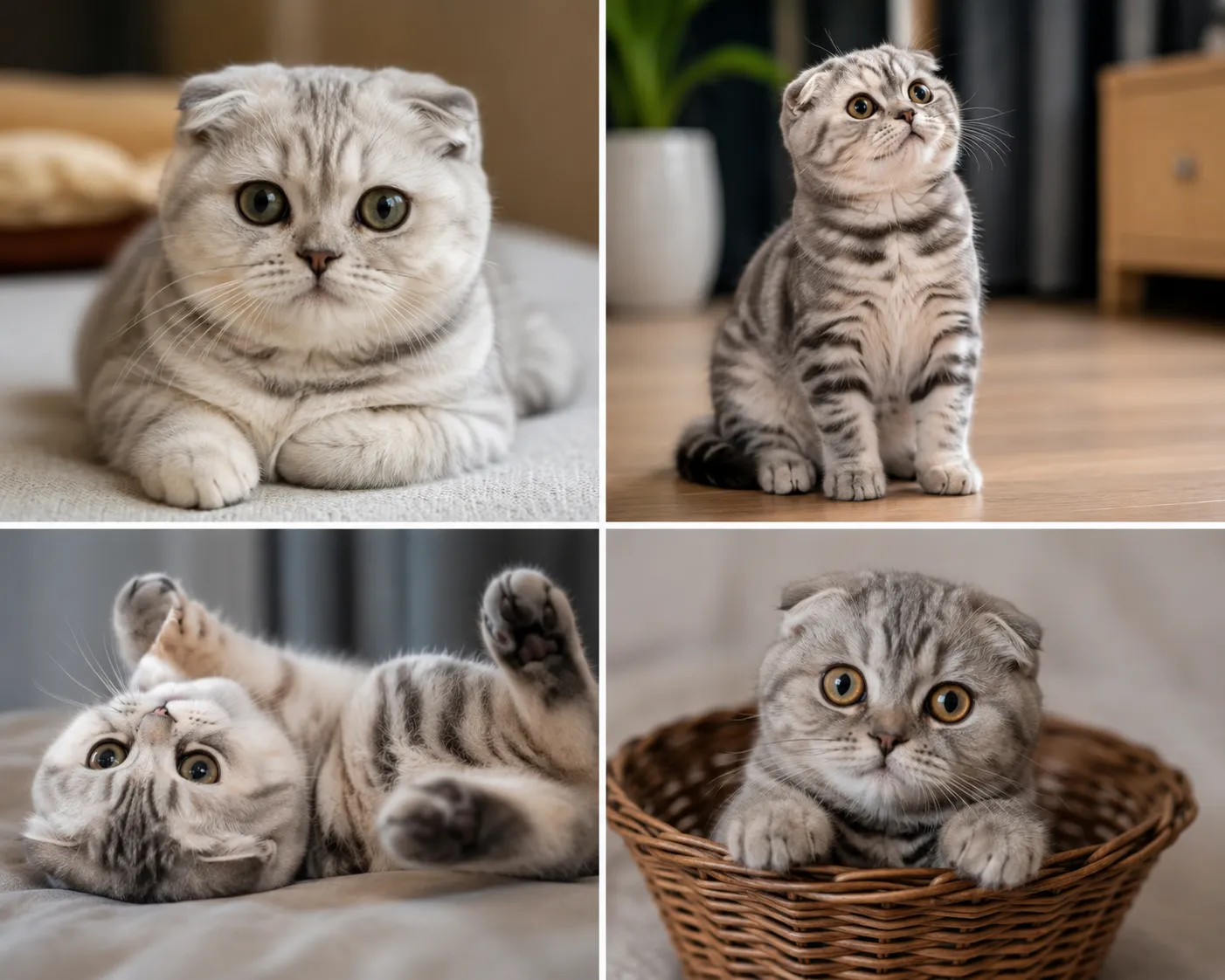
The Scottish Fold is a medium sized cat known for its round face, large eyes, quiet personality, and ears that fold forward. Many Scottish Folds form close bonds with their families and enjoy gentle play without constantly demanding attention.
A Scottish Fold can be an affectionate and adaptable companion, but it has an inherited cartilage disorder linked to its folded ears. Care should include weight control, gentle handling, regular veterinary checks, and close attention to changes in movement or behavior.
Scottish Fold Quick Facts
| Breed fact | General information |
| Origin | Scotland |
| Size | Medium |
| Typical weight | About 2.5 to 6 kilograms |
| Commonly reported lifespan | About 11 to 15 years |
| Coat | Short or long |
| Ear type | Folded, although straight eared cats occur in the same breed group |
| Common personality | Affectionate, quiet, curious, and people oriented |
| Activity level | Moderate |
| Grooming | Weekly for many short coats and more often for long coats |
| Main health concern | Scottish Fold osteochondrodysplasia |
| Home type | Indoor home with gentle handling and accessible resources |
Weight and lifespan figures are only broad guides. Purina UK reports a weight range of 2.5 to 6 kilograms and a lifespan of 11 to 15 years, while Hill’s lists different weight and longevity figures. Sex, genetics, health, body condition, and quality of care can all affect an individual cat.
What Is a Scottish Fold Cat?
A Scottish Fold is a cat from a Scottish breed group that includes folded eared and straight eared cats, with both short and long coats. Its most recognizable feature is the small ear that bends forward and downward, creating a rounded appearance around the head. The breed is also known for large round eyes, a compact body, and a soft facial expression. Coat colors and patterns vary widely, so a Scottish Fold does not have to be grey or blue. The Cat Fanciers’ Association recognizes folded and straight ears along with long and short coats. You can read more about Scottish Cat Breeds, We already provide the vet approved explanation on it.
That cute ear shape is not simply a cosmetic feature. It is the visible result of a genetic change affecting cartilage development. This point is central to understanding the breed and the care it may need.
History and Origin of the Scottish Fold
The modern Scottish Fold line began in 1961 with a white farm cat named Susie. William Ross noticed Susie on a farm in the Tayside region of Scotland. One of her kittens, Snooks, later became an important part of the breed’s development.
Snooks was bred with a domestic cat and later a British Shorthair. These pairings produced more kittens with folded ears and helped establish the breed. The Cat Fanciers’ Association states that modern pedigree Scottish Folds trace their ancestry to Susie.
The short haired Scottish Fold received championship status from the Cat Fanciers’ Association in 1978. Long haired Scottish Folds received the same status in 1992. Straight eared cats were accepted into championship competition in 2022, giving the breed group four divisions based on ear type and coat length.
The short haired Scottish Fold received championship status from the Cat Fanciers’ Association in 1978. Long haired Scottish Folds received the same status in 1992. Straight eared cats were accepted into championship competition in 2022, giving the breed group four divisions based on ear type and coat length.
What Does a Scottish Fold Look Like?
The word most often associated with the Scottish Fold is round. The head is rounded, the eyes are large and round, and the body usually looks compact and well padded. Females may be slightly smaller than males, but appearance alone cannot reliably tell you a cat’s healthy weight.
Head and Eyes
The head should have a rounded appearance with prominent cheeks and a relatively short neck. The eyes are set well apart and may be blue, green, gold, or another color connected with the coat.
Folded Ears
The folded ears bend forward and downward toward the head. All kittens that later develop folded ears are born with straight ears. The folding generally begins when a kitten is around three to four weeks old.
The depth and tightness of the fold can differ between cats. An ear may have a softer bend or sit more closely against the head. Ear shape cannot tell you how much joint disease an individual cat will develop.
Body and Tail
Scottish Folds are generally medium sized with a rounded body and muscular legs. A healthy cat should be able to move comfortably. The tail should remain flexible and should be handled gently because stiffness can be associated with joint and bone disease.
Coat Types and Colors
Scottish cats may have short or long coats. Short coats are usually dense and plush. Long coats may have a fuller tail, toe tufts, and longer hair around the body.
CFA recognizes many coat colors and patterns. Scottish Folds can be solid, tabby, tortoiseshell, bicolor, and other accepted patterns.
Why Do Scottish Fold Cats Have Folded Ears?
Scottish Fold ears are caused by a variant in the TRPV4 gene. This variant changes cartilage development. Because cartilage normally supports the outer ear, the affected ear loses support and folds forward. The gene follows a dominant inheritance pattern. One copy can produce folded ears. Two copies are associated with more extreme problems involving cartilage, bones, limbs, and joints.
The ears are only the most visible effect. Cartilage is also involved in normal joint movement and bone development. This is why the same variant may affect the feet, legs, tail, and other joints.
Understanding One Copy and Two Copies
| Genetic result | Usual ear appearance | General meaning |
| N/N | Straight ears | The tested cat does not carry the fold variant |
| N/SF | Folded ears | One copy is present and cartilage or bone problems may develop |
| SF/SF | Folded ears | Two copies are present and more severe disease is more likely |
The severity and age of onset can vary widely in cats with one copy. Some show obvious mobility problems early, while others appear comfortable for longer. Two copies generally cause earlier and more serious disease.
Scottish Fold vs Scottish Straight
A Scottish Straight is the straight eared member of the same Scottish breed group. Scottish Folds and Scottish Straights may occur in the same litter and can share similar coats, body shapes, colors, and general breed ancestry. Their main visible difference is the ear shape.
| Feature | Scottish Fold | Scottish Straight |
| Ears | Fold forward and downward | Remain upright |
| Fold variant | Present in folded cats | N/N cats do not have the fold variant |
| Coat | Short or long | Short or long |
| General appearance | Rounded | Rounded |
| Main concern | Cartilage and bone disease linked to the fold variant | Does not have Scottish Fold osteochondrodysplasia when genetically N/N |
UFAW states that straight eared cats with the N/N result do not have the mutated fold gene or Scottish Fold osteochondrodysplasia. Genetic testing can provide clearer information where ancestry or status is uncertain.
Scottish Fold Personality and Temperament
Scottish Folds are often described as affectionate, quiet, curious, and comfortable around familiar people. They may follow family members from room to room, enjoy interactive games, or settle nearby without constantly asking to be held.
These are breed tendencies, not promises. Socialization, age, previous experiences, pain, and the individual cat’s personality all matter.
Scottish Fold Lifespan and Life Stages
Purina UK reports a Scottish Fold lifespan of 11 to 15 years. Hill’s gives a shorter range of 9 to 12 years, showing that published breed estimates are not completely consistent. An individual cat’s comfort and longevity may be influenced by genetics, body weight, general disease, mobility, preventive care, and access to veterinary treatment.
Kitten Stage
All kittens begin with straight ears. Folding generally starts at around three to four weeks in kittens carrying the variant. Early life should include gentle socialization, routine veterinary care, a complete kitten diet, and careful observation of growth and movement.
A kitten that walks unusually, has an inflexible tail, or seems reluctant to move should be assessed by a veterinarian rather than being described as naturally lazy.
For feeding information during the first year, read our Scottish Fold kitten nutrition guide.
Adult Stage
Adult care should focus on maintaining a healthy body condition, providing gentle exercise, and recognizing subtle changes in normal habits. A cat that starts sleeping more, stops climbing, or struggles with grooming may be showing pain.
Senior Stage
Older cats may need lower resting areas, a litter box with a low entrance, food and water on the same level, and more help with grooming. Age related arthritis can occur in any cat, but Scottish Fold osteochondrodysplasia adds another reason to monitor mobility carefully.
Scottish Fold Health Problems
The defining health problem of the Scottish Fold is osteochondrodysplasia. This is a developmental disorder involving cartilage and bone. It creates the ear fold but may also cause abnormal limb bones, stiff tails, progressive osteoarthritis, lameness, and chronic pain.
Osteochondrodysplasia
UFAW states that all folded eared cats with the fold gene are affected to some degree. Cats with two copies are usually affected more severely and at a younger age. Cats with one copy may have mild changes or significant joint disease, and progression varies between individuals.
There is no cure for the underlying genetic condition. A veterinarian may assess movement, examine the joints and tail, and use imaging when needed. Management may focus on pain control, weight management, and changes at home that reduce physical strain.
Signs of Pain or Mobility Problems
| Possible change | What an owner may notice |
| Hesitation before jumping | Pausing before getting onto a chair or bed |
| Reduced play | Less interest in toys or chasing |
| Stiff walking | Short steps or an unusual gait |
| Tail stiffness | A tail that feels thick, rigid, or painful |
| Poor grooming | Greasy coat, mats, or missed areas |
| Behavior change | Hiding, irritability, or aggression |
| Litter box difficulty | Accidents or trouble entering a high box |
| More sleeping | Longer rest periods combined with less normal activity |
How to Care for a Scottish Fold
Scottish Fold care should be built around normal feline needs plus close attention to mobility. Food, water, litter, bedding, play, and grooming equipment should be easy to reach.
A more detailed daily routine is available in our Scottish Fold care guide for beginners.
Feeding and Weight Management
Scottish Folds do not need a special breed diet simply because their ears fold. PetMD states that they need complete and balanced food suited to their life stage, just like other cats.
Portion control matters because extra body weight places more strain on painful or abnormal joints. Hill’s also warns against allowing the breed to become overweight and recommends interactive play to help maintain condition.
Food portions should be based on the individual cat’s age, body condition, activity, health, and the calorie content of the food. A veterinarian can help set an appropriate target where pain or weight gain is already present.
For a broader feeding plan, visit our Scottish Fold diet guide. Owners comparing commercial foods can also read the dry food guide for Scottish Folds.
Exercise and Enrichment
Use short, gentle play sessions that allow the cat to choose its pace. Wand toys, floor toys, scratching surfaces, and food puzzles can offer activity without requiring repeated high jumps. Do not force exercise through pain. A cat that wants to play but repeatedly stops, lies down, or avoids turning may need a veterinary assessment.
Creating a Mobility Friendly Home
A cat with joint discomfort may struggle with tasks that once looked easy. Useful home changes include a low entrance litter box, soft bedding, rugs on slippery floors, and small steps leading to a favorite sofa. Place food, water, and litter where the cat does not need to climb stairs every time. PetMD recommends making essential items easy to reach for cats with orthopedic disease.
Coat Care
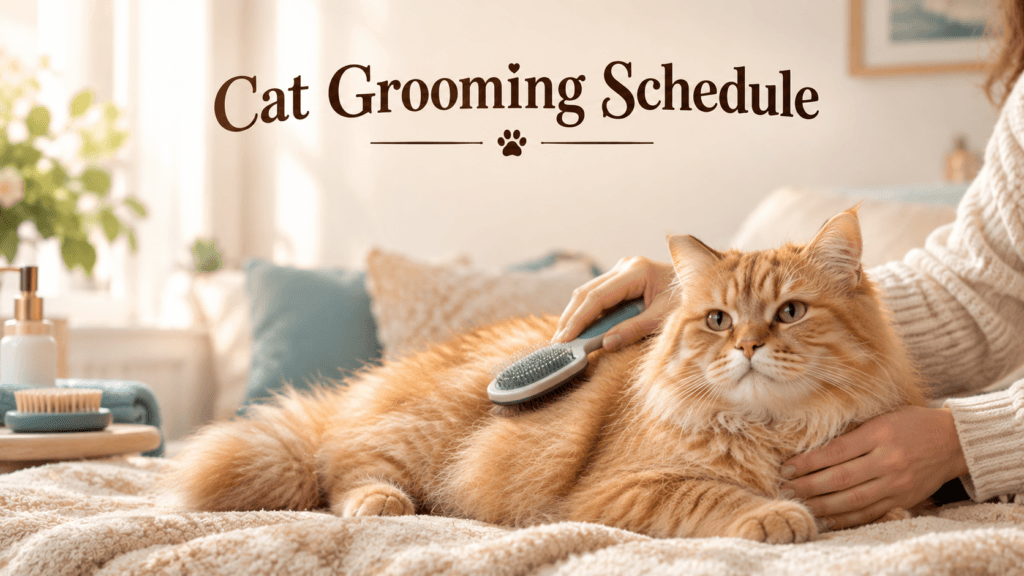
CFA recommends weekly combing for many short haired Scottish Folds. Long haired cats usually need more frequent grooming to prevent tangles and mats. PetMD notes that cats with reduced mobility may need extra help reaching areas they can no longer groom comfortably. Our full Scottish Fold care and grooming guide covers coat, nail, dental, and routine care in more detail.
Ear Care
Check the ears for redness, odor, discharge, dark debris, or irritation. A healthy ear should not smell unpleasant or appear inflamed. PetMD recommends a veterinary examination when the ears seem bothersome. Do not insert cotton swabs into the ear canal or clean an inflamed ear aggressively. A veterinarian should examine painful ears, strong odor, discharge, repeated head shaking, or a persistent head tilt. Our step by step guide explains how to clean Scottish Fold ears safely. Follow veterinary instructions where they differ from a general routine.
Tail and Joint Handling
Never pull, twist, or force the tail through a range of motion. Hill’s warns that some Scottish Folds develop painful tail stiffness. CFA also advises monitoring flexibility because stiffness may be an early sign of wider health problems. Gentle handling is especially important with children. A cat should always be supported under the body when lifted.
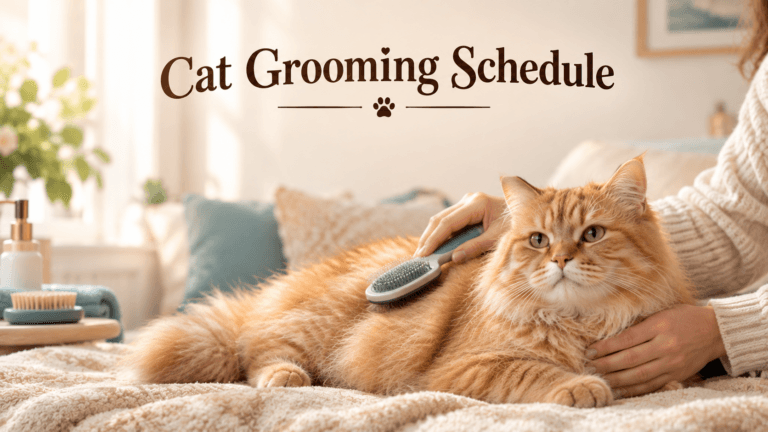
Scottish Fold Grooming Schedule
| Care task | General starting point |
| Short coat brushing | About once weekly |
| Long coat brushing | More frequently according to tangles and shedding |
| Ear inspection | Regularly and whenever behavior changes |
| Nail check | Every few weeks according to growth |
| Dental care | Regular home care with veterinary dental checks |
| Weight check | Regularly enough to notice gain or loss |
| Veterinary examination | Based on age, health, and your veterinarian’s advice |
Is a Scottish Fold Right for You?
A Scottish Fold may be affectionate, intelligent, and easy to live with, but its health needs can be more complex than its calm expression suggests.
| The home may be prepared when | The breed may not be suitable when |
| Regular veterinary care is affordable | The decision is based mainly on appearance |
| Family members use gentle handling | Children are likely to handle the cat roughly |
| The home can be adapted for mobility | High physical activity is expected from the cat |
| Weight and movement will be monitored | Long term pain care is not financially possible |
| The welfare issue has been fully considered | The genetic condition is being dismissed as harmless |
Frequently Asked Questions
Are Scottish Fold cats in pain?
The fold variant causes osteochondrodysplasia, but the degree of pain and disability varies. Some cats show serious problems early, while others develop less obvious or slower changes. Folded eared cats should still be monitored for stiffness, reduced play, grooming difficulty, and behavior changes.
When do Scottish Fold kittens’ ears fold?
Kittens that develop folded ears are born with straight ears. The fold usually begins to appear at around three to four weeks of age.
Are Scottish Fold cats hypoallergenic?
No. Hill’s does not classify the Scottish Fold as less allergenic, and medical allergy organizations state that no cat breed is truly hypoallergenic. Allergens come from proteins in skin cells, saliva, and urine, not only from visible fur.
Do Scottish Fold cats shed?
Yes. CFA states that they shed throughout the year, with heavier shedding during spring and fall. Long coats generally need more grooming to prevent tangles and matting.
What is the difference between a Scottish Fold and a Scottish Straight?
The Scottish Fold has ears that bend forward because it carries the fold variant. The Scottish Straight has upright ears and belongs to the same breed group. A genetically N/N Scottish Straight does not carry the fold variant or Scottish Fold osteochondrodysplasia.
How long do Scottish Fold cats live?
Purina UK reports a common lifespan of 11 to 15 years, while Hill’s reports 9 to 12 years. These are general estimates rather than guarantees. Genetics, joint disease, body condition, and veterinary care can affect an individual cat’s lifespan and comfort.





5 Responses