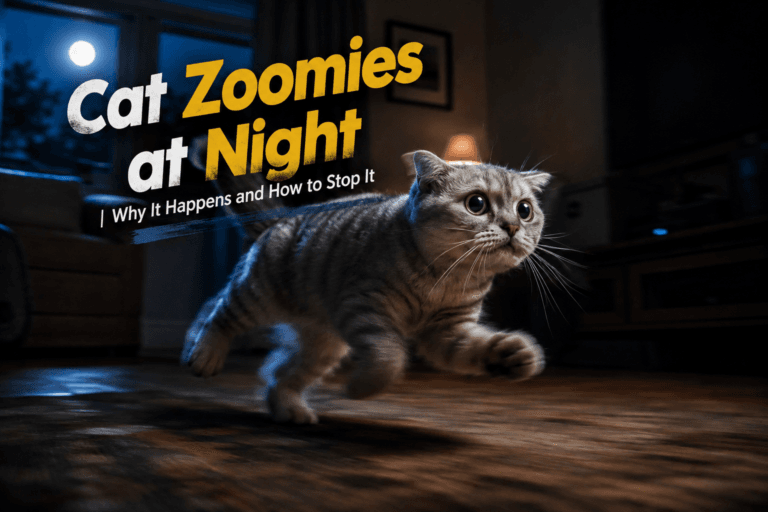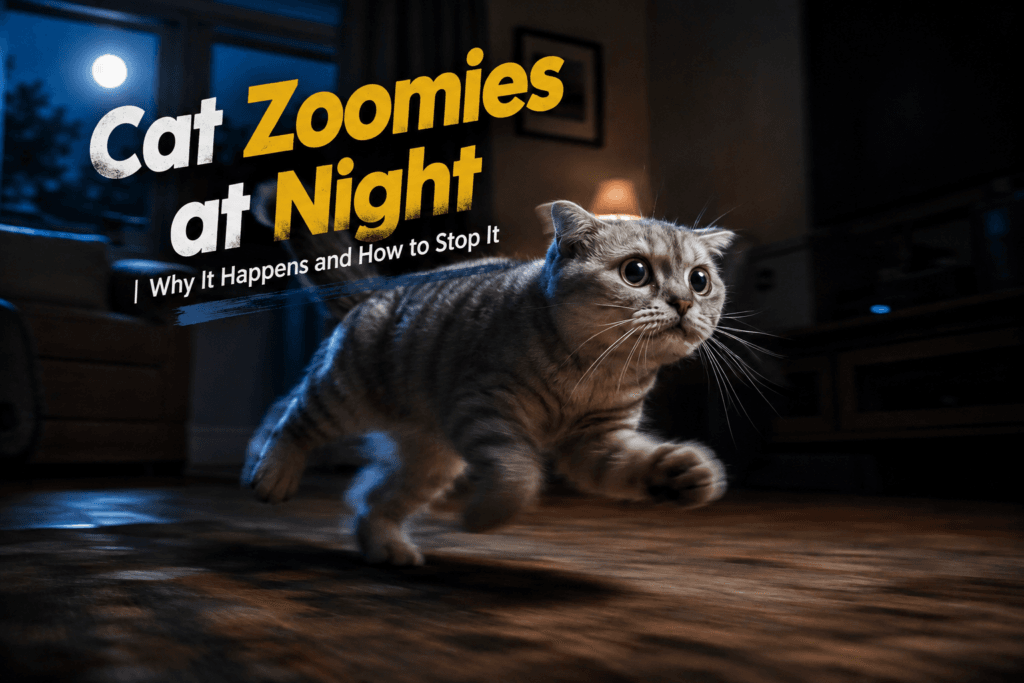


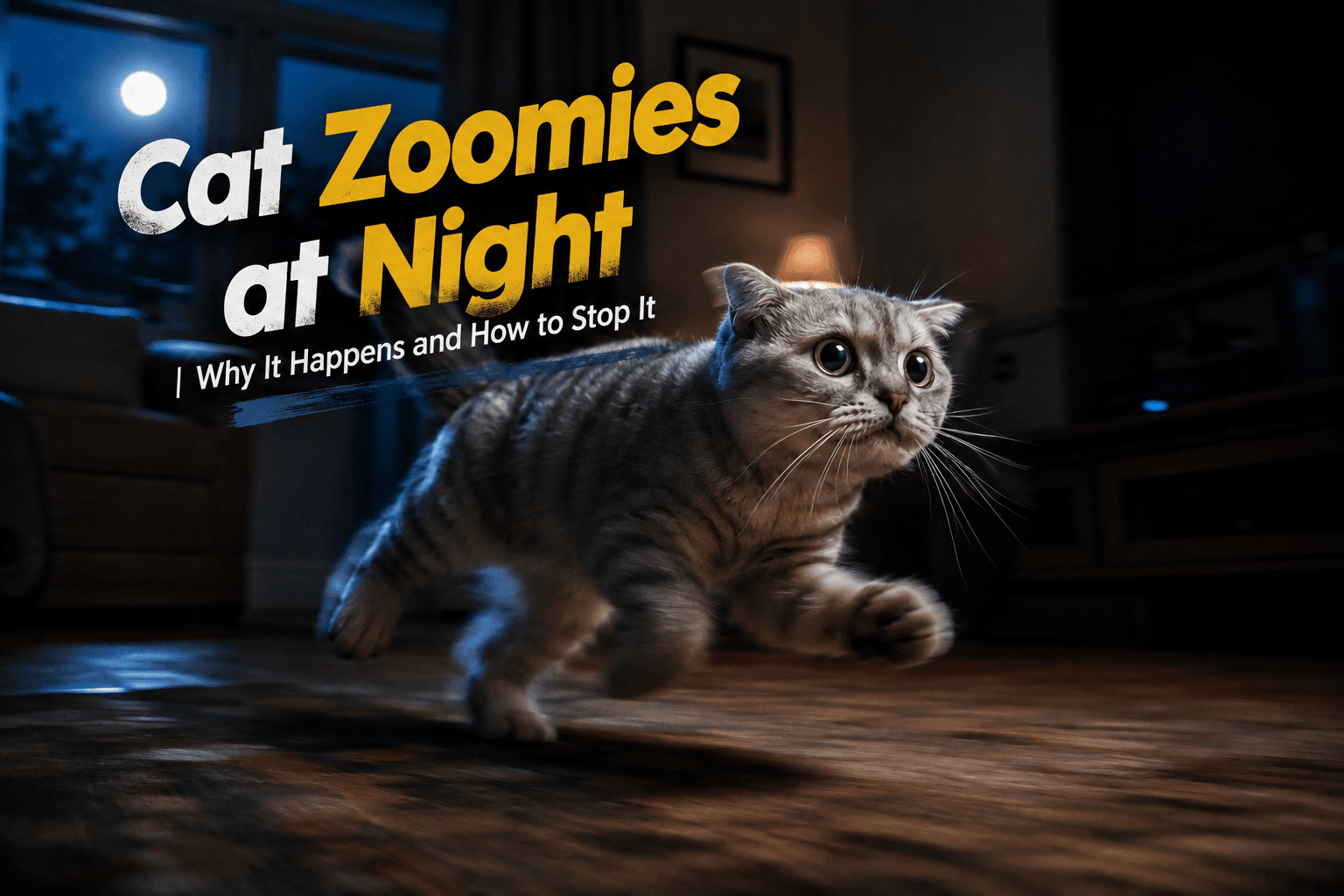
It’s 3 a.m. and your cat has just launched itself off the bed, sprinted the length of the hallway twice, and skidded into the bathroom door. Cat zoomies at night are one of the most common things new owners search about, and this burst of chaotic energy has a name, a biological explanation, and in most cases, a simple fix. Here’s everything worth knowing about cat zoomies at night, from the science behind them to when they’re actually a reason to call your vet.
What Are Cat Zoomies, Exactly?
The Scientific Term: FRAPs (Frenetic Random Activity Periods)
Behaviorists refer to zoomies as FRAPs, short for Frenetic Random Activity Periods. It’s the same phenomenon seen in dogs, and in cats it typically shows up as sudden sprinting, pouncing on nothing in particular, and short bursts of climbing or jumping that end just as abruptly as they started.
Why Zoomies Happen More at Night (Crepuscular Behavior Explained)
Cats are crepuscular, meaning they’re naturally most active at dawn and dusk rather than fully nocturnal or fully daytime creatures. Once the house goes quiet, a cat’s instinctive hunting drive tends to switch on, which is the main reason cat zoomies at night happen so much more often than during the day.
Why Do Cats Get the Zoomies at Night? (Main Causes)
Pent-Up Energy From Daytime Napping
Cats sleep for a large portion of the day, and all that stored energy has to go somewhere. Nighttime, when the house is calm and the cat finally feels alert, is often when it gets released.
Instinctive Hunting Bursts
Zoomies frequently mimic the start-stop pattern of stalking, chasing, and pouncing on prey. Even a fully indoor cat with no actual mice to chase still carries this hardwired instinct, and the Scottish Fold breed shows this pattern just as strongly as any other cat despite its calmer reputation.
Play Drive and Boredom
A cat that hasn’t had enough mental or physical stimulation during the day may use nighttime zoomies as its own way of self-entertaining.
Attention-Seeking Behavior
If sprinting around at night has ever gotten a reaction out of you, some cats learn to repeat the behavior simply because it works.
Stress or Environmental Changes
New furniture, a new pet, or a change in routine can all leave a cat with restless energy that shows up as nighttime zoomies.
Why Do Cats Get Zoomies After Pooping? (Poo-Phoria Explained)
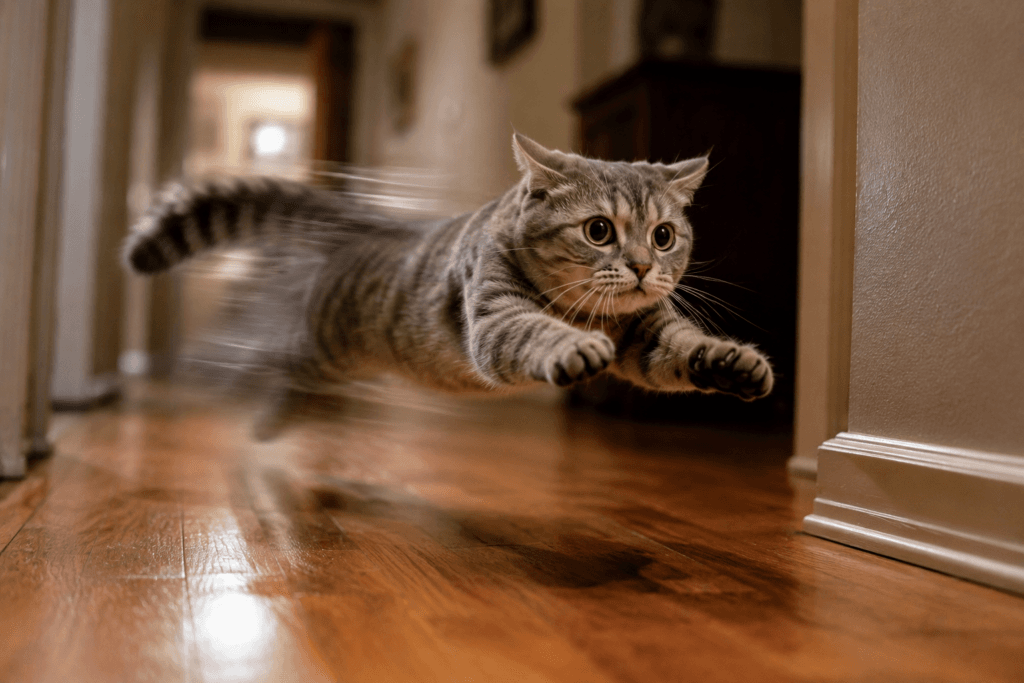
This is one of the most searched cat-zoomies questions, and it has its own informal name: poo-phoria.
The Leading Theories (Relief, Nerve Stimulation, Instinct)
A few explanations are commonly cited: simple relief after finishing a task, stimulation of the vagus nerve during defecation which can trigger a rush of activity, and an instinctive urge to quickly move away from the scent of waste, which in the wild would help avoid predators.
Is This Different From Nighttime Zoomies?
Poo-phoria is generally a short, one-time burst tied to a specific trigger, while nighttime zoomies are more of a recurring pattern tied to energy levels and the time of day. Both are considered normal feline behavior.
How Long Do Cat Zoomies Last?
Cat zoomies at night usually don’t last very long, but the exact duration depends heavily on the cat’s age.
Typical Duration in Adult Cats
Most adult cat zoomies last anywhere from 30 seconds to a few minutes before the cat settles back down on its own.
Kitten Zoomies vs Adult Cat Zoomies
Kittens tend to have longer and more frequent zoomie episodes than adult cats, simply because they have more raw energy and a stronger play drive at that life stage.
Quick Duration Comparison Table
| Kitten Zoomies | Adult Cat Zoomies | |
|---|---|---|
| Typical duration | 2 to 10 minutes | 30 seconds to 3 minutes |
| Frequency | Multiple times per day | Usually once per night |
| Intensity | High, often clumsy | Moderate, more controlled |
| Common trigger | General excess energy | Nighttime instinct, pent-up energy |
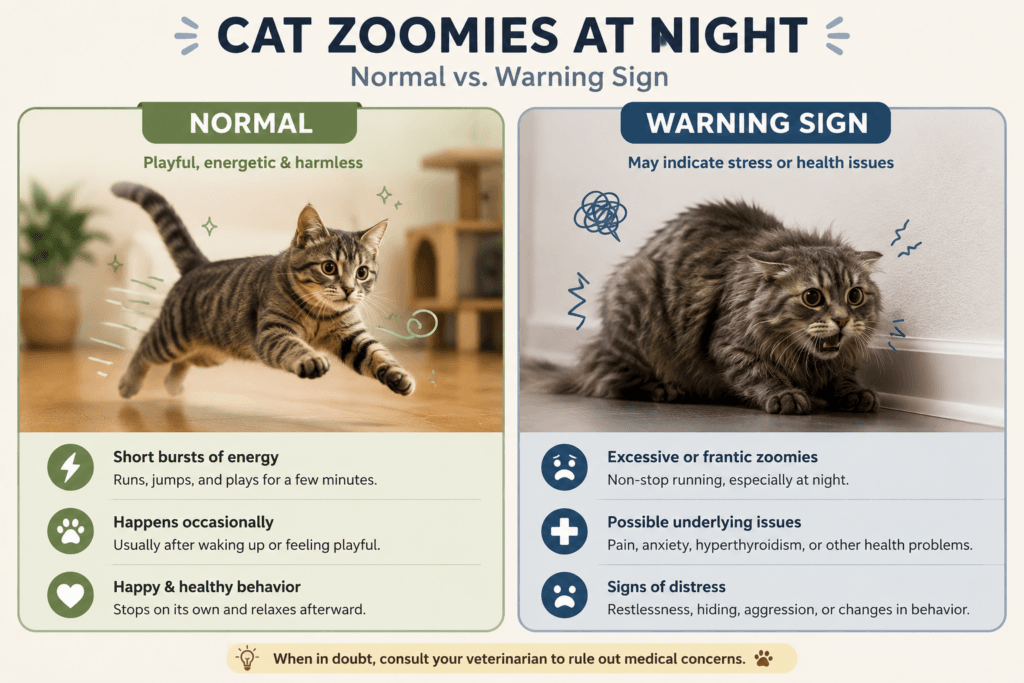
Are Cat Zoomies Normal? Or a Warning Sign?
When Zoomies Are Completely Normal
Occasional zoomies, especially in kittens and young cats, are a healthy expression of energy and generally nothing to worry about.
Warning Signs to Watch For
Zoomies that suddenly appear in an older cat, or that come paired with weight loss, unusual vocalization, disorientation, or aggression, can occasionally point to an underlying issue such as hyperthyroidism, pain, or cognitive changes.
Normal Zoomies vs Medical Warning Signs
| Feature | Normal Zoomies | Possible Warning Sign |
|---|---|---|
| Onset | Consistent pattern since kittenhood or young adulthood | Sudden new behavior, especially in an older cat |
| Duration | Brief, self-limiting | Prolonged or repeated many times a day |
| Body language | Playful, relaxed after | Distressed, disoriented, or paired with crying |
| Other symptoms | None | Weight loss, appetite change, aggression |
| Action needed | None | Veterinary checkup recommended |
When to See a Veterinarian
If zoomies are new, extreme, or accompanied by any of the warning signs above, it’s worth scheduling a vet visit to rule out a medical cause rather than assuming it will pass on its own.
Do Some Cat Breeds Get Zoomies More Than Others?
Scottish Folds and Energy Levels
Scottish Folds have a reputation for being calm and easygoing, but that doesn’t mean they skip zoomies entirely. Even the most laid-back Fold can have a burst of nighttime energy, and it’s worth reading our Scottish Fold cat training guide if you’d like to channel that energy into structured play.
High-Energy vs Low-Energy Breeds
More active breeds, generally those bred for higher activity levels, tend to have more frequent and more intense zoomie episodes, while naturally calmer breeds may have shorter or less dramatic bursts.
How to Stop Cat Zoomies at Night
If cat zoomies at night are disrupting your sleep, a consistent evening routine is usually the fastest fix.
Pre-Bed Play Routine (Step-by-Step)
A focused 10 to 15 minute play session with a wand toy about 20 to 30 minutes before your own bedtime can help burn off the exact energy that would otherwise fuel a 3 a.m. sprint.
Adjusting Feeding Schedules
Feeding a small meal right after that play session mimics a natural hunt-eat-sleep cycle, which can encourage your cat to settle down faster afterward.
Enrichment Ideas
Cat trees, window perches, puzzle feeders, and rotating toys throughout the day all help use up energy before nighttime rolls around, reducing how much is left over for the zoomies.
How to Stop Kitten Zoomies at Night Specifically
Kittens generally need more frequent, shorter play sessions spread across the day rather than one single pre-bed session, since their energy reserves refill faster than an adult cat’s.
Should You Punish or Ignore Cat Zoomies?
Why Punishment Doesn’t Work
Punishing a cat for zoomies doesn’t address the underlying energy or instinct driving the behavior, and it can damage trust between you and your cat without actually solving anything.
Better Ways to Redirect the Energy
Interactive play, consistent daytime enrichment, and a calm pre-bed routine work far better than any form of correction.
FAQs
How long do cat zoomies last at night?
Most episodes last anywhere from 30 seconds to a few minutes before the cat calms down on its own.
How long do kitten zoomies last at night?
Kitten zoomies tend to run longer, often 2 to 10 minutes, and can happen multiple times a day rather than just once at night.
How to stop cat zoomies immediately?
A quick interactive play session with a wand toy is usually the fastest way to redirect the energy in the moment.
Why do cats get zoomies after pooping?
It’s commonly linked to relief, vagus nerve stimulation during defecation, or an instinctive urge to move quickly away from the scent, and it’s considered normal behavior.
Do cats outgrow zoomies?
Most cats have fewer and less intense zoomies as they age, though even senior cats can have the occasional burst of energy.
Should I punish my cat for zoomies?
No. Redirecting the energy through play and a consistent routine works far better than any form of punishment.
Conclusion
When to Just Enjoy the Chaos (and When to Call a Vet)
For the vast majority of cats, cat zoomies at night are simply a healthy, if inconvenient, expression of pent-up energy and instinct. A consistent pre-bed play routine can turn those 3 a.m. sprints into a much quieter night for everyone. The only real exception is a sudden change in an older cat’s behavior, which is worth a quick vet visit just to rule out anything medical.
Related Reads
- Scottish Fold Cat Breed Profile
- Scottish Fold Cat Training | Effective Tips & Techniques
- Why Do Cats Headbutt You? Bunting Behavior Fully Explained
- Why Does My Cat Sit on Me and What It Really Means
- How to Stop Cat Zoomies at Night (Fast) on Pets Mastery
This article provides general educational information about cat behavior and is not a substitute for professional veterinary advice. If your cat’s zoomies suddenly change or come with other symptoms, consult a licensed veterinarian promptly.