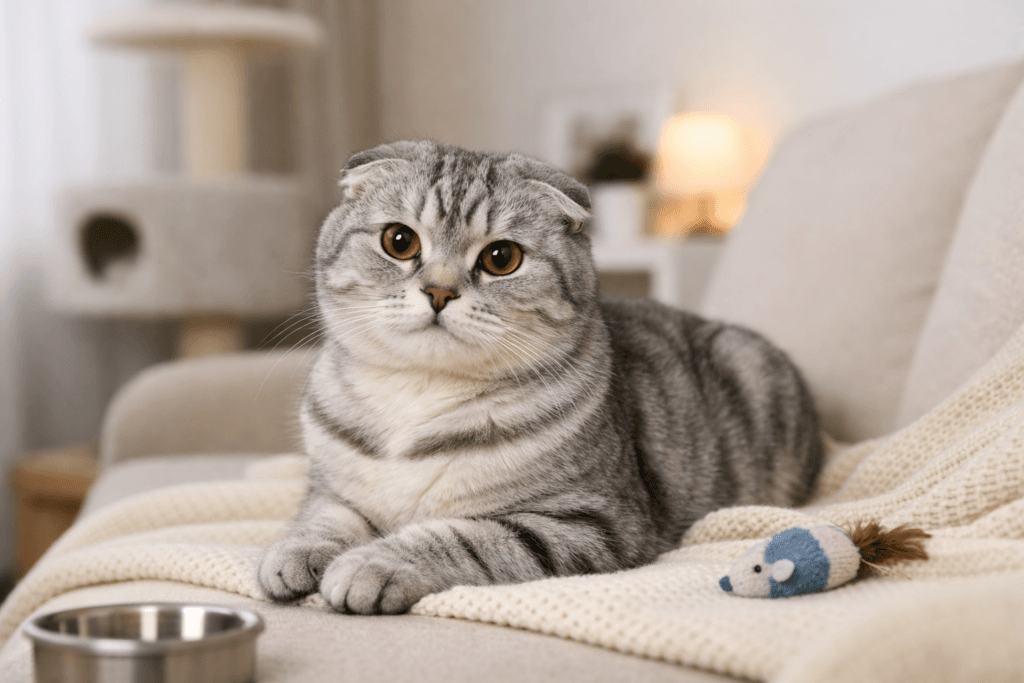


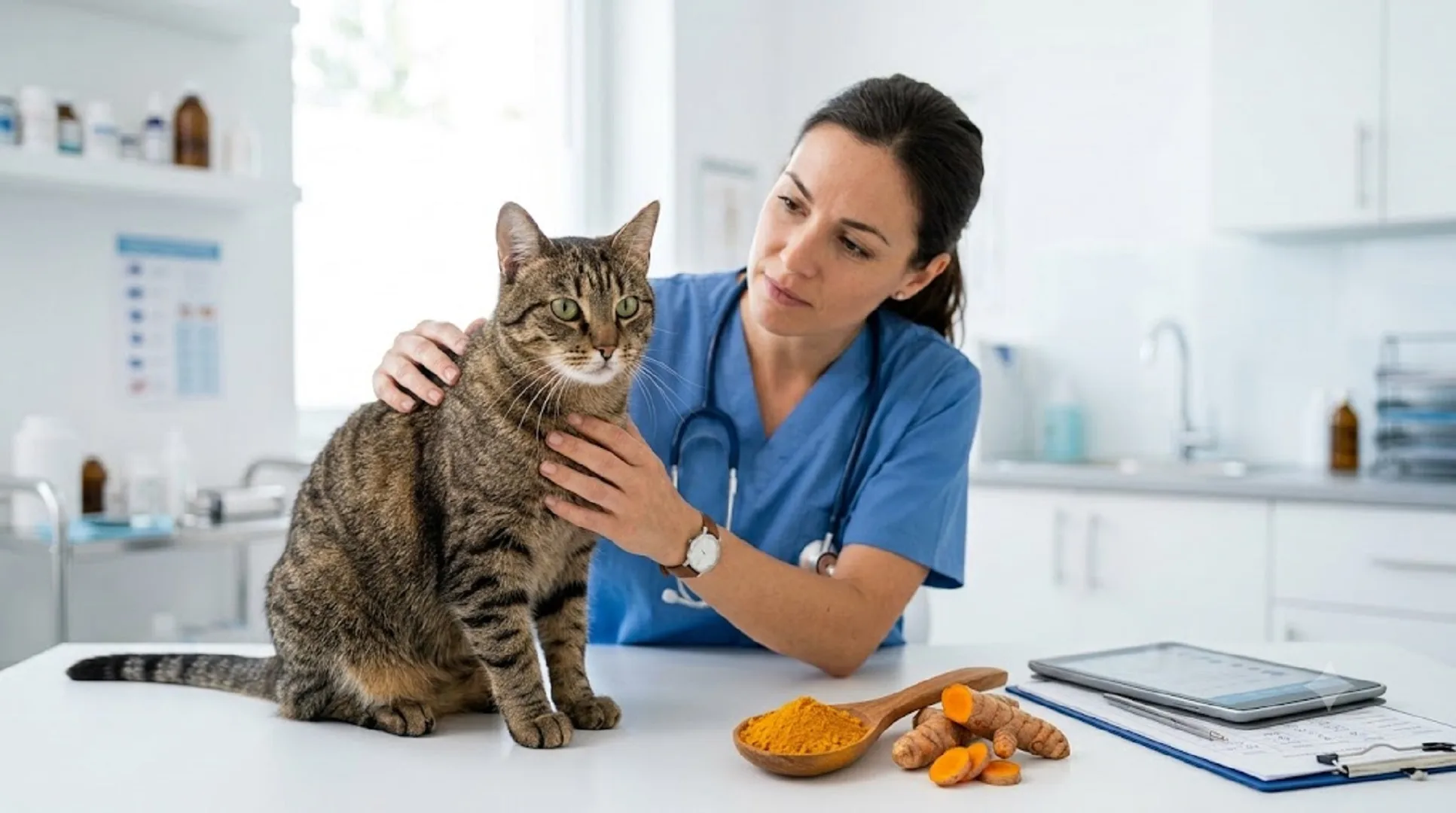
Cats are obligate carnivores that require a meat-based diet to meet their nutritional needs to lead healthy lives. As turmeric is widely known for its potential health benefits in humans, the question arises: can cats have turmeric? The short answer is yes. An extremely small amount taken by accident is not likely to hurt a healthy cat. However, turmeric is not essential in a cat’s diet, and it shouldn’t be used as a supplement or medication unless recommended by your veterinarian. In this cat health and safety guide, you will learn about the use of turmeric for cats based on current scientific research and veterinary advice.
Is Turmeric Safe for Cats?
Absolutely, turmeric is safe for cats in small quantities, and if a cat consumes a small amount by mistake, it is unlikely to be toxic. This does not, however, imply that cats should be given turmeric on a daily basis or turmeric supplements. Cats have different nutritional requirements than humans, and turmeric does not form an essential part of their diet. Although several studies have investigated curcumin, there are few studies on cats. While the smallest possible amount is usually considered safe, that doesn’t necessarily mean that your cat should take turmeric on an everyday basis. It’s important to realize that cats require special care when it comes to nutrition, and what is good for people may be harmful to them.
This caution also applies to common household greenery, as some plants can be harmful if chewed or swallowed. For example, owners should understand whether snake plants are toxic to cats before keeping them within reach.
What Is Turmeric and Why Do People Give It To Their Cats?
Turmeric is a golden-yellow spice that is known to contain curcumin – a substance that has been associated with having anti-inflammatory and antioxidant properties. Therefore, many pet parents wonder whether the use of turmeric is beneficial for their cats’ health and particularly joint health and healthy aging. Similar safety concerns also arise with common household plants, such as whether lavender is safe for cats. Nevertheless, most studies of curcumin have been conducted on humans or cell cultures or other animal species. Curcumin is the primary active compound that can be found in turmeric. Curcumin has gained a lot of attention due to its numerous benefits, but most studies have been done on humans and animals, not cats.
Possible benefits of turmeric for cats
Although turmeric does not play a significant role in a cat’s nutrition, its active component, which is curcumin, has received much attention due to its potential health benefits. Nevertheless, the scientific evidence on the positive effects of curcumin has been studied mainly in humans and other animals but not in cats.
May Help Support a Normal Inflammatory Response
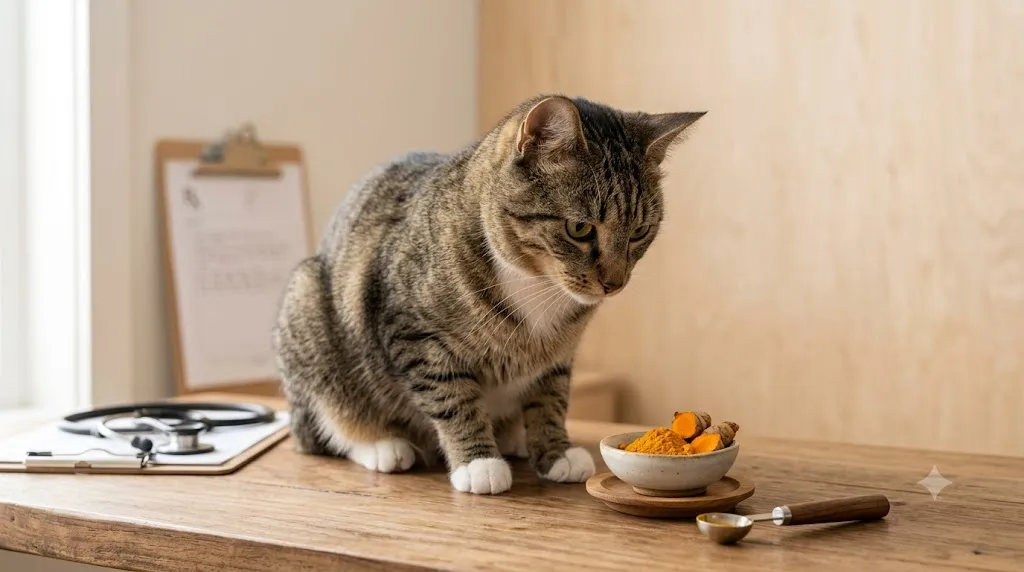
Curcumin is an anti-inflammatory compound that may help support the body’s normal reaction to inflammation. It is believed that the supplement may provide additional support for cats suffering from age-related joint pain. However, there is insufficient scientific evidence to prove these effects on cats. Therefore, turmeric cannot be considered a remedy or alternative to any prescribed medication advised by your vet.
Antioxidant Support
Curcumin is known for its antioxidant properties, which may help protect the body’s cells from damage caused by free radicals. Healthy cells play a vital role in ensuring that your cat remains healthy and well. Research suggests that curcumin may provide antioxidant benefits; however, there is insufficient evidence to confirm these effects in cats. This is one of the reasons why turmeric cannot be used as a health supplement for cats.
May Support Joint and Immune Health
Early studies indicate that curcumin could have a beneficial effect on joint health and maintain a healthy immune system. For some owners of older cats, these may be interesting to consider as they go through changes associated with old age. But, there are not enough studies of good quality to confirm such effects in cats.
Risks and Side Effects of Turmeric
While turmeric is safe in smaller amounts, it may produce some side effects for certain cats, but this is not an ingredient that cats need to completely avoid. However, there could be other instances where the side effects on the feline pets may arise; especially when the cats consume excessive amounts of turmeric or take turmeric supplements without a veterinarian’s recommendation. Taking too much turmeric causes adverse health effects. It would be helpful to learn the side effects and those that should not take turmeric.
Digestive Problems
Some cats might develop digestive issues due to excessive ingestion of turmeric, especially if turmeric is given regularly or in large amounts. The symptoms include vomiting, diarrhea, nausea, and loss of appetite. Such reactions are usually minor, but they can be severe when they persist for a long time.
Drug Interactions
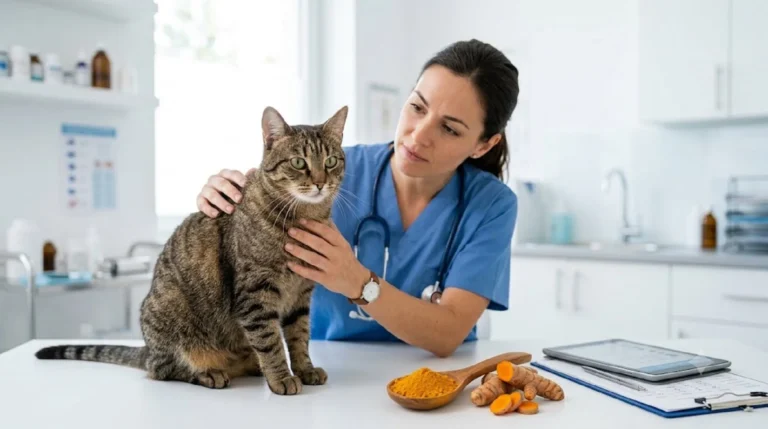
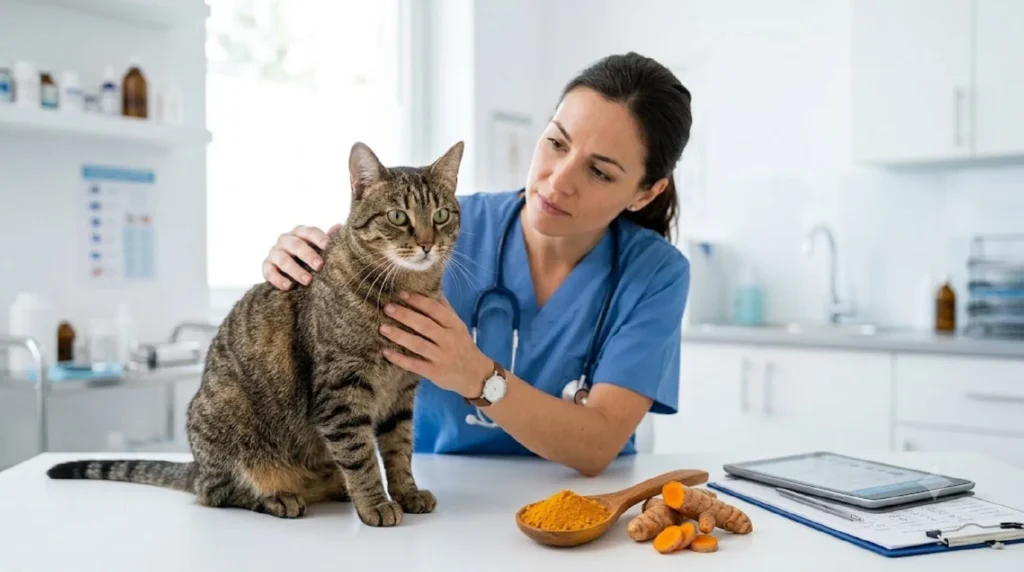
It is important to seek veterinary advice before introducing turmeric to your cat’s diet, as it can interact with some drugs. Some medications, such as blood thinners, diabetes drugs, and anti-inflammatory drugs, could interact with curcumin. Such interactions may make the desired treatment less effective, or cause side effects that are not wanted. Do not feed turmeric to your cat if he or she is on any medication or has a medical condition unless you have spoken to your veterinarian first.
Cats That Shouldn’t Have Turmeric
Turmeric is not recommended for cats with digestive disorders or who are unwell. Cats with liver or gallbladder problems or kidney disorders may be at risk of developing problems because of these conditions. Moreover, cats that have surgery coming up should not have turmeric since it can affect the regular clotting of the blood. In addition, the effects of turmeric have not been tested on kittens and pregnant/nursing cats and therefore you need to seek veterinary advice.
Turmeric for Cats – How Much?
There is no scientifically approved dose of turmeric for cats. It will depend on various factors such as the weight, age, health conditions, and medications your cat might be taking. Only your vet can provide the right dose. You shouldn’t give turmeric supplements to your cat since they might have ingredients harmful to your feline companion, unless your veterinarian prescribes it to him or her. Overconsumption of turmeric could cause digestive problems like diarrhea and vomiting. Always use turmeric with a veterinarian’s supervision. If your cat eats large amounts of food, contact your veterinarian.
Healthy Alternatives to Turmeric
There are other, safer and well-researched options to support your cat’s long-term health that you can choose from instead of turmeric. Although there are potential benefits, there is not enough scientific data to support the use of turmeric as part of a cat’s diet. Rather, concentrate on well-established health promoting strategies. A well-balanced diet, supplements recommended by a veterinarian, and regular veterinary exams are more beneficial without taking on the risk of an unproven remedy. Using proven methods will always be more effective than taking supplements whose efficacy has not been scientifically proven. A proper diet, exercise, and checkups from time to time can help support your cat’s long-term health.
Creating a safer home environment is equally important. Even artificial greenery is not completely risk free, so cat owners should check whether fake plants are safe for cats before using them around curious pets.
Balanced Diet
Cat food which is completely balanced in terms of its nutrients is considered the best form of nutrition for your cat. Commercial complete and balanced cat foods have been carefully formulated to provide sufficient amounts of proteins, vitamins, minerals, and good fats to your cat. Being obligate carnivores, cats require a meat-based diet to survive. A healthy diet forms the basis of optimal feline well-being. For more information on recommended cat foods, refer to our guide on Best cat food for senior cats.
Vet-Approved Omega-3
Your vet may also prescribe an omega-3 supplement to your cat, instead of turmeric, if they feel your cat needs extra nutritional support. Omega-3 fatty acids have been extensively researched in cats and are thought to promote joint health, skin and coat health, and normal inflammation response. Use products recommended by your veterinarian since supplements that are good for people are not necessarily good for cats or safe.
Healthy weight and regular vet care
Maintaining a healthy weight is another important way to protect your cat’s health. Having too much weight can raise the likelihood of numerous health issues, and put additional pressure on the joints. Veterinary check-ups also help to identify the health problems early and help your cat to get the proper treatment before the small problems get worse. These simple habits can help keep your cat healthy throughout their lives.
Conclusion
Now the question arises whether one can give turmeric to their cats? Turmeric is generally safe in very small amounts but should not be used as a daily supplement. There is limited scientific research on turmeric and its uses for the felines, so turmeric cannot be considered as a medicinal supplement for your cats. The best thing would be to consult your veterinarian before giving any kinds of supplements to your cats. A healthy diet, playtime, and visits to the vet are the best ways to keep your pet healthy. Any supplement that you plan on adding to your cat’s nutrition must first be cleared by your vet. This is the safest way to protect your cat’s health.
FAQs
Can I give turmeric to my kitten?
No. Kittens should only be given turmeric on advice from a vet.
Does turmeric help cats suffering from arthritis?
There is not enough scientific evidence about the efficiency of turmeric on feline arthritis.
Is turmeric powder okay for cats?
Turmeric powder can cause harm only in large amounts and at constant frequency of administration.
Can I give turmeric to my cat?
Only use turmeric if suggested by your veterinarian, because excessive amounts may cause digestive problems.