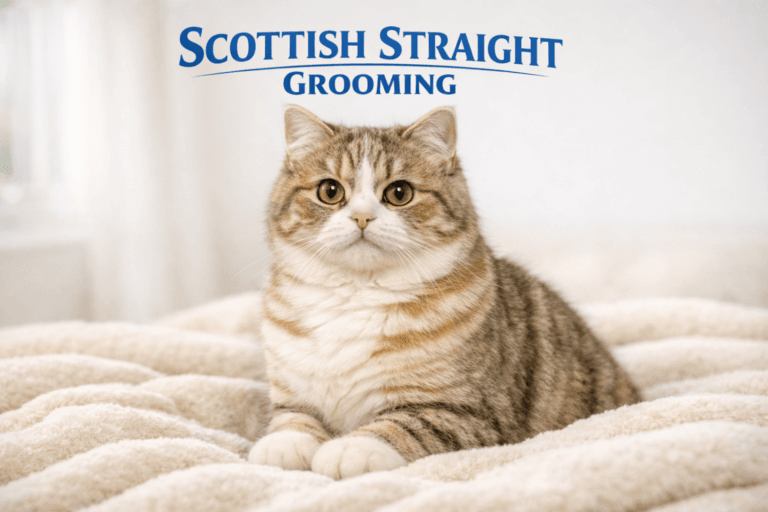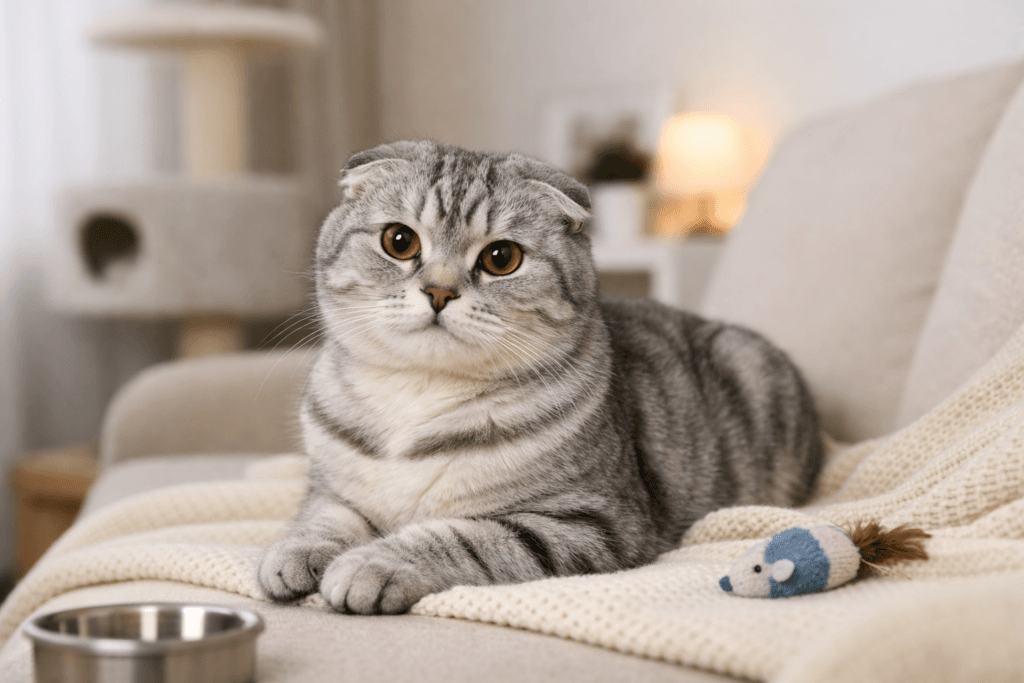


Scottish Straight grooming gets far less attention online than its fold-eared cousin, but the routine matters just as much and, honestly, it’s a little easier to keep up with. Their upright ears skip the wax-trapping problem that Scottish Folds deal with, which changes the whole approach. If you’ve just brought one home, or you’re trying to figure out how to groom a Scottish Straight cat whose coat has gotten a bit neglected, here’s a complete walkthrough of what actually needs doing, how often, and with what tools.
Do Scottish Straight Cats Need a Lot of Grooming?
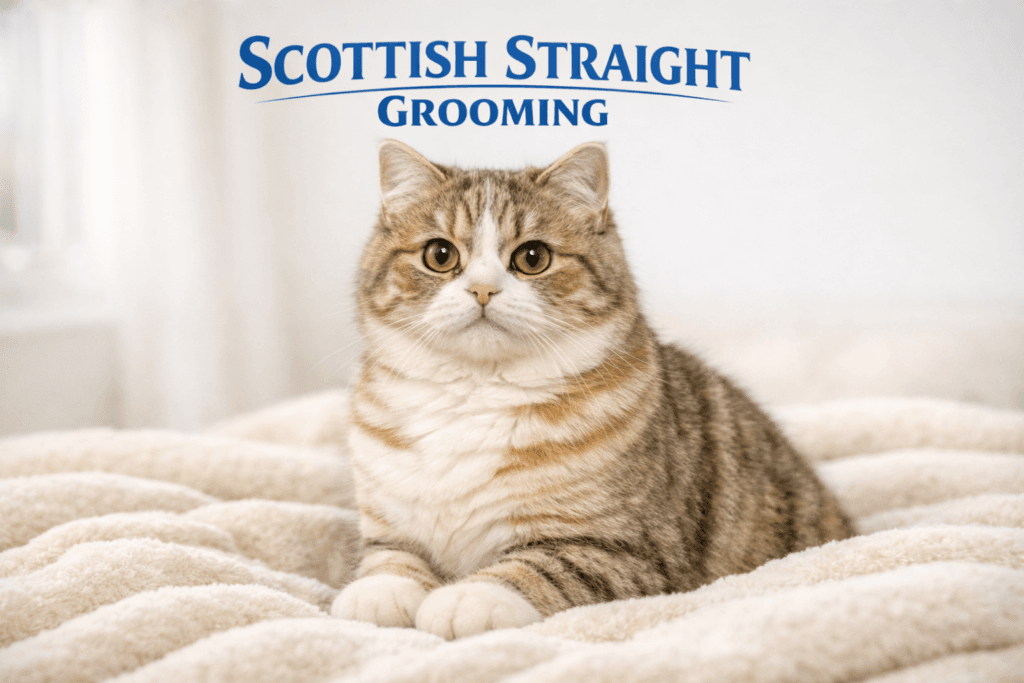
Not really. Scottish Straights carry a dense, plush coat, but it isn’t prone to the same matting issues you’d see in a Persian or a Maine Coon. Short-haired Straights are close to a “wipe and go” breed a weekly brush covers most of it. Long-haired Straights (sometimes called Highland Straights) need more frequent attention, closer to two or three sessions a week, because their coat has a longer undercoat that tangles near the neck and behind the legs.
The short version: Scottish Straight grooming is low-effort, but not zero-effort. Skipping it for months at a time is where owners run into trouble loose fur builds up, shedding increases, and mats can start forming in the armpit and belly area even on a short-haired cat.
Grooming Tools You’ll Actually Need
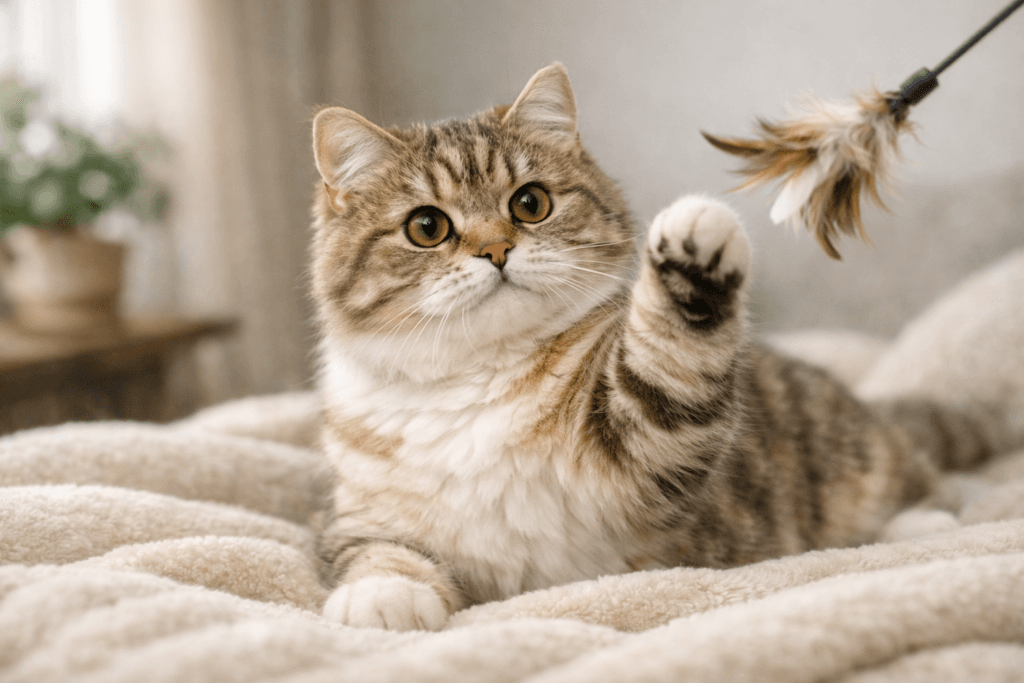
You don’t need a full kit for Scottish Straight grooming three or four items cover almost everything.
- A rubber grooming glove or soft-bristle brush for short-haired Straights. This pulls out loose fur while feeling like petting, which most cats tolerate well from day one.
- A wide-tooth comb and a slicker brush for long-haired Straights, used together the comb works through the undercoat first, the slicker finishes the top coat.
- Cat-specific nail clippers the guillotine or scissor style both work; avoid human clippers, which crush rather than cut a cat’s nail shape.
- A cat-formulated ear cleaner and cotton pads for the occasional wax check.
- Styptic powder, kept nearby the first few times you trim nails, in case you nick the quick by accident.
Skip anything marketed as a “deshedding tool” with sharp metal teeth unless a vet or groomer has specifically recommended it for your cat on a coat this manageable, they’re often overkill and can irritate the skin if used too aggressively. Brushing is the backbone of Scottish Straight grooming, and it’s simpler than most people expect.
Brushing: The Weekly (or Twice-Weekly) Basics
For short-haired Scottish Straights: a rubber grooming glove or a soft-bristle brush once a week is enough. Go in the direction the fur grows, starting from the neck and working back toward the tail. This pulls out loose undercoat before it ends up on your sofa.
For long-haired Scottish Straights: switch to a wide-tooth comb or a slicker brush, and aim for two to three sessions weekly. Pay extra attention to the ruff around the neck, the back of the thighs, and the belly these are the spots that mat first because they get less airflow and more friction from movement.
A five-minute session is usually plenty. If your cat tenses up or tries to leave, stop and try again later rather than pinning them down a bad first experience makes every future grooming session harder.
Ear Care: The One Area Where Straights Have It Easy
This is where Scottish Straight grooming genuinely differs from Scottish Fold care. Because their ears sit upright, airflow into the ear canal is normal, so wax and moisture don’t get trapped the way they do in folded ears. You still want to check them every couple of weeks, but you’re looking for buildup, not managing a structural risk.
If you notice a dark, gritty residue or a smell coming from the ear, a cat-specific ear cleaner applied to a cotton pad (never a cotton swab pushed into the canal) is usually enough. If the cat is scratching at an ear repeatedly shaking its head, that’s worth a vet visit rather than a home fix it could point to mites or an infection rather than routine wax.
Nail Trimming
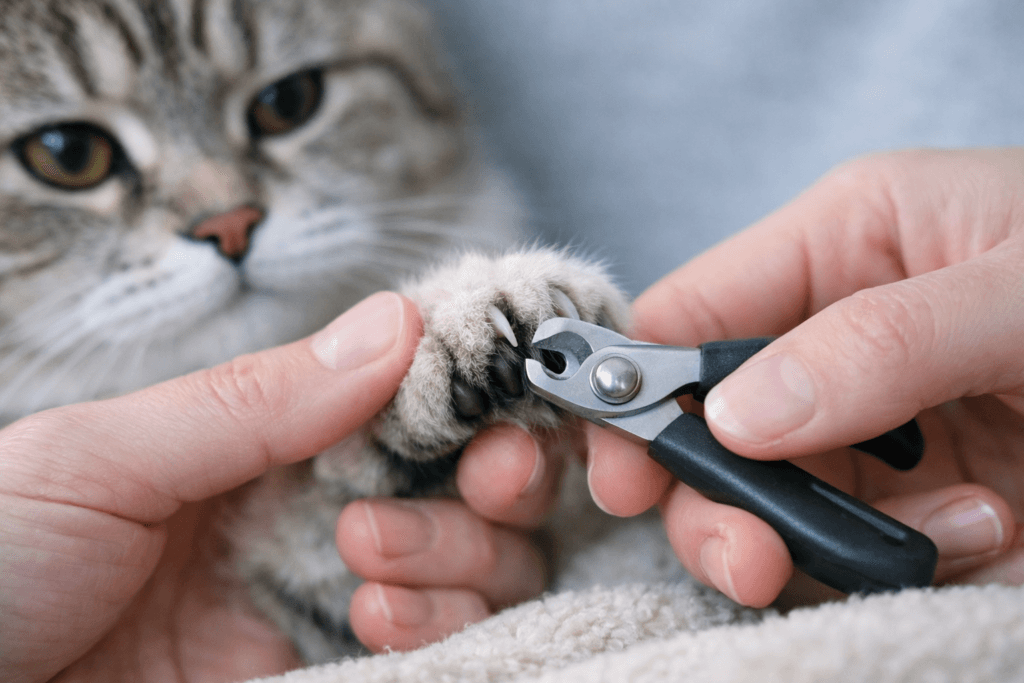
Nail care is a small but essential part of Scottish Straight grooming. Trim every two to three weeks. Scottish Straights aren’t especially fussy about paw handling compared to some breeds, but it still helps to get them used to having their paws touched from kittenhood.
Use a cat-specific nail clipper, and only cut the clear tip the pink area (the quick) contains a blood vessel and will bleed if nicked. If you’re new to this, ask your vet to show you once in person; it takes far less time to learn hands-on than it does to read about.
Bathing: Rarely Necessary
Scottish Straights are efficient self-groomers, and most never need a full bath unless they’ve gotten into something messy. If a bath is unavoidable, use a cat-formulated shampoo human shampoo strips the natural oils from a cat’s skin and can cause irritation and keep the water lukewarm, not hot.
Brush the coat before the bath, not after. Wet fur tangles far more easily, and a mat that was manageable dry can turn into a stubborn knot once soaked.
Teeth and Overall Hygiene
Dental disease is common across most cat breeds by middle age, and Scottish Straights aren’t an exception. A few brushes a week with a cat-safe toothpaste, or dental treats as a lower-effort alternative, go a long way. Litter box cleanliness also plays into overall hygiene a cat that’s stepping in a dirty box will track that mess straight into its coat.
Seasonal Grooming: What Changes Through the Year
Scottish Straight grooming needs aren’t flat all year round. Most Scottish Straights, like most double-coated cats, go through two noticeable shedding periods spring and autumn when they’re dropping a season’s worth of undercoat at once.
During these windows, bump brushing up by an extra session or two per week, even for short-haired cats. It’s temporary, usually four to six weeks, and it makes a real difference in how much fur ends up on your furniture versus in the brush.
Winter tends to be the quietest season for grooming indoor heating can dry out skin slightly, so if you notice flaking or dullness in the coat, that’s worth mentioning at a routine vet visit rather than assuming it’s just dry air.
Scottish Straight vs. Scottish Fold Grooming: What Actually Differs
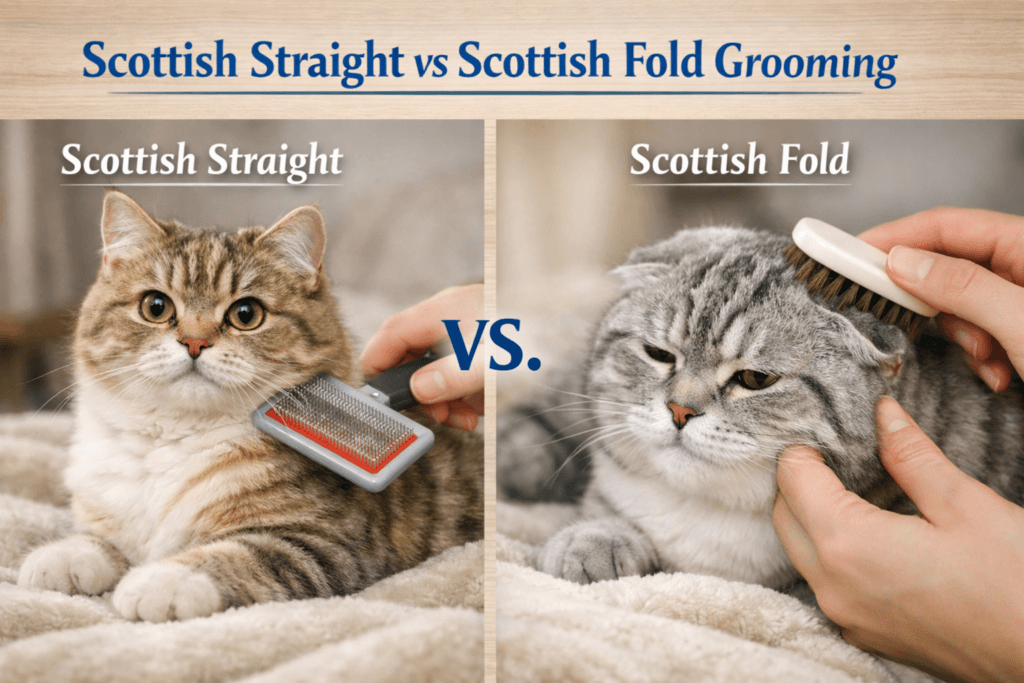
Since these two breeds come from the same litters and share almost everything except ear shape, it’s worth being specific about where the grooming routines genuinely diverge because it’s not everything.
What’s the same: brushing frequency by coat length, nail trimming schedule, bathing rarity, and dental care are identical for both breeds. If you’re following a Fold-specific guide for these parts, it applies to a Straight without changes.
What’s different: ear care is the one real divergence. A Fold’s ear structure traps moisture and wax against the canal, so owners are advised to check weekly and watch closely for infection signs. A Straight’s upright ear allows normal airflow, so a check every two to three weeks for general buildup is enough there’s no structural risk to manage on top of routine hygiene.
If you’re raising both breeds under one roof, this is really the only adjustment you need to make between them everything else on the grooming checklist can be handled the exact same way.
What to Watch For During Grooming
Grooming sessions double as a low-key health check, since you’re handling your cat closely enough to notice things a quick glance would miss. Keep an eye out for:
- Lumps or swelling under the skin that weren’t there last session
- Bald patches or thinning fur, which can point to allergies, stress, or a skin condition rather than normal shedding
- Flaky, red, or greasy patches of skin, especially along the back or base of the tail
- A change in how your cat tolerates being touched sudden flinching in one spot can signal pain, even if nothing is visibly wrong
None of these mean panic, but they’re worth a vet visit rather than waiting to see if they resolve on their own. Catching this early is one of the underrated benefits of grooming your cat yourself rather than only relying on occasional professional visits.
When to Call a Professional Groomer
Most Scottish Straight owners never need one, but a few situations are worth outsourcing rather than tackling at home:
- Mats that won’t comb out pulling at a stubborn mat risks tearing skin; a groomer has clippers and technique to remove it safely
- A cat that’s genuinely aggressive during nail trims, where the risk of injury to either of you outweighs doing it yourself
- Senior cats with mobility issues who can no longer groom hard-to-reach spots on their own and need a more thorough, gentle session than a quick home brush
A single professional visit, even just to watch and learn technique, is often enough to make future home sessions easier.
Scottish Straight Grooming Checklist by Coat Type
| Short-haired Straight | Long-haired Straight | |
|---|---|---|
| Brushing frequency | Once a week | 2–3 times a week |
| Best tool | Grooming glove or soft brush | Wide-tooth comb or slicker brush |
| Matting risk | Low | Moderate, especially neck and belly |
| Shedding season needs | Slightly more frequent brushing | Daily brushing during spring/autumn shed |
FAQs
Do Scottish Straight cats need haircuts?
No. Their coat doesn’t require clipping or trimming for maintenance. The only time a haircut comes up is if mats become too severe to comb out, in which case a vet or professional groomer would carefully trim just the affected area.
Are Scottish Straights easy to groom compared to other breeds?
Yes, relative to long-haired breeds like Persians or Ragdolls. Scottish Straight grooming is manageable because of coat density and upright ears, which skip one of the more fiddly parts of caring for a Scottish Fold.
How often should I bathe a Scottish Straight?
Only when genuinely necessary visible dirt, a skin condition your vet has flagged, or exposure to something like grease or a strong odor. Routine monthly bathing isn’t needed for this breed.
Can I groom a Scottish Straight kitten the same way as an adult?
The routine is the same, but kitten sessions should be shorter and more reward-based. Getting a kitten comfortable with brushing, paw handling, and ear checks early makes adult grooming far less stressful for both of you.
What’s the simplest way to groom a Scottish Straight cat at home?
Stick to the basics: a weekly brush, an ear check every couple of weeks, nail trims every two to three weeks, and baths only when actually needed. None of it requires special equipment beyond a brush, a nail clipper, and a cat-safe ear cleaner.
Making Scottish Straight Grooming a Weekly Habit
The easiest way to keep up with any of this is to attach it to something you already do brush while watching TV, check ears on the same day you clean the litter box, trim nails right after a meal when your cat is calmer. Scottish Straights don’t demand much, but consistency matters more than intensity here. A cat brushed for two minutes every week will have a healthier coat than one deep-groomed once every two months. Once Scottish Straight grooming becomes part of your weekly rhythm, it stops feeling like a chore.
If you’re building this into an already busy routine, our cat grooming resources cover general coat and hygiene basics that apply across most breeds, and the Scottish Fold grooming and care guide is worth a look if you’re caring for both breeds under one roof.
Sources: Cornell Feline Health Center on general feline grooming and skin health; ASPCA on nail trimming and bathing guidelines; PDSA on dental and ear hygiene for cats.