


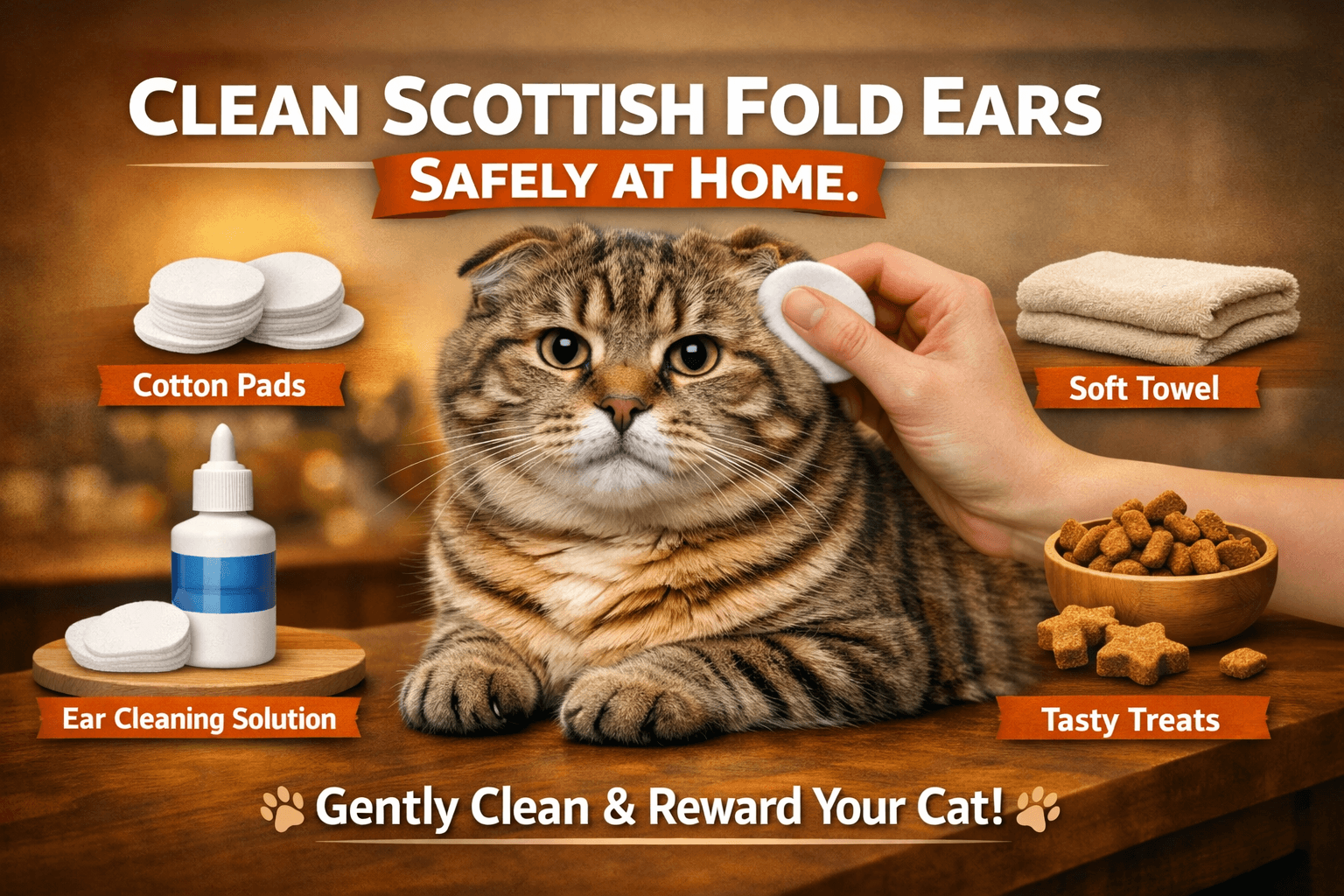
If you own a Scottish Fold, then you clean scottish fold ears already know those adorable folded ears are what make them so uniquely charming. But those same ears come with a hidden downside they trap heat, moisture, and debris far more easily than upright-eared cats. Reduced airflow inside the ear canal means wax builds up faster, and without regular attention, this can lead to discomfort, odour, and in some cases, infections that require a vet visit.
The good news? Keeping your Clean Scottish Fold Ears healthy is a simple, 10-minute routine you can do right at home. This guide walks you through everything from choosing the right cleaning solution to knowing when something needs professional attention.
Why Clean Scottish Fold Ears Need Extra Ear Care
The folded pinnae (outer ear flap) that give Scottish Folds their signature look also restrict natural airflow into the ear canal. Unlike straight-eared breeds where air circulates freely, a Scottish Fold’s ear sits flat against the head, creating a warm, enclosed environment where earwax, debris, and moisture accumulate quickly.
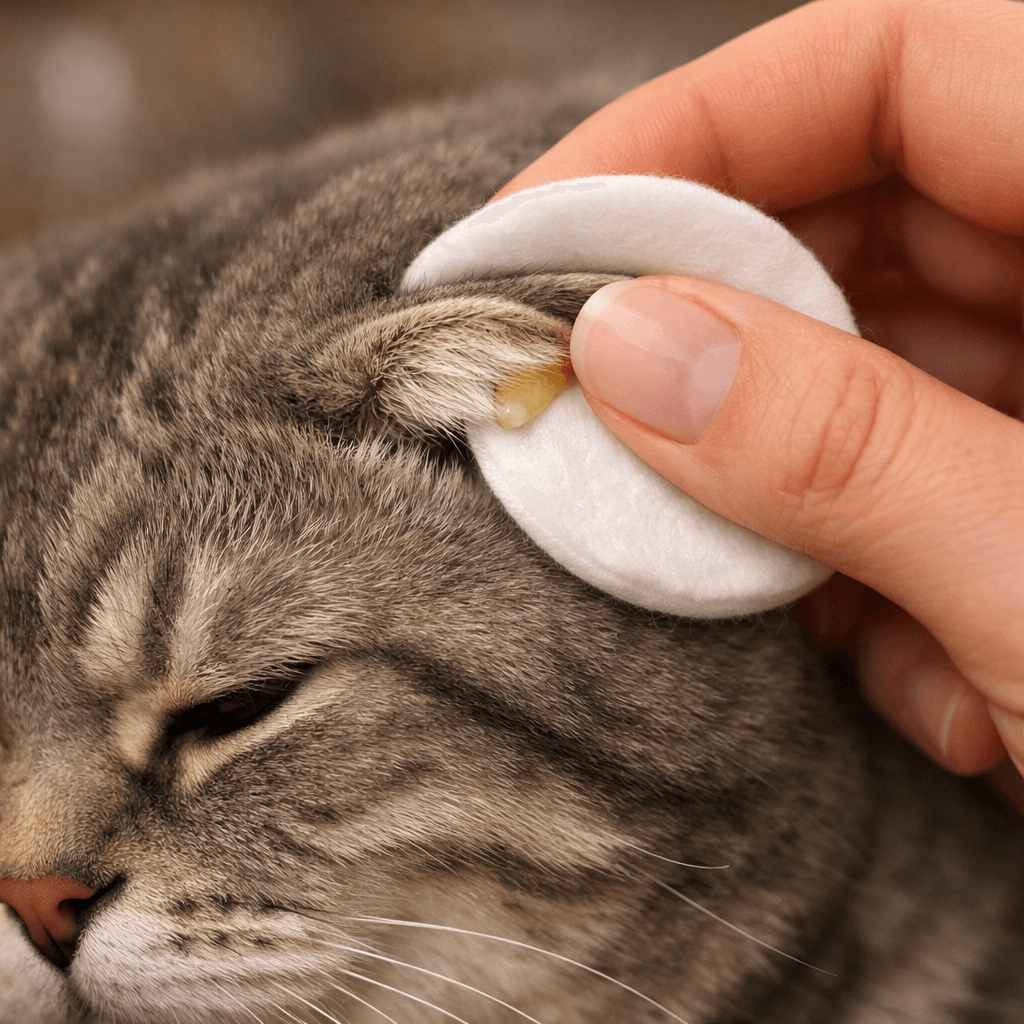
This structural difference makes them noticeably more prone to:
- Excessive earwax buildup dark brown or yellowish wax that accumulates within days
- Otitis externa inflammation of the outer ear canal caused by bacteria or yeast
- Ear mites tiny parasites that thrive in the warm, dark environment of a folded ear
- Secondary infections which can worsen if early warning signs are ignored
According to veterinary guidance from PDSA UK, most healthy cats don’t need frequent ear cleaning but Scottish Folds are a clear exception. Vets generally recommend checking and wiping their ears at least once a week. If your cat has a history of ear infections or mites, your vet may suggest more frequent cleaning.
Signs Your Clean Scottish Fold Ears Need Cleaning
Before reaching for a cotton ball, check for these signals:
- Dark or brown wax visible inside the ear flap
- Mild odour coming from the ears (not sharp or foul that could indicate infection)
- Your cat scratching or pawing at their ears frequently
- Head shaking or tilting the head to one side
- Redness or swelling along the inner ear flap
A small amount of light-coloured wax is normal. Heavy dark buildup, strong smell, discharge, or visible scratches inside the ear are all reasons to call your vet rather than clean at home.
What You’ll Need Before Starting
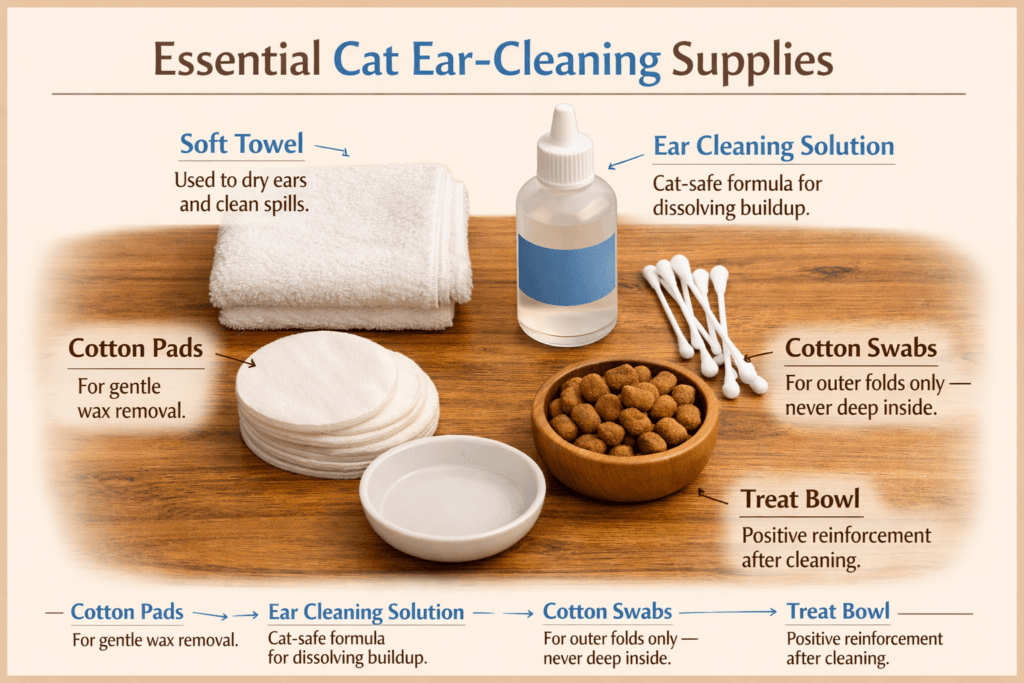
Gather everything before you begin stopping mid-clean to search for supplies will stress your cat and make the session harder:
- Vet-approved ear cleaning solution (see options below)
- Cotton balls or gauze pads never cotton swabs (Q-tips)
- A warm, quiet room with good lighting
- A soft towel to wrap your cat if needed
- Cat treats for positive reinforcement
What to avoid entirely: cotton swabs, alcohol-based liquids, undiluted apple cider vinegar, hydrogen peroxide, or any solution not specifically formulated for cats. These cause irritation, burning, and can permanently damage the sensitive tissues of the ear canal.
Best Ear Cleaning Solutions for Scottish Folds
Vet-Recommended Commercial Options
Safe cat ear cleaners are alcohol-free, pH-balanced, and designed specifically for feline ear tissue. Rough or chemical-heavy solutions destroy the natural protective barrier inside the ear and worsen the problem.
Popular UK vet-recommended choices:
- Virbac EpiOtic widely used by vets across the UK, gentle surfactant formula, safe for routine use
- DOUXO S3 Care Ear Solution anti-inflammatory, great for sensitive or irritated ears
- Otodex Veterinary Ear Drops available at most UK pet pharmacies, effective against wax and mites
- Artero Oto Ear Cleaner a groomer favourite, works well for regular weekly maintenance
For cats with a history of yeast-related ear problems, ask your vet specifically about solutions with anti-fungal properties.
Natural Clean Scottish Fold Ears Options
If you prefer a more natural approach or you simply don’t have a commercial solution on hand there are gentle, plant-based alternatives that work safely for routine maintenance.
Warm olive oil is one of the simplest and most effective options. It softens hardened wax, making it easy to wipe away, and it’s completely non-irritating to a cat’s skin. Coconut oil and sweet almond oil work similarly well.
Some pet owners also use witch hazel diluted with distilled water (50/50 ratio), which has mild antiseptic properties and helps dissolve wax without disrupting the ear’s natural environment. Aloe vera gel (pure, fragrance-free) is another soothing option used in some natural grooming communities, particularly in South and Southeast Asia where herbal pet care is common.
Homemade Clean Scottish Fold Ears solution (simple recipe):
Mix 1 tablespoon of warm distilled water with 5–6 drops of pure aloe vera juice and a small amount of witch hazel. Apply with a cotton ball, wipe gently, and never pour directly into the canal.
How to Clean Scottish Fold Ears at Home Step by Step
This routine takes about 10 minutes once your cat is comfortable with it. Do it weekly.
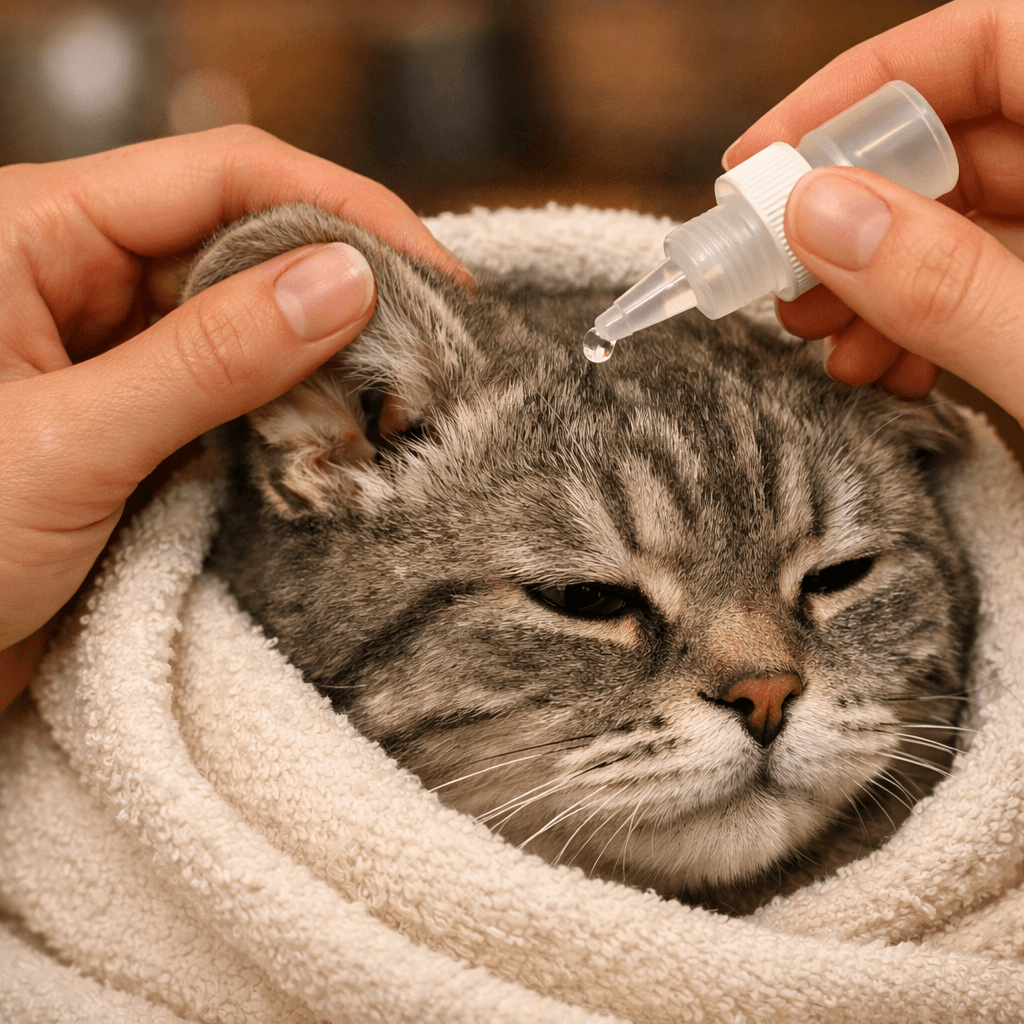
Step 1 Choose the Right Time
Pick a moment when your cat is calm and relaxed — after a meal, after a nap, or during a slow, quiet evening. Avoid cleaning right after active play.
Step 2 Wrap Your Cat (If Needed)
For cats that dislike being handled around their head, wrap them snugly in a towel — often called a “purrito.” This keeps their paws still and reduces the chance of sudden movements.
Step 3 Inspect the Ear First
Hold the ear flap gently and look inside with a good light source. Note the colour and amount of wax, any smell, or anything unusual. If you see black crumbly debris that looks like coffee grounds, this is a strong indicator of ear mites — stop and call your vet.
Step 4 Apply the Cleaning Solution
Warm your solution slightly by holding the bottle in your hands for a minute — cold liquid in the ear is uncomfortable. Place the nozzle gently at the entrance of the ear canal (not deep inside) and apply a few drops. For natural oil, use a dropper and apply 3–4 drops.
Step 5 Massage the Base of the Ear
Gently fold the ear flap back down and massage the base of the ear for about 20–30 seconds. You’ll likely hear a soft squelching sound — that’s the solution loosening the wax inside. This is completely normal.
Step 6 Let Your Cat Shake
Allow your cat to shake their head. This brings loosened debris up toward the outer ear where you can easily wipe it away. Step back slightly — some solution may fly out!
Step 7 Wipe with a Cotton Ball
Using a fresh cotton ball or gauze pad, gently wipe the visible inner surface of the ear flap and just inside the entrance of the canal. Work from the inside outward. Use a new cotton ball each time it gets dirty. Never push anything deeper into the canal.
Step 8 Reward and Repeat on the Other Side
Give your cat a treat, offer some gentle praise, and then repeat the entire process on the second ear. Always reward after — this builds a positive association that makes future sessions much easier.
Kitten Ear Cleaning Starting Young
Starting ear care early makes a huge difference. Kittens that get used to having their ears handled at 8–12 weeks of age tend to be far more cooperative as adults.
For Scottish Fold kittens, use only plain warm water on a cotton ball for the first few months unless your vet advises otherwise. Their ear canals are smaller and more sensitive, so even gentle commercial solutions may be too strong for very young kittens. Focus on getting them comfortable with the handling the actual cleaning matters less than the routine at this stage.
When NOT to Clean at Home

Home cleaning is for routine maintenance only. Stop and book a vet appointment if you notice:
- Strong, foul smell from the ears
- Black, crumbly debris (possible ear mites)
- Visible discharge or pus
- Significant redness, swelling, or the cat crying when you touch the ear area
- Head tilt that doesn’t improve
- No improvement after 2–3 cleaning sessions
Ear infections in cats particularly yeast or bacterial otitis need prescription treatment. Cleaning an infected ear at home without diagnosis can push bacteria deeper and delay proper healing.
If you’re in the UK, Goddard Veterinary Group and PDSA both offer accessible advice and walk-in consultations for pet ear concerns.
Are Scottish Folds Prone to Ear Infections?
Yes more so than most breeds. The folded ear structure, combined with the breed’s generally dense coat (which can also trap hair near the ear entrance), creates conditions where bacteria and yeast find it easier to thrive.
Common contributors to Scottish Fold ear infections include:
- Yeast overgrowth — particularly in warm, humid climates (common concern in South Asian countries like Pakistan, India, Bangladesh where humidity is high)
- Bacterial infections — often secondary to wax buildup or scratching
- Ear mites — Otodectes cynotis, highly contagious between cats in multi-pet households
- Allergies — food sensitivities or environmental allergens can trigger chronic ear inflammation
Regular weekly cleaning, paired with a balanced diet that supports immune health, significantly reduces the chance of recurrent infections.
Quick Reference Safe vs. Unsafe Ear Cleaning Ingredients
| Safe to Use | Never Use |
|---|---|
| Vet-formulated ear cleaner (Virbac EpiOtic, DOUXO S3) | Hydrogen peroxide |
| Warm olive oil | Rubbing alcohol / isopropyl alcohol |
| Coconut oil | Undiluted apple cider vinegar |
| Witch hazel (diluted, 50/50) | Cotton swabs / Q-tips inside the canal |
| Warm distilled water | Baby wipes with fragrance or alcohol |
| Aloe vera juice (pure) | Tea tree oil |
How Often Should You Clean Scottish Fold Ears?
| Situation | Recommended Frequency |
|---|---|
| Healthy adult Scottish Fold | Once per week |
| History of ear infections | Every 4–5 days (vet-guided) |
| During recovery from infection | As directed by vet |
| Kitten under 12 weeks | Once every 2 weeks (water only) |
| After swimming or bathing | Always check and dry |
Final Thoughts
Clean Scottish Fold Ears doesn’t have to be stressful for you or your cat. With the right solution, a calm environment, and a consistent weekly habit, it becomes a simple part of your grooming routine. Most cats genuinely tolerate it well once they’re used to the handling.
The key things to remember: use only cat-safe solutions, never go deeper than what you can see, and pay attention to what your clean scottish fold ears are telling you week to week. Changes in colour, smell, or your cat’s behaviour around their ears are your earliest warning system.
For more on keeping your Scottish Fold comfortable and healthy, check out the full guide on Scottish Fold care and grooming at CatsMastery, and browse additional cat health resources at PetsMastery.
FAQs
How do you clean a Scottish Fold cat’s ears?
Gently apply a few drops of vet-approved or natural ear cleaning solution (like warm olive oil) into the ear canal entrance, massage the base for 20 seconds, let your cat shake, then wipe away loosened debris with a cotton ball. Never use cotton swabs inside the canal.
Are Scottish Folds prone to ear infections?
Yes. Their folded ear structure restricts airflow, making wax buildup, yeast growth, and bacterial infections more likely than in straight-eared breeds. Weekly cleaning significantly reduces this risk.
What is the best homemade ear cleaner for cats?
Warm olive oil is the safest and most effective natural option. A diluted witch hazel and distilled water mix (50/50) also works for mild wax removal. Avoid vinegar, alcohol, or hydrogen peroxide.
What household items can I use to clean my cat’s ears?
Plain warm water on a cotton ball, olive oil, or coconut oil are the safest household options for a light clean. Avoid anything with fragrance, alcohol, or harsh chemicals.
Always consult your vet before starting a new ear care routine, especially if your cat has a history of ear problems.











One Response