

If your cat has ever climbed onto your lap, pressed its paws into your stomach one after another, and settled into a slow purring rhythm, you’ve experienced one of the most endearing and most misunderstood cat behaviors there is. Cats knead you for reasons rooted deep in kittenhood, and once you understand where it comes from, the whole ritual makes a lot more sense. Here’s everything worth knowing about why cats knead you, including the claws-out version that isn’t quite as charming.
What Is Cat Kneading, Exactly?
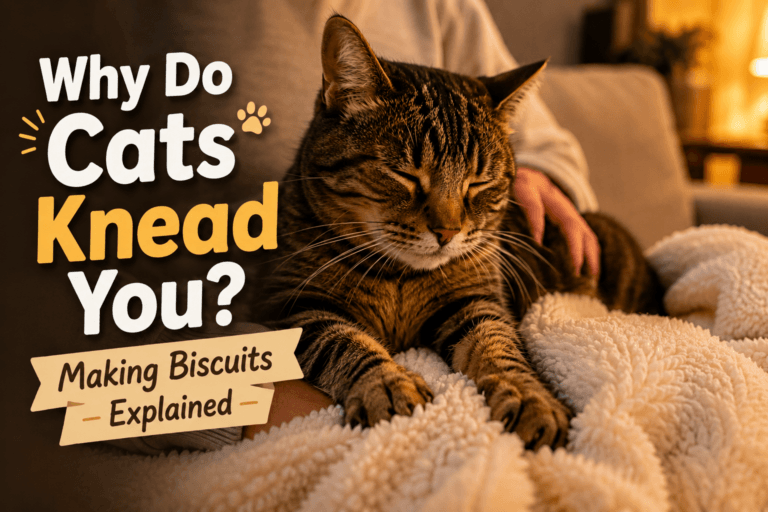
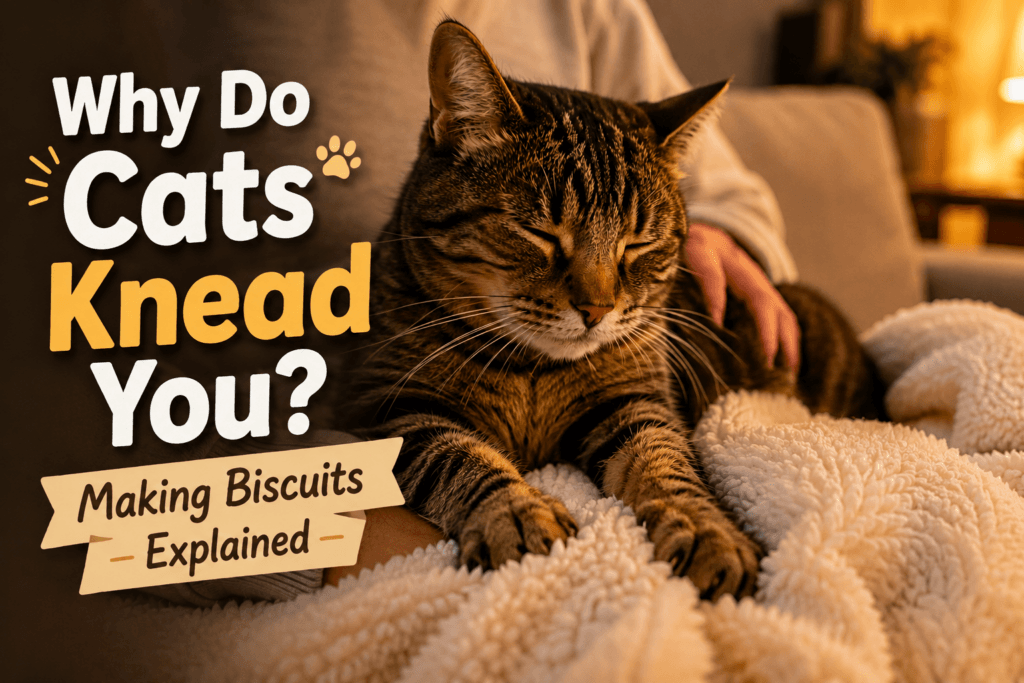
Why It’s Called “Making Biscuits”
The nickname comes from the visual: a cat pressing its paws rhythmically into a soft surface looks a lot like someone working dough. It’s an affectionate, slightly silly term, but the behavior behind it is entirely instinctive.
How Cats Knead (Paw Motion Explained)
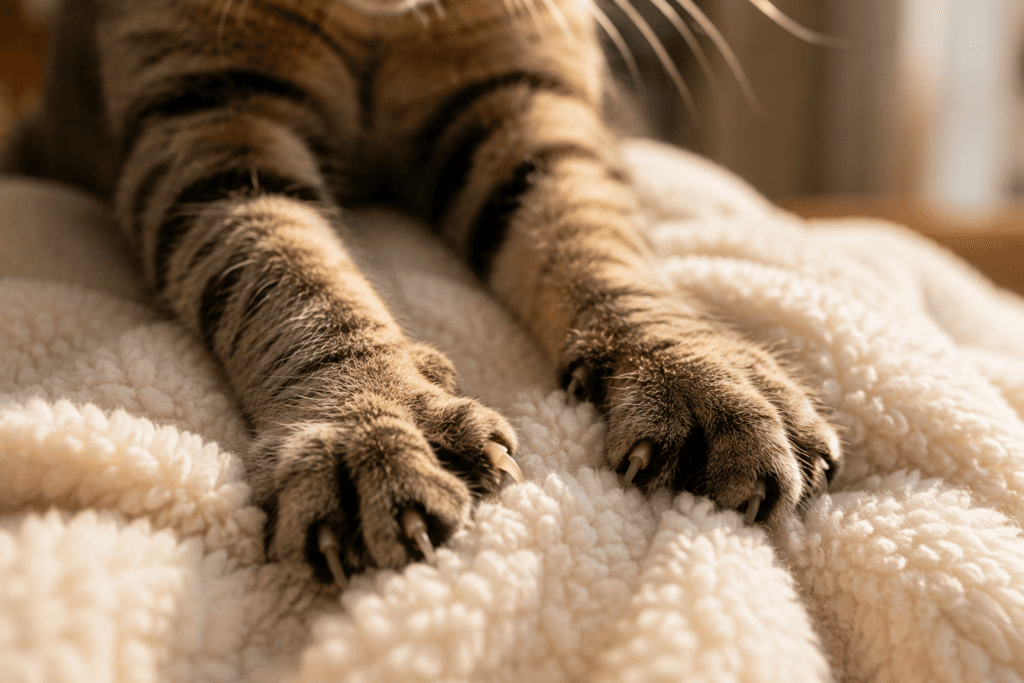
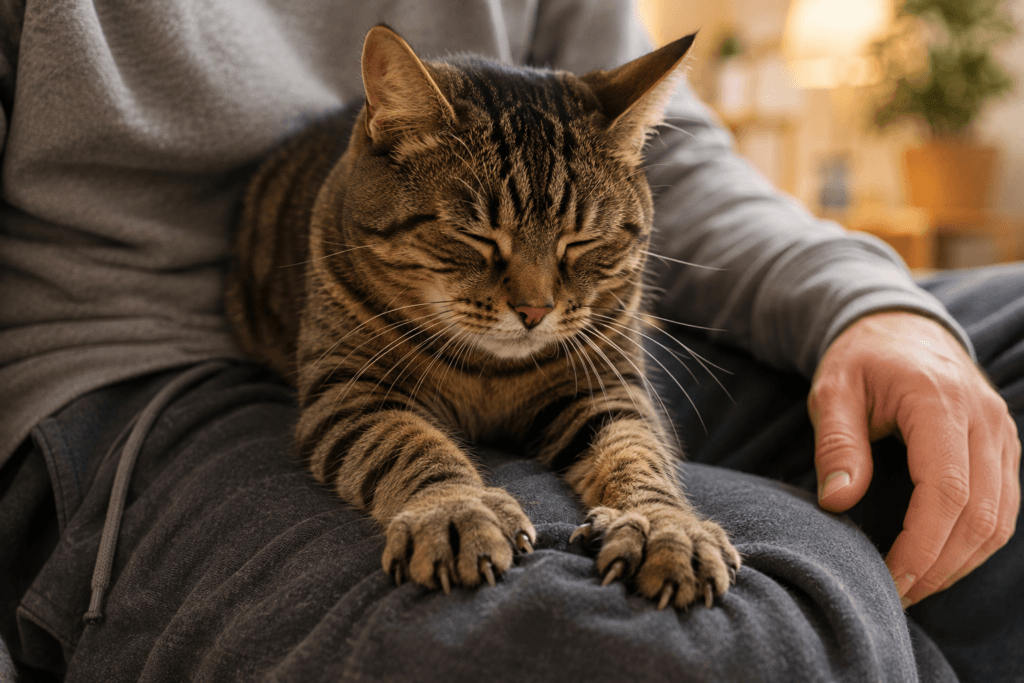
Kneading involves a cat alternating its front paws, pressing down and pulling back in a steady rhythm, often with claws extending slightly on each push. Some cats knead with all four paws, and some only use their front two.
Why Do Cats Knead You? (Main Reasons)
A Leftover Kitten Nursing Instinct
Kittens knead their mother’s belly while nursing to help stimulate milk flow. Most cats carry this motion into adulthood, and kneading you is often a direct callback to that early, comforting routine.
Marking You With Scent (Paw Pad Pheromones)
Cats have scent glands in their paw pads, and kneading deposits their scent onto whatever they’re pressing into, including you. In a sense, a cat that kneads you is quietly claiming you as part of its territory.
Preparing a Comfortable Nesting Spot
In the wild, this same motion helps flatten grass or bedding into a comfortable resting spot. Domestic cats still carry the instinct, even when the “nest” is just your lap or a blanket.
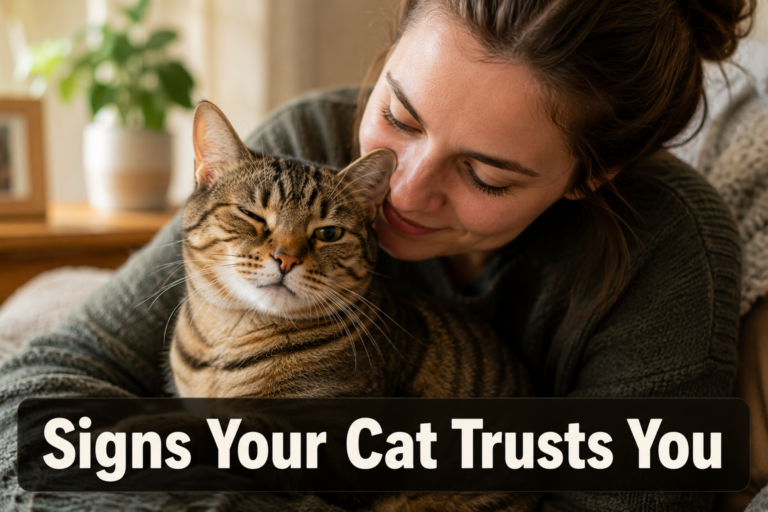
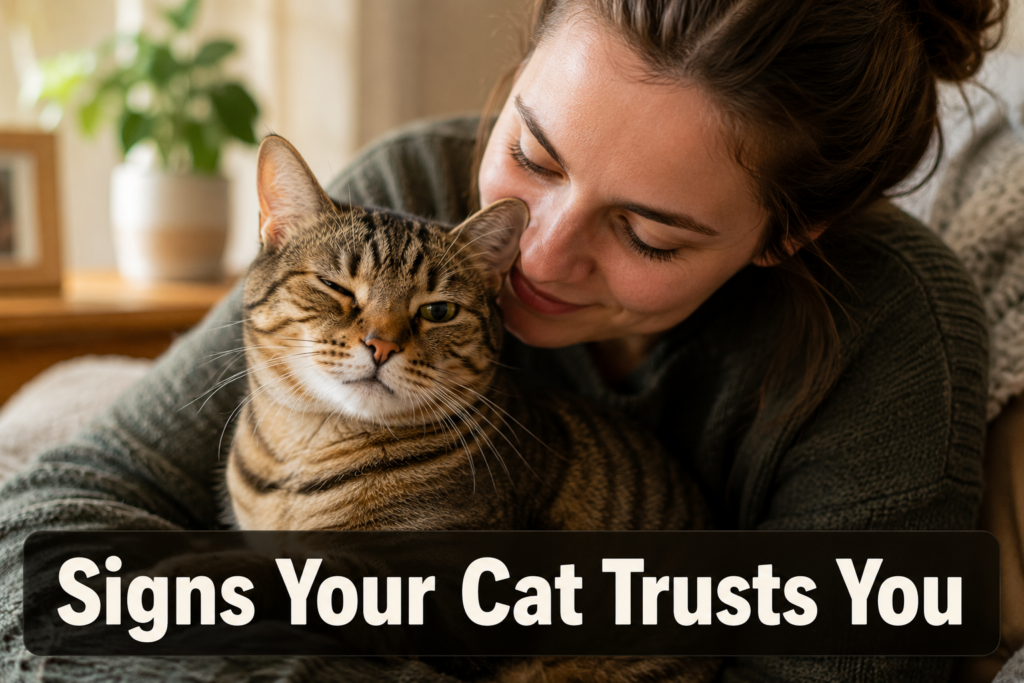
Showing Affection and Trust
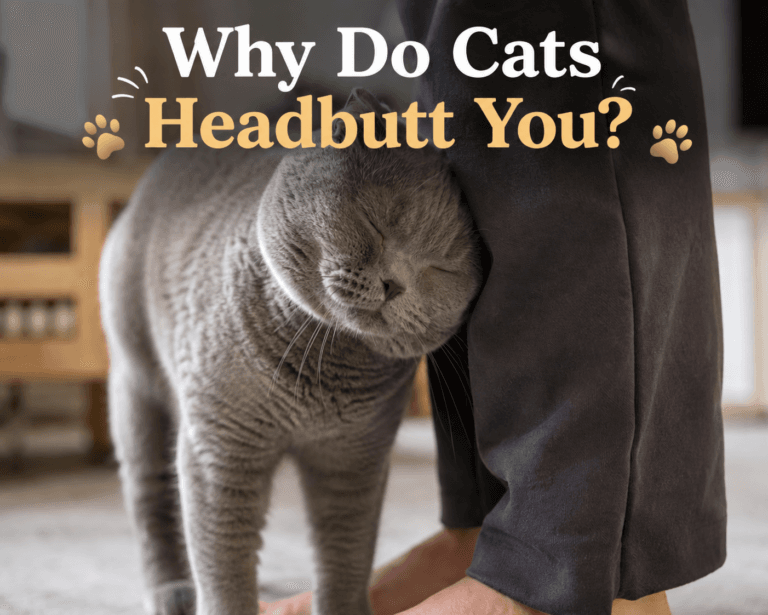
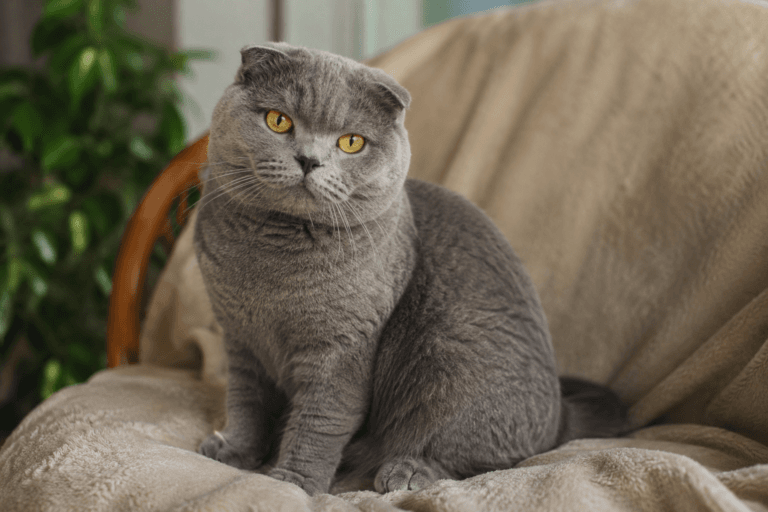
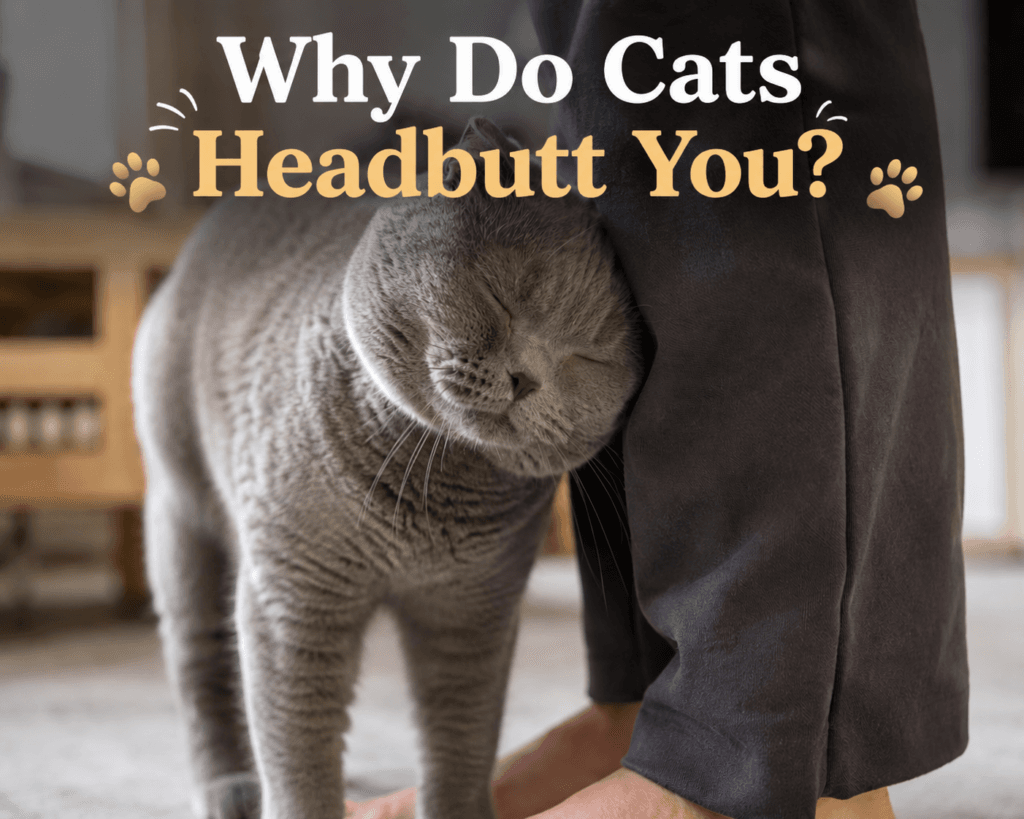
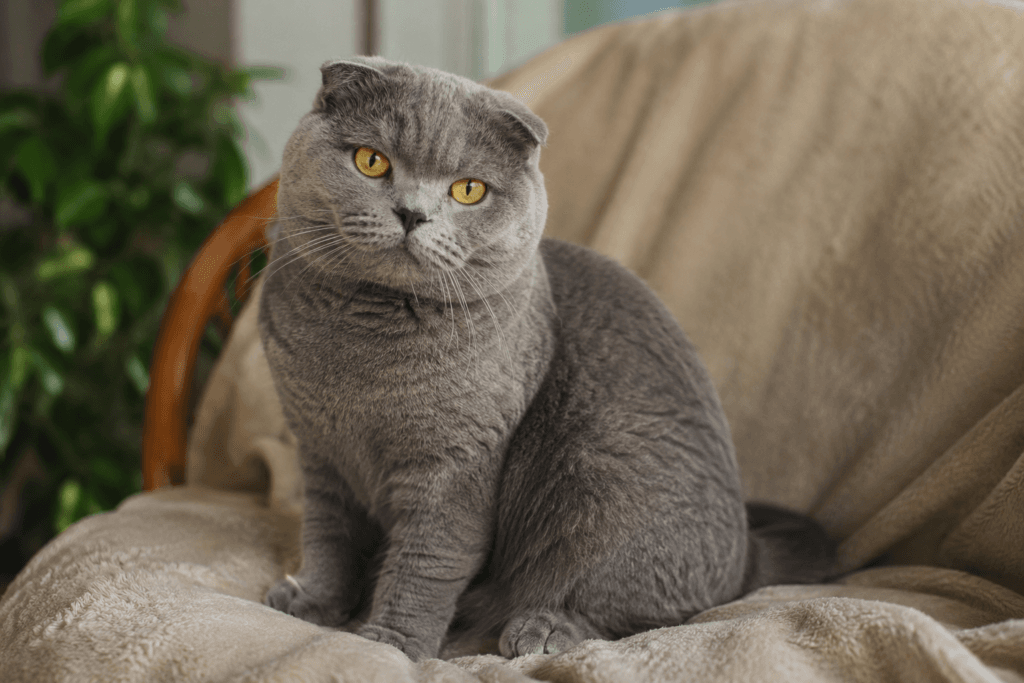
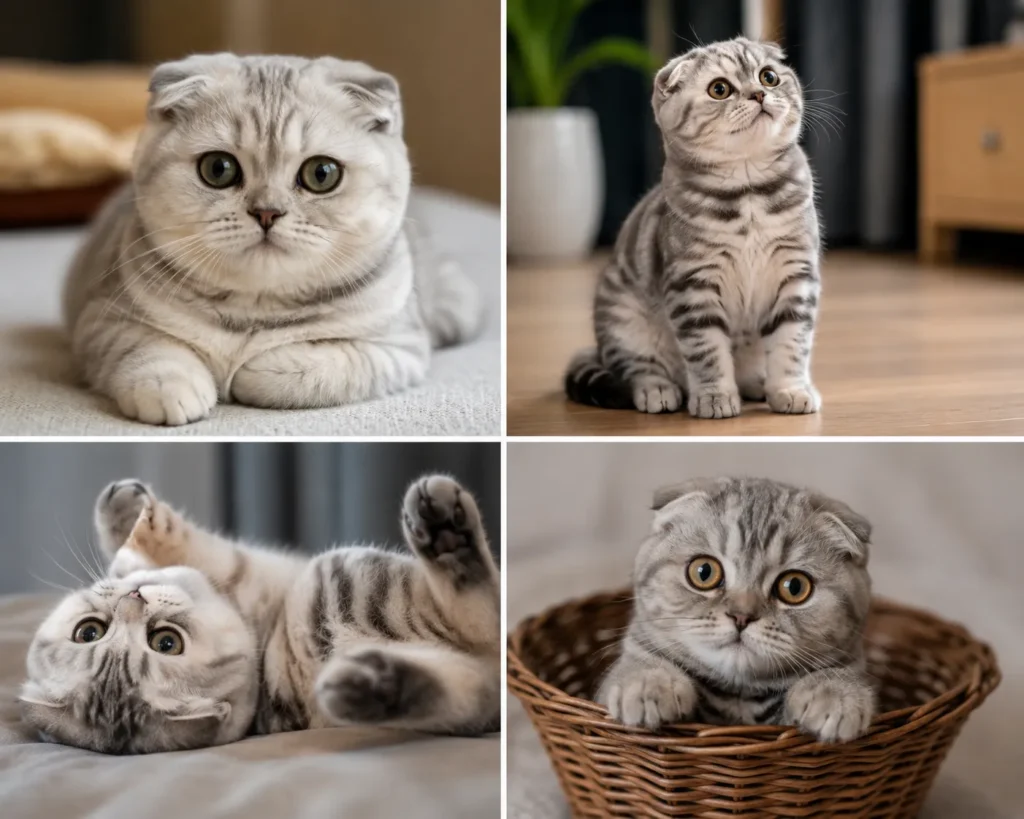
Cats generally only knead when they feel safe and relaxed, so being on the receiving end is usually a genuine sign of trust, similar to how a Scottish Fold or any affectionate breed might also show trust through headbutting or bunting.
Self-Soothing and Relaxation
The repetitive motion can also be self-soothing, helping a cat settle into a calm, drowsy state, often right before a nap.
Cat Kneading and Other Behaviors Together
Cats knead you in different combinations depending on the moment, and pairing kneading with other behaviors usually adds another layer of meaning.
Cat Kneading and Purring
When kneading is paired with purring, it’s one of the clearest combined signals of contentment a cat can give, much like how bunting paired with purring signals the same deep comfort.
Cat Kneading and Suckling or Dribbling
Some cats suckle on a blanket or dribble slightly while kneading. This is generally considered a continuation of the nursing instinct and is normal, especially in cats weaned early or who are simply prone to the habit.
Why Do Cat Kneading Blankets Specifically?
Soft, pliable materials mimic the feel of a mother cat’s belly far better than a hard surface, which is why cats consistently choose blankets, pillows, and laps over the floor or furniture arms.
Why Does My Cat Knead My Blanket and Hump?
Occasionally, kneading can be accompanied by a humping-like motion, particularly in cats that weren’t spayed or neutered, or in cats displaying leftover reproductive instinct. It’s generally harmless, but if it happens frequently or seems distressing to your cat, it’s worth mentioning at your next vet visit.
Situational Kneading, What Each One Means
Why Do Cats Knead you and Their Owners at Night?
Nighttime kneading often lines up with a cat settling in to sleep near you, using the motion to get comfortable the same way it would with bedding or a nest.
Why Does My Cats Knead you & Me With Claws Out?
Claws often extend naturally during kneading, especially when a cat is deeply relaxed or excited, and it isn’t a sign of aggression even though it can pinch.
Why Does My Cat Knead Me for So Long?
Some cats simply have a stronger kneading instinct than others, and duration usually just reflects how relaxed and content your cat is in the moment.
Do Cats Knead When Stressed?
Kneading can occasionally show up as a self-soothing response to stress or anxiety, particularly if it happens outside the usual calm, cuddly context.
Cat Kneading Myths, Debunked
“My Cat Keeps Kneading My Stomach, Am I Pregnant?”
This is a genuinely common search, and it’s worth addressing directly: there is no scientific evidence that cats can detect human pregnancy through kneading. Any perceived change in behavior during pregnancy is more likely tied to a cat picking up on changes in your routine, scent, or hormone levels in a general sense, not a reliable pregnancy indicator.
Were They Weaned Too Early? (The Outdated Theory)
An older theory suggested that only cats separated from their mothers too early continued kneading into adulthood. Research since has shown that nearly all cats knead regardless of weaning age, so this theory doesn’t hold up well.
Is Cat Kneading Normal? When to Watch More Closely
When Kneading Is Completely Normal
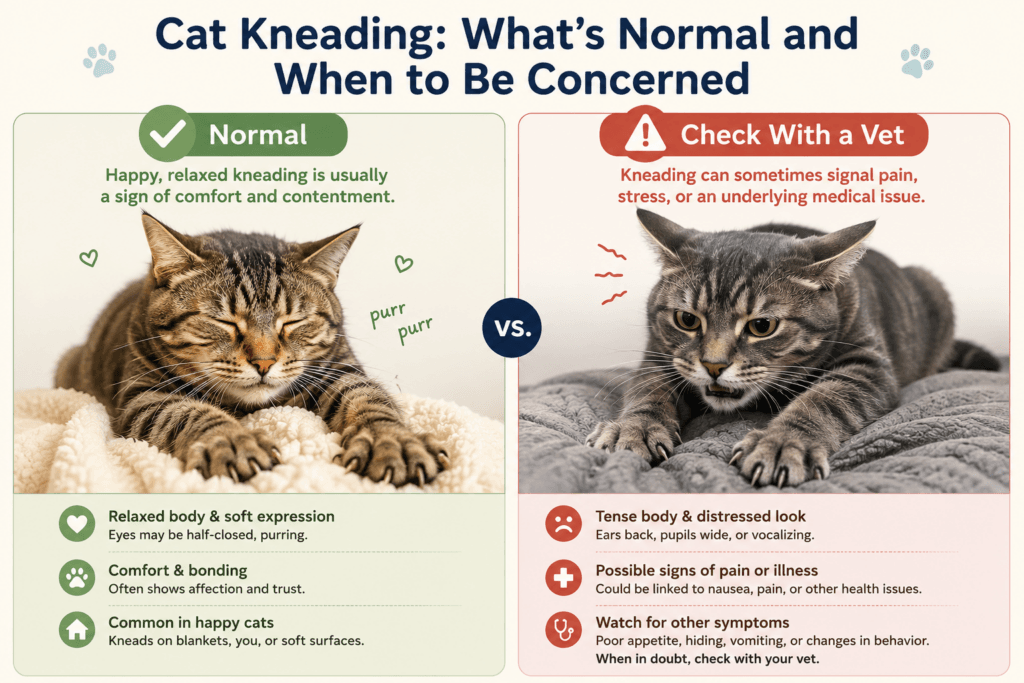
Occasional to frequent kneading, especially paired with purring and relaxed body language, is a healthy and typical feline behavior.
When Excessive Kneading or Sucking Could Signal Stress or Pain
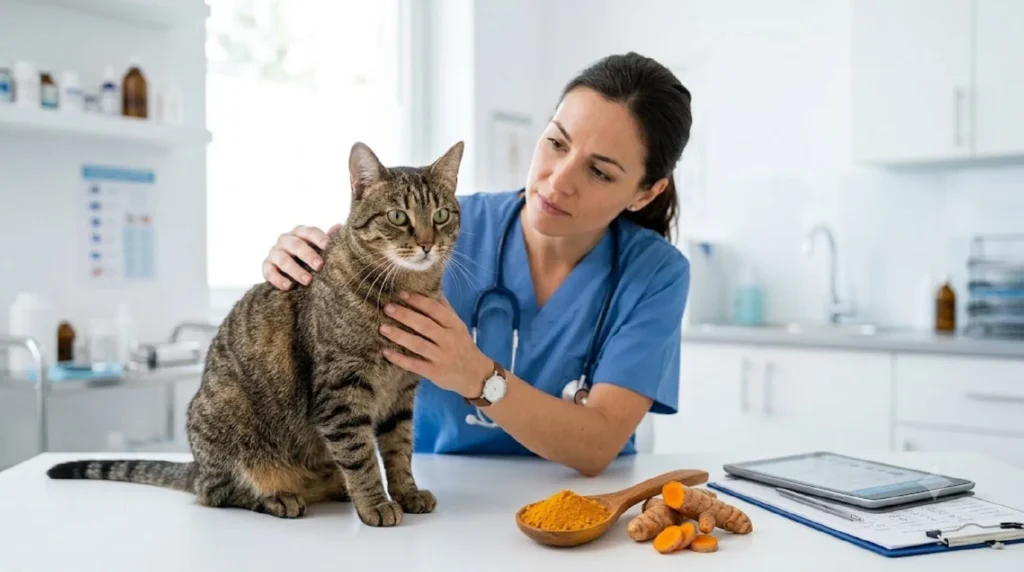
If kneading becomes compulsive, happens constantly regardless of context, or is paired with signs of distress, it’s worth paying closer attention, as it can occasionally point to underlying stress or discomfort.
Normal Kneading vs When to Check In With a Vet
| Normal Kneading | Worth Mentioning to a Vet | |
|---|---|---|
| Frequency | Occasional, situational | Constant, compulsive |
| Body language | Relaxed, purring | Tense, distressed |
| Claws | Extend naturally, no damage to skin | Digging in aggressively, drawing blood |
| Paired behavior | Purring, dozing off | Excessive sucking, self-injury |
Can You Stop a Cat From Kneading?
Why You Shouldn’t Punish Kneading
Kneading is an instinctive, deeply rooted behavior, and punishing a cat for it can create anxiety without actually stopping the habit.
How to Redirect Kneading With Claws
Keeping a thick blanket nearby to place over your lap before your cat settles in gives it a designated surface to knead without claws catching your skin.
Trimming Claws and Using a Blanket Barrier
Regular nail trims, combined with the blanket-barrier method, are generally the most effective way to keep kneading comfortable for both of you without discouraging the behavior itself. For more on general handling and comfort, our Scottish Fold cat training guide covers related positive-reinforcement techniques.
FAQ
Still curious about the specifics of why cats knead you? Here are the questions owners search most.
Why do cats knead their owners at night?
It’s usually tied to settling in to sleep, using the same comforting motion a cat would use to prepare a nesting spot.
Why does my cat knead me with claws?
Claws often extend naturally during deep relaxation or excitement, and it isn’t a sign of aggression.
Do cats knead when stressed?
Occasionally, yes, kneading can serve as a self-soothing behavior during moments of stress, similar to how some cats get zoomies as another form of energy release.
Can you stop a cat from kneading?
Not entirely, and it’s not recommended to try. Redirecting the behavior with a blanket and trimmed claws is a better approach than attempting to stop it outright.
Is my cat’s kneading normal?
In the vast majority of cases, yes. Kneading paired with relaxed, content body language is one of the clearest signs of a happy, comfortable cat.
Why do cats knead and purr at the same time?
The combination reflects a especially deep state of contentment, similar to how bunting and purring together signal strong affection.
Conclusion
What Kneading Really Says About Your Bond
So why do cats knead you? At its core, a kneading cat is telling you, in its own instinctive way, that it feels safe, comfortable, and connected to you. The occasional pinch of claws aside, it’s one of the clearest compliments a cat can give.
Related Reads
- Scottish Fold Cat Breed Profile
- Why Do Cats Headbutt You? Bunting Behavior Fully Explained
- Cat Zoomies at Night, Why It Happens and How to Stop It
- Why Does My Cat Sit on Me and What It Really Means
- Stop Cat Kneading: What Actually Works (And What Doesn’t) on Pets Mastery
This article provides general educational information about cat behavior and is not a substitute for professional veterinary advice. If your cat’s kneading changes suddenly or seems compulsive, consult a licensed veterinarian promptly.