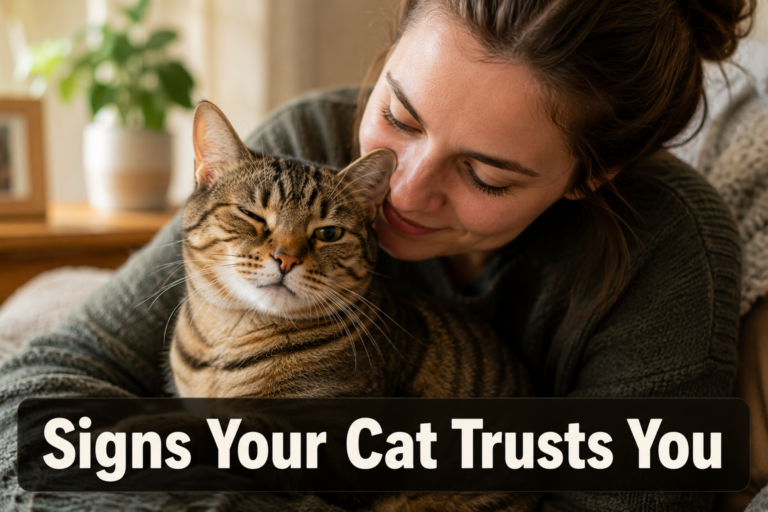


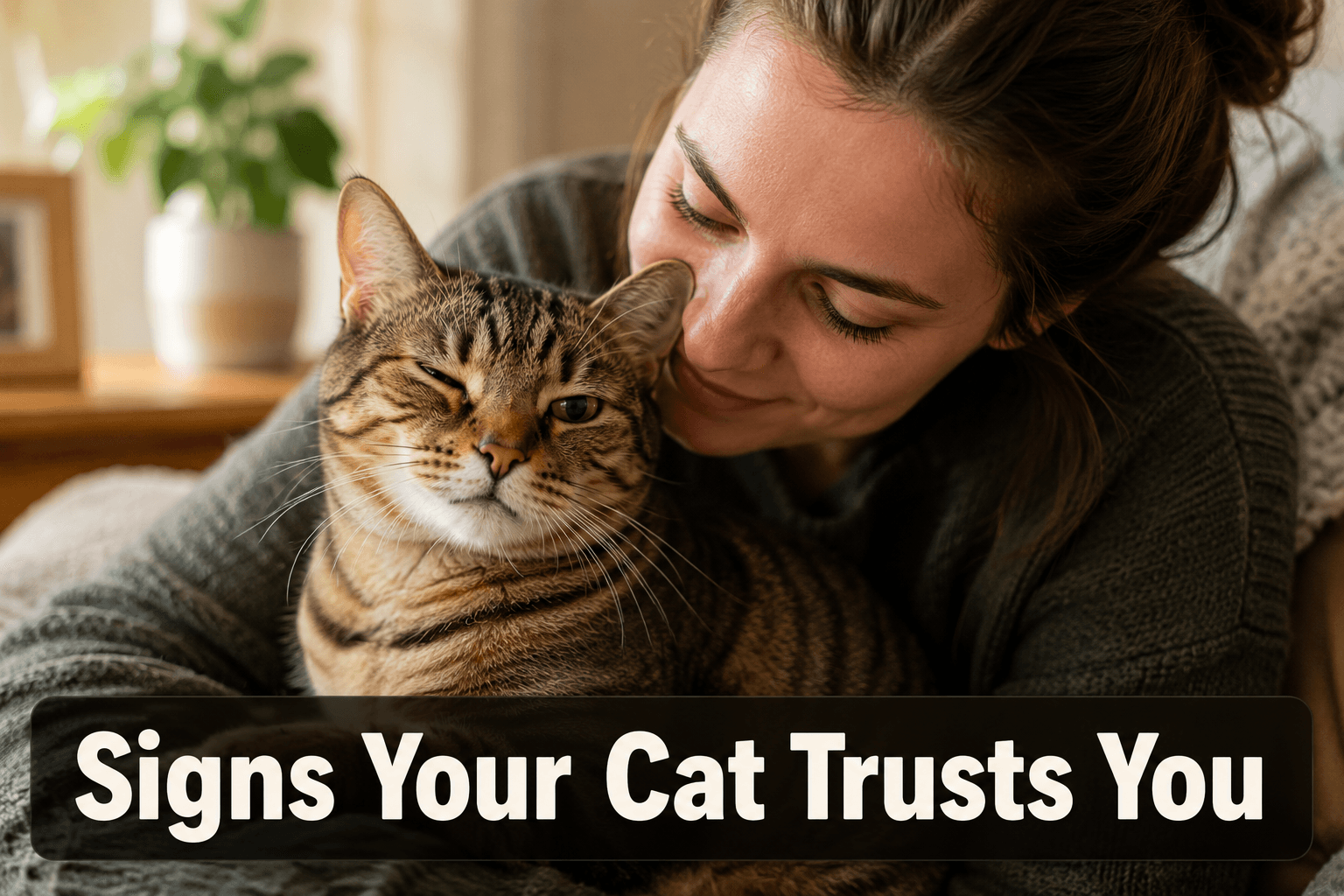
Cats don’t say “I love you” the way dogs do, but they have their own language for it, built from slow blinks, scent marking, and small daily choices. If you’ve ever wondered how do you know if a cat trusts you, the short answer is that trust shows up in dozens of quiet ways long before a cat ever curls up in your lap. Here are 12 real cat trust signs, starting with the ones easiest to miss and working up to the unmistakable ones.
How Do You Know If a Cat Trusts You? (Quick Overview)
Some cat trust signs are loud and obvious, others are so subtle they’re easy to miss entirely. Here’s a fast overview before the full breakdown.
The Short Answer
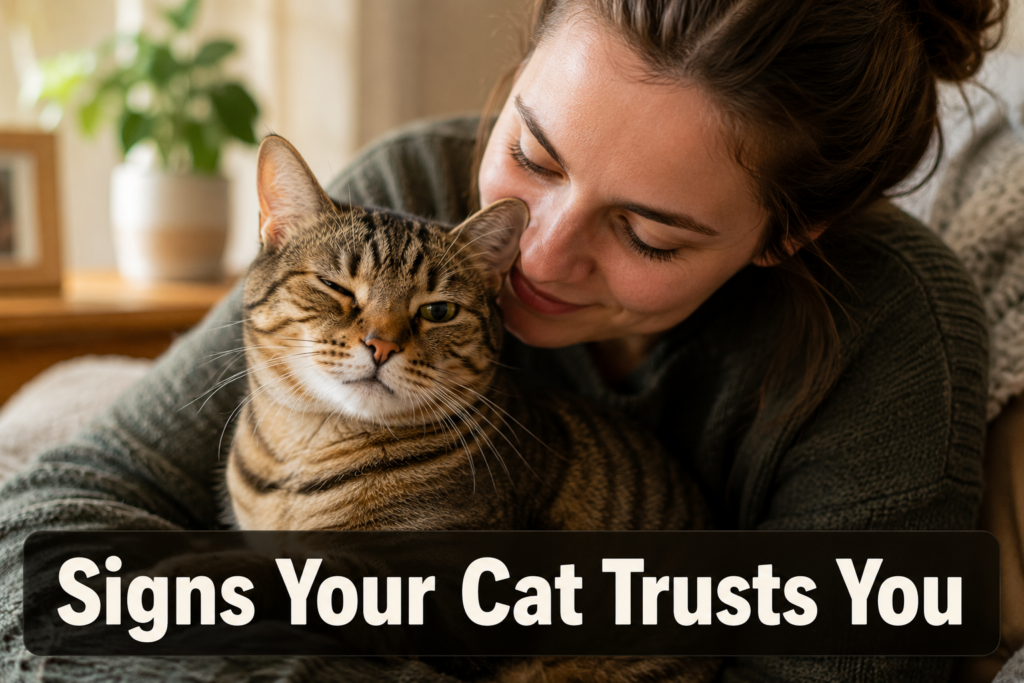
A cat that trusts you will hold soft eye contact, approach you with a raised tail, choose to spend time near you, and tolerate or seek out physical closeness like kneading, headbutting, or sleeping nearby. These behaviors build gradually, and the more of them you see together, the stronger the bond.
Quick-Reference Table
Use this table as a fast cheat sheet for the most common cat trust signs before reading the full breakdown below.
| Sign | What It Means |
|---|---|
| Slow blink | Relaxed, feels safe with you |
| Upright, quivering tail | Excited, happy to see you |
| Kneading | Comfort, leftover kitten instinct |
| Headbutting | Marking you with trusted scent |
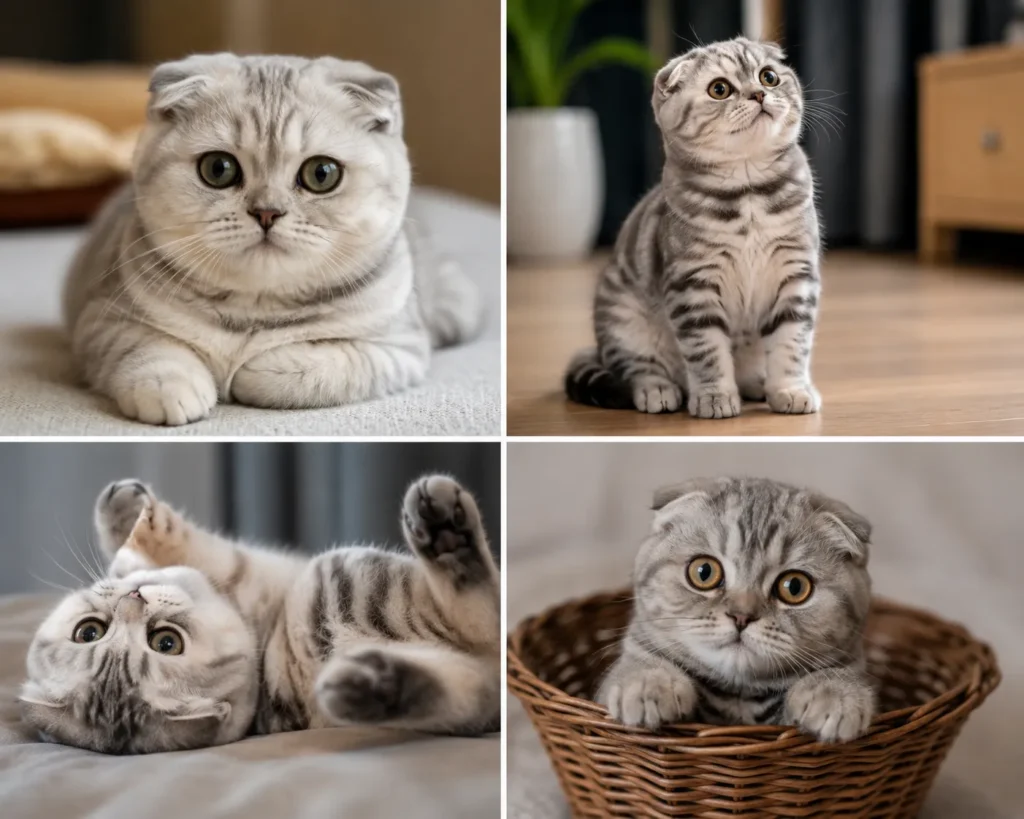
| Belly exposed | Deep physical vulnerability, trust |
| Bringing gifts | Sharing resources, social bonding |
| Sleeping near you | Feels safe enough to be vulnerable |
Subtle Signs of Cat Trust (Easy to Miss)
These early cat trust signs are quiet, and it’s easy to overlook them if you’re only watching for the obvious ones.
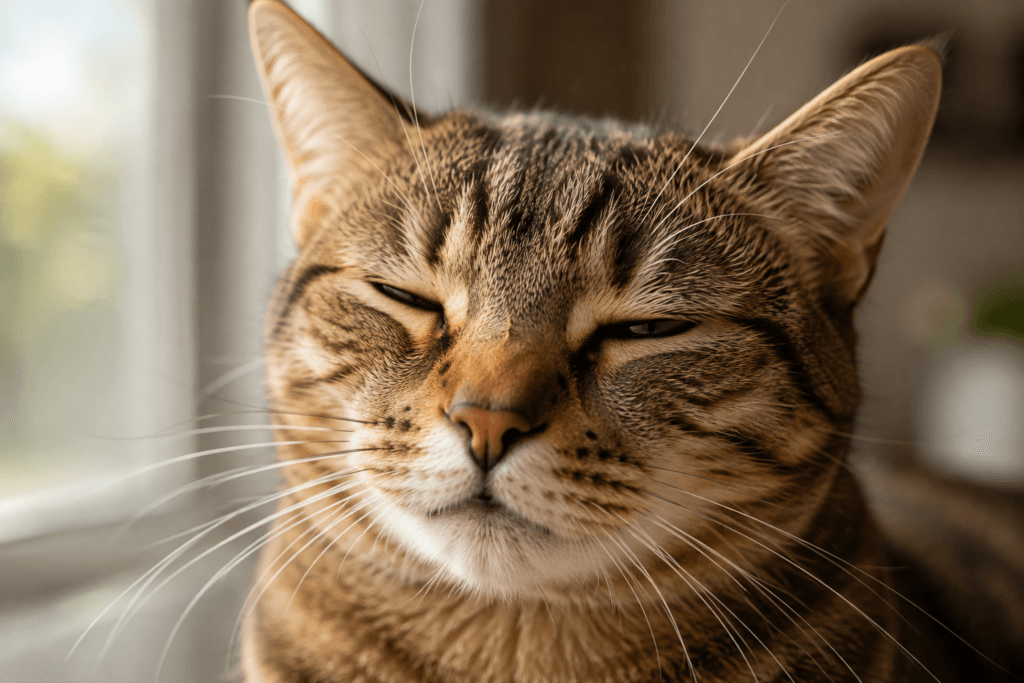
The Slow Blink (“Cat Kiss”)
A slow, deliberate blink, especially paired with relaxed body language, is one of the clearest quiet signals of trust a cat can give. Blinking slowly back tends to be read as a friendly response in return.
Soft, Relaxed Eye Contact
Held eye contact from a tense, dilated-pupil cat is very different from soft, half-closed eye contact. The relaxed version signals comfort rather than alertness.
A Tail Held Upright and Quivering
An upright tail, sometimes with a slight quiver at the tip, is generally a sign of genuine excitement and pleasure at seeing you.
Choosing to Sleep Near You (Not Necessarily On You)
Sleep is a vulnerable state for any animal, so a cat that chooses to nap nearby, even without being right on top of you, is making a quiet statement about how safe it feels in your presence.
Everyday Signs of Cat Trust
Beyond the subtle cues, these cat trust signs show up in your everyday routine together.
Greeting You at the Door
A cat that comes running when you get home, rather than watching cautiously from a distance, is showing you it feels secure in its territory and glad you’re back in it.
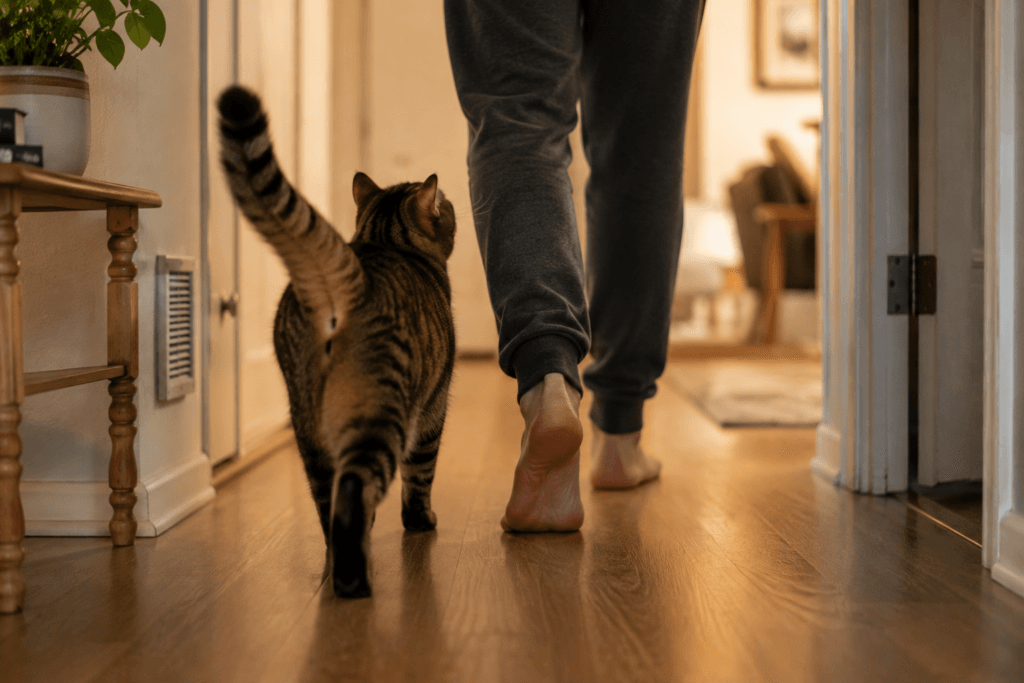
Following You From Room to Room
Cats have a reputation for independence, but a cat that consistently follows you around the house is choosing your company over solitude, which is a meaningful signal on its own.
Grooming You (Allogrooming)
Mutual grooming, called allogrooming, is something cats typically reserve for bonded companions. A cat that licks or grooms you is treating you as part of its social circle.
Chatty Meows and Trills
Cats mostly communicate with each other through body language and scent rather than sound, so a cat that greets you with enthusiastic meows or soft chirping trills is making a real effort to communicate directly with you.
Obvious, Unmistakable Signs of Cat Trust
By this point, the cat trust signs stop being subtle altogether.
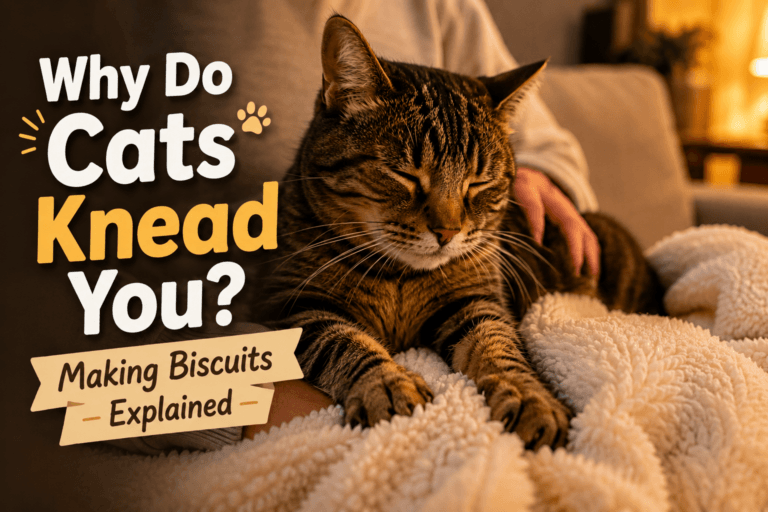
Kneading You
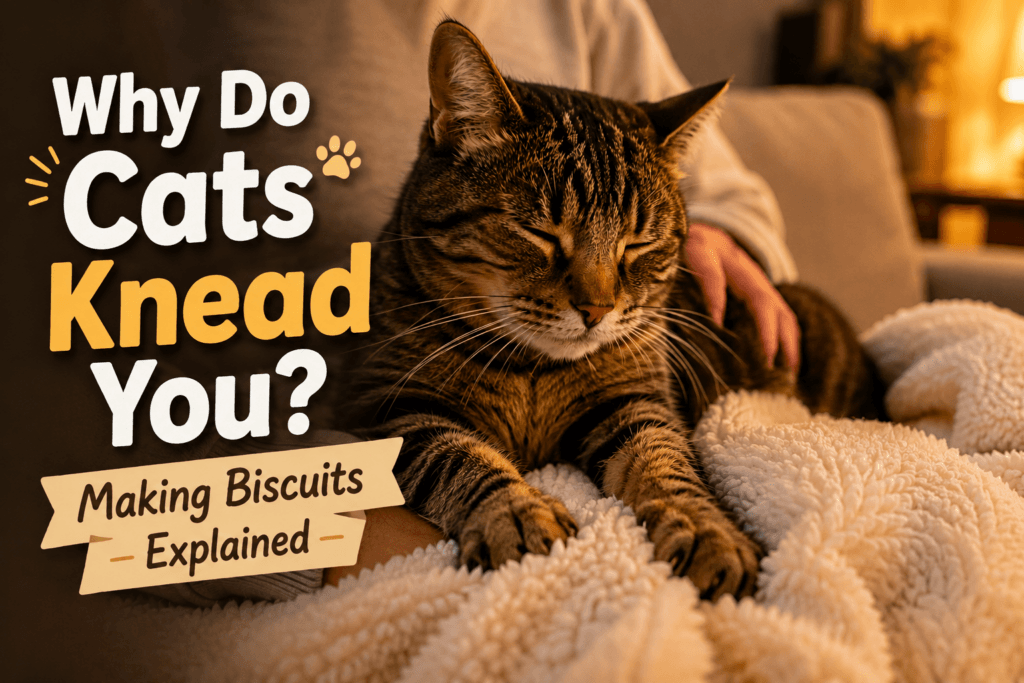
Kneading you is one of the clearest trust signals a cat gives, so much so that it deserves its own full breakdown, along with the claws-out version and what to actually do about it, which we cover in Why Do Cats Knead You?
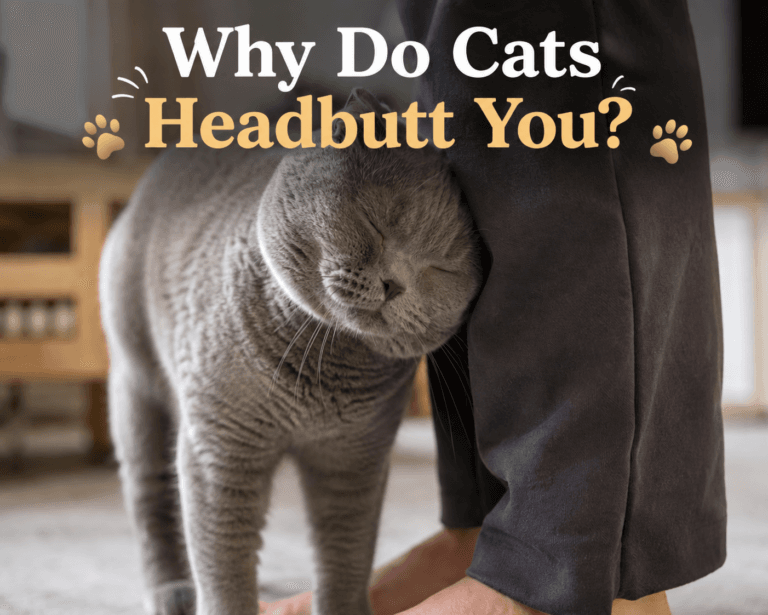
Headbutting and Bunting
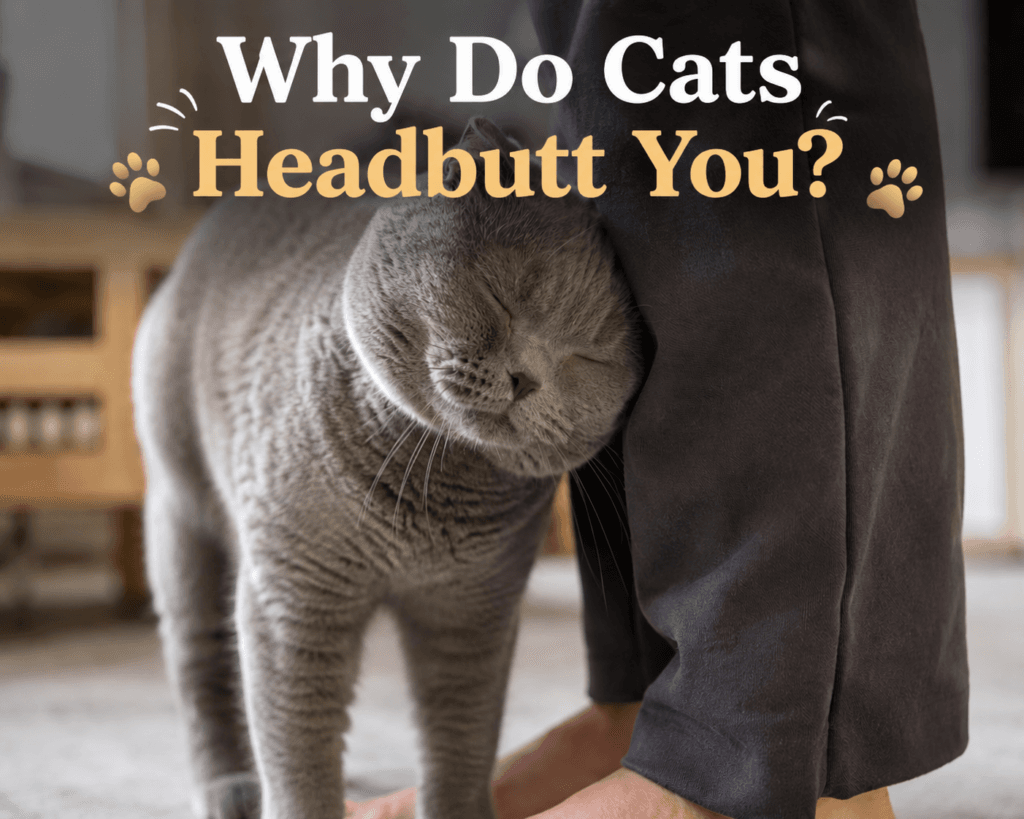
Headbutting works the same way, marking you with facial scent glands the same way kneading marks you with paw-pad scent, both are forms of the same trust language. Our full guide on why cats headbutt you breaks down every version of this behavior, including what it means when it happens with a bite attached.
Showing You Their Belly
A cat’s stomach is one of its most physically vulnerable areas. Exposing it in front of you, even without wanting a belly rub, is a strong statement of comfort and trust.
Bringing You “Gifts”
Whether it’s a toy or, less charmingly, something they’ve hunted, a cat presenting you with a “gift” is treating you the way it would treat a trusted member of its own social group.
Backing Their Bottom Toward You (Scent Sharing)
It’s not the most glamorous sign on this list, but cats have scent glands near their tail base, and backing toward you to share that scent is a genuine trust behavior, not rudeness.
How Long Does It Take a Cat to Trust You?
Timing is one of the most common questions behind cat trust signs, and the honest answer depends heavily on your cat’s history.
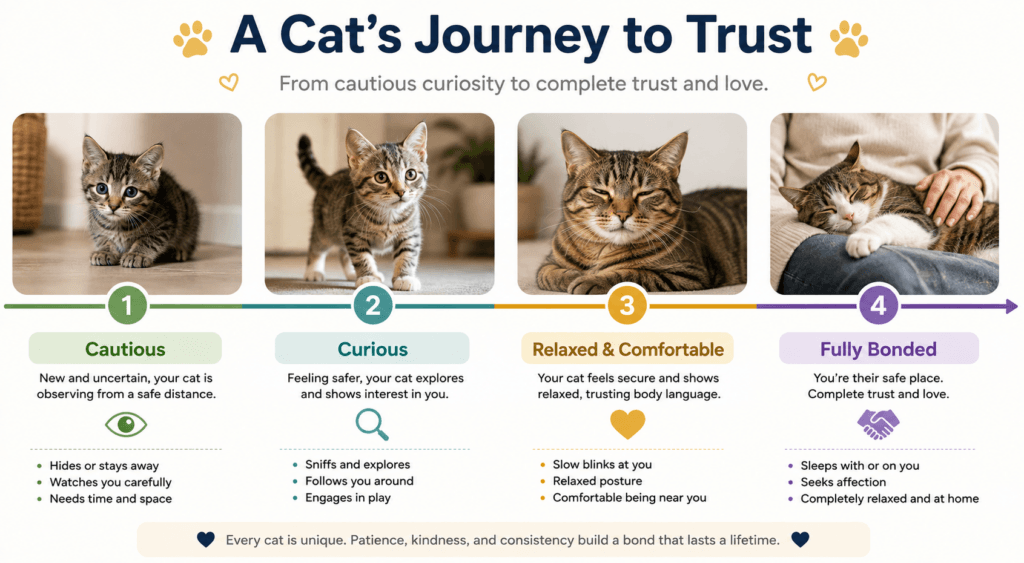
The First Few Days, Building Basic Comfort
In the first few days, most cats are simply observing, learning your routines, your voice, and your movements, without necessarily showing overt affection yet.
The First Few Weeks, Early Trust Signals
Within the first few weeks, many cats begin offering early signals like slow blinks, sitting nearby, or approaching for a sniff or brief pet.
Months to Full Bonding (Rescue and Shy Cats)
For rescue cats, shy cats, or cats with a difficult background, full trust can take several months of consistent, low-pressure interaction rather than weeks.
Timeline Summary Table
| Stage | Typical Timeframe | What You Might See |
|---|---|---|
| Initial observation | Days 1 to 7 | Watching from a distance, cautious approach |
| Early trust signals | 2 to 6 weeks | Slow blinks, sitting nearby, brief contact |
| Established bond | 2 to 3 months | Kneading, headbutting, sleeping near you |
| Deep trust (rescue or shy cats) | 3 to 12 months | Full relaxation, belly exposure, following you |
Signs Your Cat Doesn’t Trust You Yet
Just as there are clear cat trust signs, there are equally clear signs that trust isn’t there yet.
Hiding or Avoiding Eye Contact
A cat that consistently hides when you enter a room, or avoids eye contact altogether, is generally still in the early stages of building comfort with you.
Flattened Ears or a Puffed Tail
These are classic stress signals rather than trust signals, and they usually mean a cat needs more space, not more attention.
Refusing Food or Treats From Your Hand
A cat that won’t take food directly from your hand, even when it’s clearly hungry, is often signaling that it isn’t fully comfortable with close contact yet.
What to Do If Your Cat Seems Distant
Sometimes distance isn’t about trust at all. If your cat suddenly seems restless or is bursting with pent-up energy instead of affection, it might just need an outlet, and if that’s the pattern you’re seeing, our sister site has a useful companion read on it:
Do Some Cats Trust Faster Than Others?
Not every cat reaches the same cat trust signs on the same schedule, and a few real factors explain why.
Which Gender of Cat Is More Cuddly? (Addressing the Myth)
There’s no strong scientific evidence that one gender is consistently more affectionate than the other. Individual personality, early socialization, and breed tend to matter far more than whether a cat is male or female.
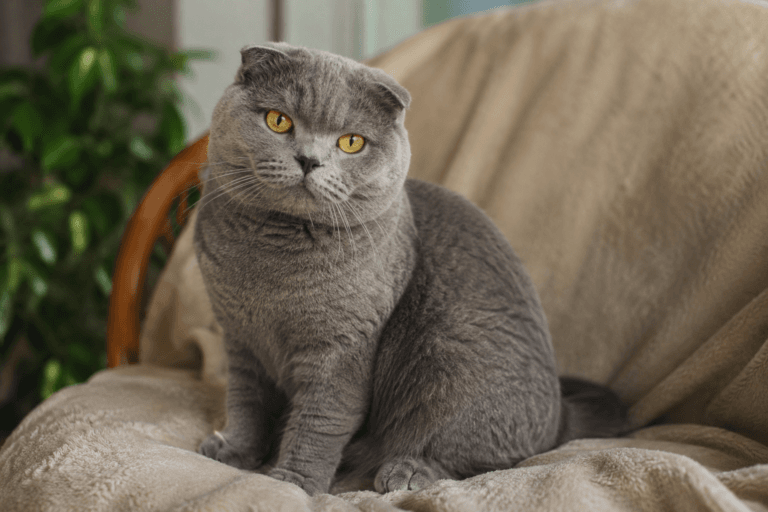
Do Certain Breeds Bond Faster? (Scottish Fold Example)
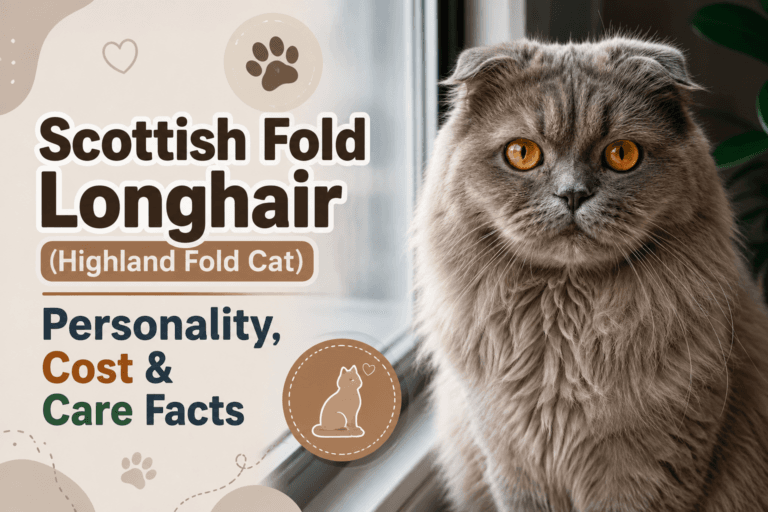
Some breeds do have a reputation for bonding quickly. Scottish Folds, for example, are known for bonding closely with a single household, largely because of their people-oriented temperament, something we cover in more depth in our Scottish Fold breed profile.
Kittens vs Adult Cats vs Rescue Cats
Kittens often warm up faster simply because they haven’t developed caution yet, while adult cats and rescues, particularly those with an unknown history, may need more time and patience before trust fully sets in.
How to Build Trust With Your Cat Faster
If you’d like to see more of these cat trust signs sooner rather than later, a few habits genuinely speed up the process.
Let Them Approach First
Letting a cat initiate contact, rather than reaching for it first, tends to build trust faster than any other single habit.
Use Slow Blinks Back
Returning a slow blink is a simple, low-effort way to communicate calm intent in a language your cat already understands.
Consistent Feeding and Play Routines
Predictable routines around food and play help a cat feel secure, which is often the real foundation trust is built on. If you’re working on trust-building through structured play, this pairs well with basic training fundamentals covered in our Scottish Fold cat training guide.
Avoid Forcing Physical Contact
Picking up or restraining a cat before it’s ready almost always slows down the process rather than speeding it up.
FAQ
How do you know if a cat trusts you?
A trusting cat typically shows relaxed body language, slow blinks, and voluntary closeness, like sitting near you, kneading, or sleeping nearby.
Can cats sense a good person?
Cats are highly attuned to tone of voice, body language, and consistency, which means they often respond well to calm, predictable people, though it’s more about behavior patterns than some innate ability to judge character.
What is the highest form of affection from a cat?
Many behaviorists point to a cat sleeping on or right next to you as one of the highest forms of trust, since sleep is when an animal is at its most physically vulnerable.
How long until a cat trusts you?
Early signals can appear within a few weeks, while full trust, especially in rescue or shy cats, can take anywhere from a few months up to a year.
How to tell if a cat chooses you?
A cat that consistently seeks you out over other people or resting spots, follows you around, and initiates contact is showing a clear preference for your company.
Can cats sense if a person is bad?
There’s no evidence cats can detect moral character, but they are very sensitive to tension, loud noises, and inconsistent behavior, which can make them wary of certain people without it being a judgment of “good” or “bad.”
Which gender of cat is more cuddly?
Neither gender is consistently more affectionate. Personality, early experiences, and breed tend to have a much bigger impact than whether a cat is male or female.
How do you say “I love you” in cat body language?
A slow blink, paired with relaxed posture and a raised tail, is generally considered the closest thing to “I love you” in feline communication.
Conclusion
Every Cat Shows Trust Differently
Some cats announce their trust loudly, with headbutts and gifts and full-body flops onto your lap. Others show it quietly, through a slow blink from across the room or a tail that lifts just a little higher when you walk in. Neither version is less real, and learning to read your own cat’s particular cat trust signs is often the fastest way to build even more of it.
Related Reads
- Why Do Cats Knead You? (Making Biscuits Explained)
- Why Do Cats Headbutt You? Bunting Behavior Fully Explained
- Cat Zoomies at Night, Why It Happens and How to Stop It
- Why Does My Cat Sit on Me and What It Really Means
- Scottish Fold Cat Breed Profile
For additional expert perspective on feline bonding, see Cats Protection’s guide on understanding your cat.
This article provides general educational information about cat behavior and is not a substitute for professional veterinary or behavioral advice. If your cat shows sudden, persistent signs of fear or aggression, consult a licensed veterinarian or certified cat behaviorist.