


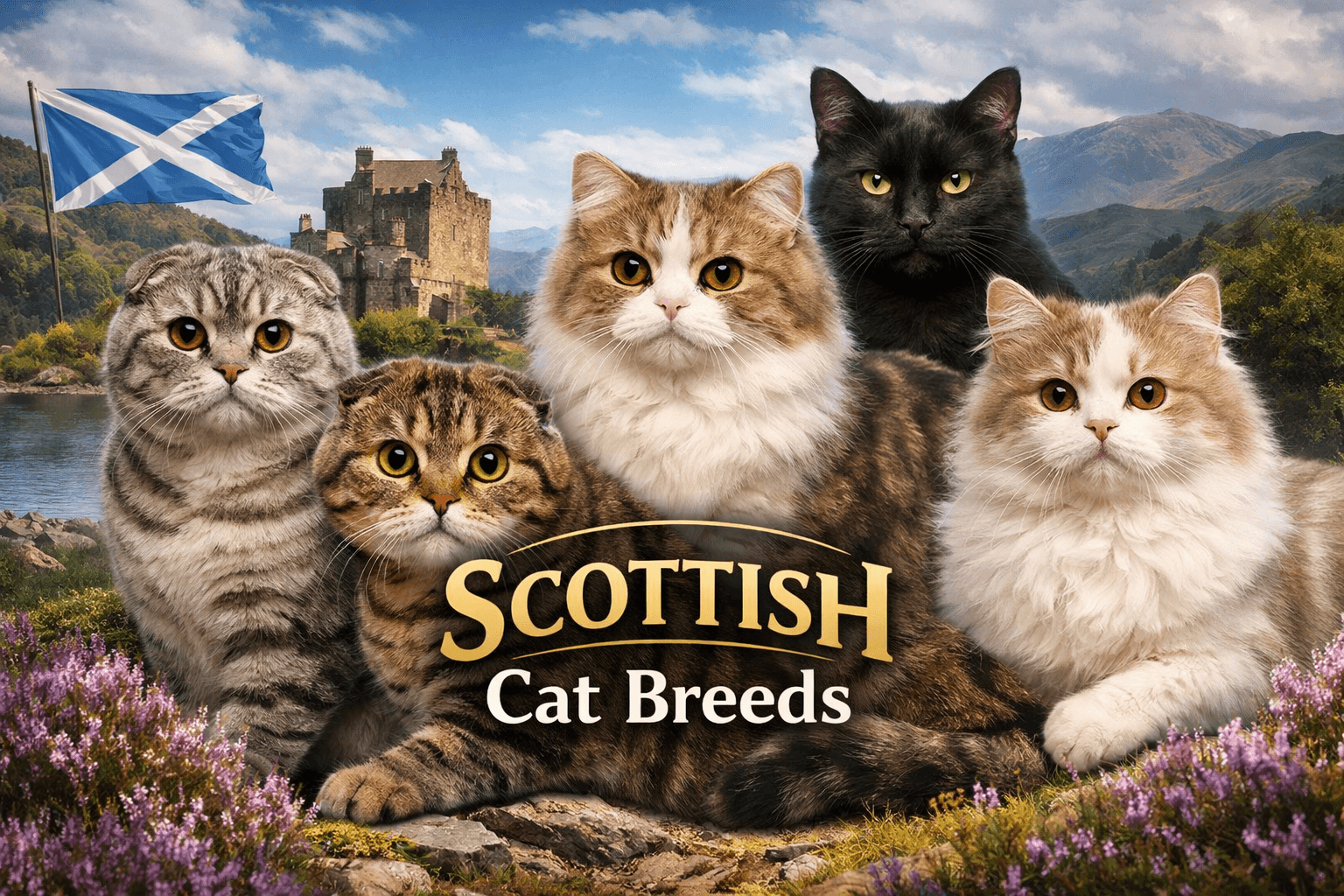
Discover all Scottish cat breeds from the iconic Scottish Fold to the lesser-known Scottish Straight and Kelle’s Cat. Learn their traits, temperament, health, and care tips.
Scotland is home to four officially recognized cat breeds the Scottish Fold, Scottish Fold Longhair, Scottish Straight, and Scottish Straight Longhair all recognized by TICA (The International Cat Association). A fifth, the Kellas Cat, is a rare wild hybrid native to the Scottish Highlands. This guide covers every Scottish cat breed in full detail: appearance, temperament, health risks, and what UK and US owners need to know before bringing one home.
Scotland has given the world some of the most beloved and distinctive cat breeds in existence. When most people hear “Scottish cat breeds,” the Scottish Fold instantly comes to mind that owl-faced, folded-ear cat that took the internet by storm. But Scotland’s contribution to the cat world goes deeper than one viral breed. From the straight-eared Scottish Straight to the near-mythical Kellas Cat found in the Moray Highlands, these breeds carry a character as rugged and charming as Scotland itself.
This guide covers every recognized Scottish cat breed in full detail, what makes each one unique, and answers the most common questions cat owners in the UK and US ask when researching Scottish cat breeds. Whether you are thinking of bringing one home or simply want to know more, this is the most complete overview you will find.
How Many Scottish Cat Breeds Are There?
There are 4 to 5 Scottish cat breeds, depending on whether you include wild or unregistered hybrids. According to TICA (The International Cat Association), the Scottish Breed Group officially contains four breeds: the Scottish Fold (shorthair), Scottish Fold Longhair, Scottish Straight (shorthair), and Scottish Straight Longhair. Beyond TICA’s registry, the Kellas Cat a natural wildcat hybrid native to Scotland is sometimes discussed as a fifth type, though it is not a domestic breed.
All four TICA-recognized Scottish cat breeds share the same foundation: a round, medium-sized build, calm temperament, and family-friendly personality. The key differences come down to ear shape (folded vs. straight) and coat length (short vs. long).
1. Scottish Fold
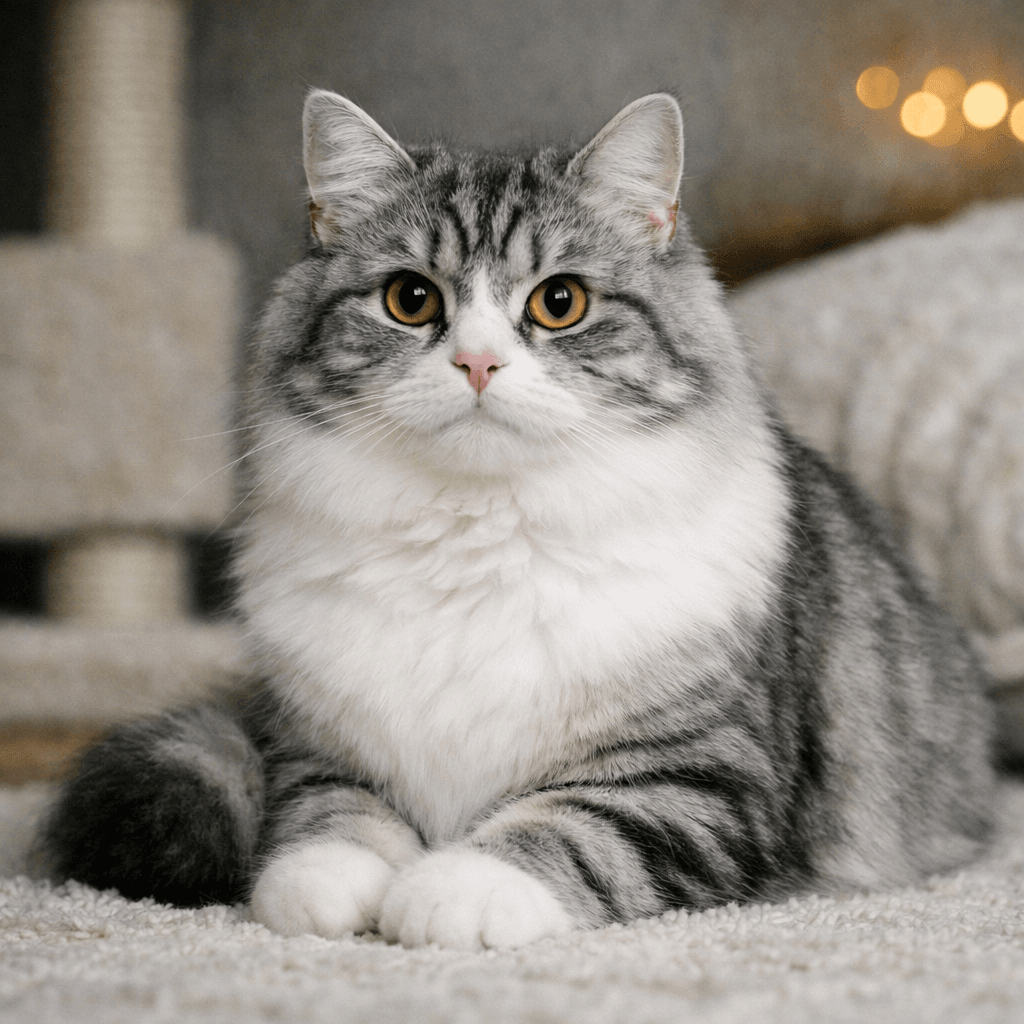
The Scottish Fold is the most famous of all Scottish cat breeds and the breed that started it all. Its story begins in 1961, when a Scottish shepherd named William Ross discovered a barn cat named Susie on a farm in Perthshire. Susie carried a spontaneous genetic mutation that caused her ears to fold forward and downward, sitting flat against her head and giving her an unmistakably owl-like expression. Every Scottish Fold alive today traces its ancestry back to Susie.
The folded ear is caused by an incomplete dominant gene. Kittens are born with straight ears the fold only appears between 18 and 24 days of age, and only in roughly 50% of each litter. The remaining 50% are born with straight ears and are registered as Scottish Straights.
Appearance: The Scottish Fold is round in every sense round head, round wide-set eyes, round compact body, and rounded paws. Their large, expressive eyes and small folded ears create a permanently sweet, kitten-like expression that lasts their entire life. Coat colors and patterns span almost every combination, including tabby, solid, bicolor, and colorpoint.
Temperament: Scottish Folds are intelligent, inquisitive, and deeply loyal to their families. They follow owners from room to room, rarely content to be left alone in another part of the house. They are famously known for sitting upright on their haunches in what breeders call “the Buddha sit” balanced on their tailbone, front paws resting on their belly, looking completely unbothered. They are calm, generally quiet, and get on well with children, other cats, and cat-friendly dogs.
Health Considerations: The same gene responsible for the folded ears can cause osteochondrodysplasia a painful degenerative condition affecting the joints and cartilage particularly when two fold-eared cats are bred together. This is why responsible breeders always pair a Fold with a Straight to minimize this risk. Scottish Folds are also monitored for hypertrophic cardiomyopathy (HCM) and polycystic kidney disease (PKD). Always buy from a breeder who provides documented veterinary screening and genetic test results for these conditions. The International Cat Care organization provides detailed guidance on hereditary health testing for the breed.
Care: Their dense, plush shorthair coat needs a weekly brush to remove loose hair and prevent matting. They are not a high-energy breed, so regular structured play puzzle feeders, wand toys, interactive games is important to maintain a healthy weight and keep their joints active. Scottish Folds can be taught to fetch and respond to their names reliably. For a full daily care plan, see our guide on Scottish Fold Cats Care and Grooming.
Are Scottish Fold Cats Rare? Scottish Folds are not globally rare reputable breeders exist across the UK, US, Australia, and many other countries. However, finding a genuinely healthy Fold from an ethical breeder who conducts full health screening is significantly harder. In Scotland itself, breeding regulations have tightened due to welfare concerns over the fold gene, making locally bred Folds comparatively rare. A properly health-tested Scottish Fold from a responsible breeder is rarer than the breed’s overall popularity suggests.
2. Scottish Fold Longhair
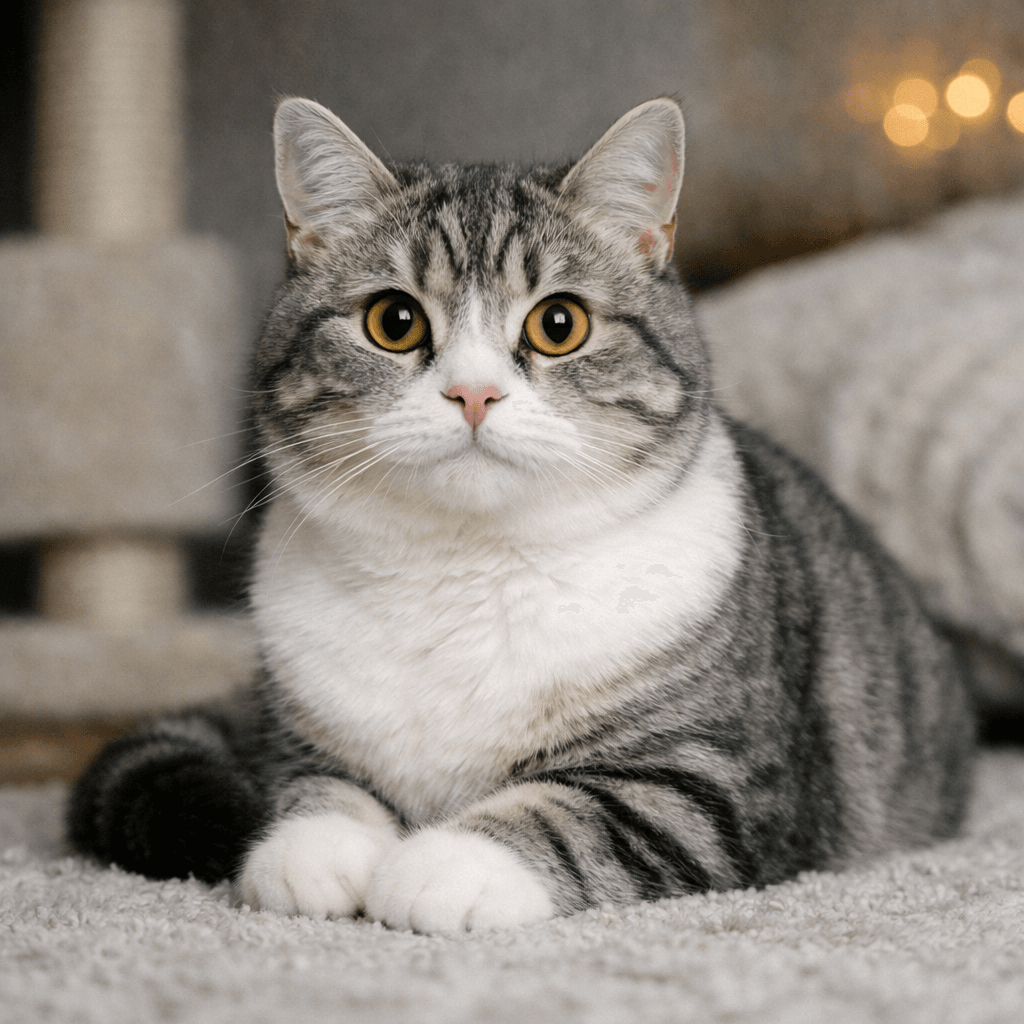
The Scottish Fold Longhair is the second of the four recognized Scottish cat breeds in TICA’s Scottish Breed Group. It is identical to the shorthaired Scottish Fold in every respect same temperament, same round build, same health profile, same folded ear gene except for one thing: its coat.
Appearance: The longhair coat is semi-long and stands slightly away from the body, giving the cat a softer, slightly more regal look than its shorthaired sibling. The full tail and leg furnishings are especially notable longhaired Folds have a flowing plume-like tail and feathering on the back legs. All colors and patterns recognized for the shorthaired Fold are also recognized in the longhair.
Temperament: Identical to the Scottish Fold calm, affectionate, loyal, and moderately playful. Scottish Fold Longhairs are well-suited to households where they will receive daily company and gentle interaction. They are not demanding or vocal but prefer not to be left alone for extended periods.
Health Considerations: The health risks are the same as the shorthaired Fold osteochondrodysplasia if bred Fold-to-Fold, plus HCM and PKD risks that apply to all Scottish breeds. The longhaired coat does not add any additional health concerns but does require more active management to prevent matting, especially behind the ears and under the armpits.
Care: Longhaired Folds benefit from combing three to four times per week, especially during spring and autumn shedding seasons. Monthly bathing helps keep the coat clean and reduces loose hair buildup. The diet and nutrition needs are identical to the shorthaired Fold a complete breakdown of what to feed is available in our Scottish Fold Cat Diet Guide.
3. Scottish Straight
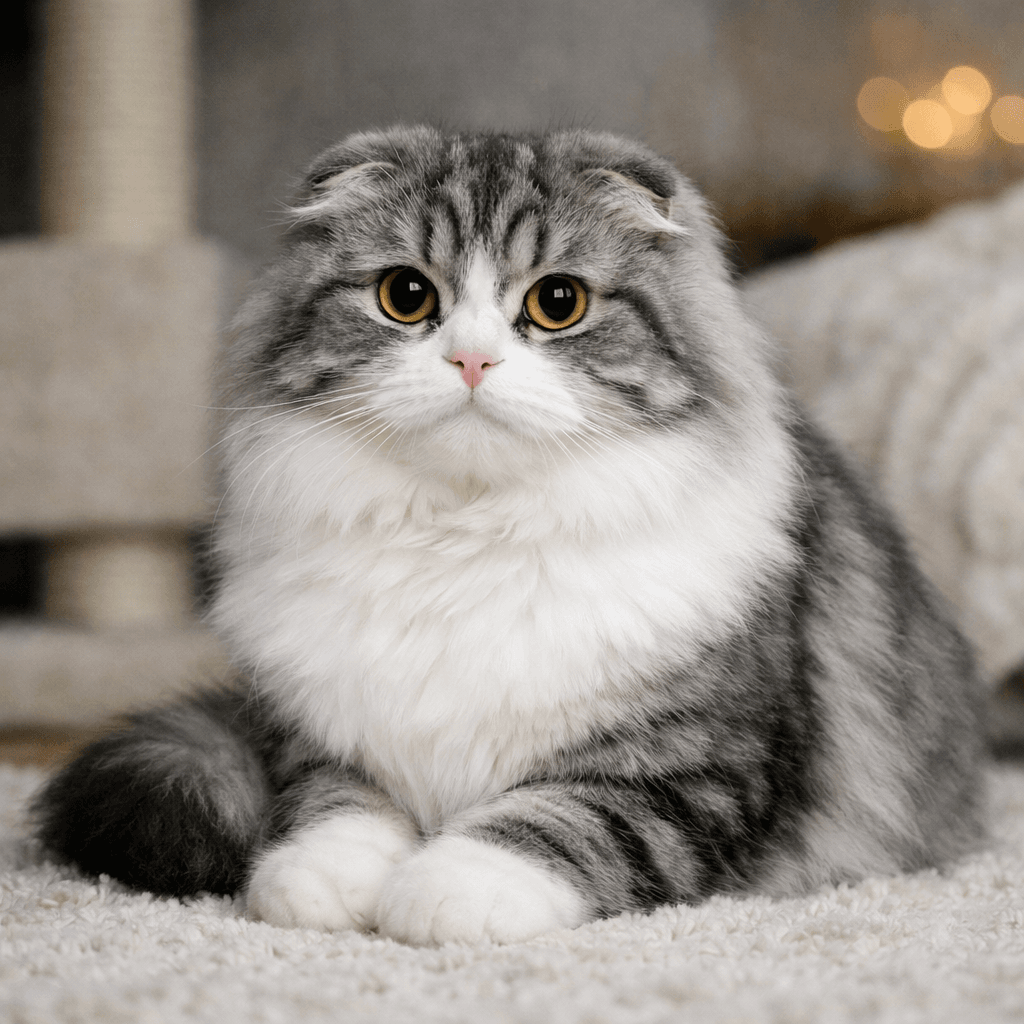
The Scottish Straight is the most underappreciated of all Scottish cat breeds. It is the straight-eared sibling of the Scottish Fold, born naturally in the same litters. Because roughly half of every litter born to a Fold parent carries normal, upright ears, the Scottish Straight is both a natural result of responsible breeding and a fully recognized breed in its own right.
TICA recognizes the Scottish Straight in both shorthair and longhair varieties. They come in all colors and patterns of the Traditional and Pointed Divisions. Eye colors range widely, with copper being the most common.
Appearance: The Scottish Straight looks nearly identical to the Scottish Fold in body structure the same round head, wide-set eyes, compact medium build, and rounded feet. The only visible difference is the ears, which stand upright in a slightly forward-tilted, alert position. This gives the Straight a slightly more traditional cat look compared to the Fold’s owl-like expression.
Temperament: Expect a cat that is playful, affectionate, and moderately laid-back. Scottish Straights love human company and are known to follow their owners around the house with the same quiet loyalty as the Fold. They prefer having all four paws on a solid surface rather than being carried, and they respond very well to interactive play and basic training. Our Scottish Fold Cat Training Guide covers techniques that work equally well for Scottish Straights.
Health Considerations: The Scottish Straight carries none of the joint risks associated with the fold gene. This is a significant practical advantage for owners concerned about osteochondrodysplasia. They are still prone to HCM and PKD the same health screening that applies to Folds applies to Straights but the skeletal concerns specific to the fold mutation do not apply, making them one of the healthiest options among Scottish cat breeds.
Scottish Fold vs. Scottish Straight Which Is Right for You? If you love the round build and calm Scottish temperament but want to avoid the fold gene health risks entirely, the Scottish Straight is the better choice. Both breeds have identical personalities. The Straight is also generally easier to find from ethical breeders precisely because they are produced in every Fold litter and their lower public profile means prices are often more reasonable.
4. Scottish Straight Longhair
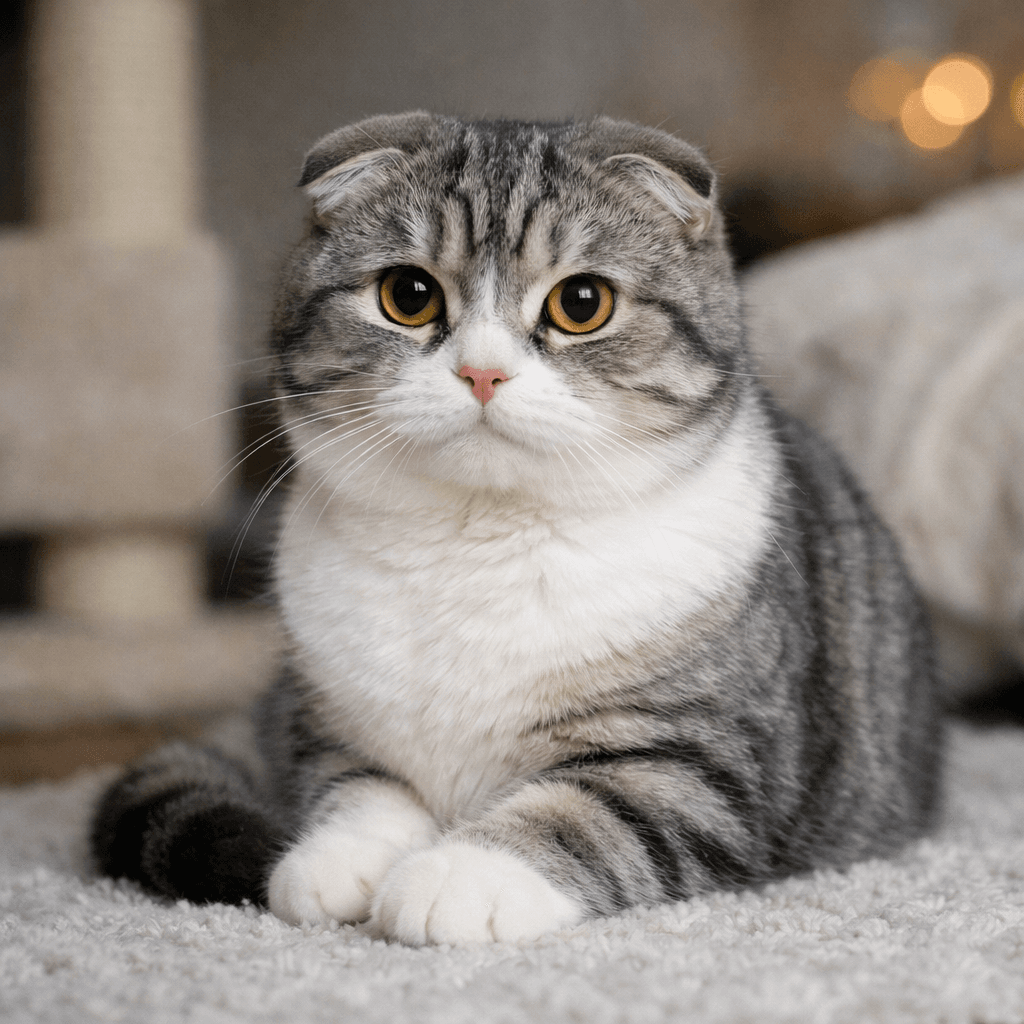
The Scottish Straight Longhair rounds out TICA’s four officially recognized Scottish cat breeds. Like its shorthaired counterpart, it has upright ears, a round medium build, and the same calm, curious temperament shared by all Scottish breeds. The difference lies entirely in the coat.
Appearance: The semi-long coat stands slightly away from the body similar in texture and volume to the Scottish Fold Longhair. Tail and leg furnishings are full and flowing. All coat colors and patterns recognized in the shorthaired Straight are also recognized in the longhair variety. Eye color ranges from copper and gold to green and odd-eyed combinations.
Temperament: Calm, intelligent, and affectionate. Scottish Straight Longhairs are excellent family cats and adapt well to both active households and quieter homes. Like all Scottish breeds, they prefer company over solitude but are not overly clingy or vocal.
Health Considerations: No fold gene risks apply. HCM and PKD screening is still recommended, as these conditions appear across all Scottish breed lines. Regular grooming prevents skin issues that can develop under a dense coat matting behind the ears and along the flanks is the most common concern.
Care: Longhaired Straights shed more noticeably during seasonal changes. A quality diet supporting coat and joint health is particularly important our guide to the best dry food for Scottish Fold cats provides guidance that applies equally well to all Scottish longhair varieties.
5. The Kelle’s Cat
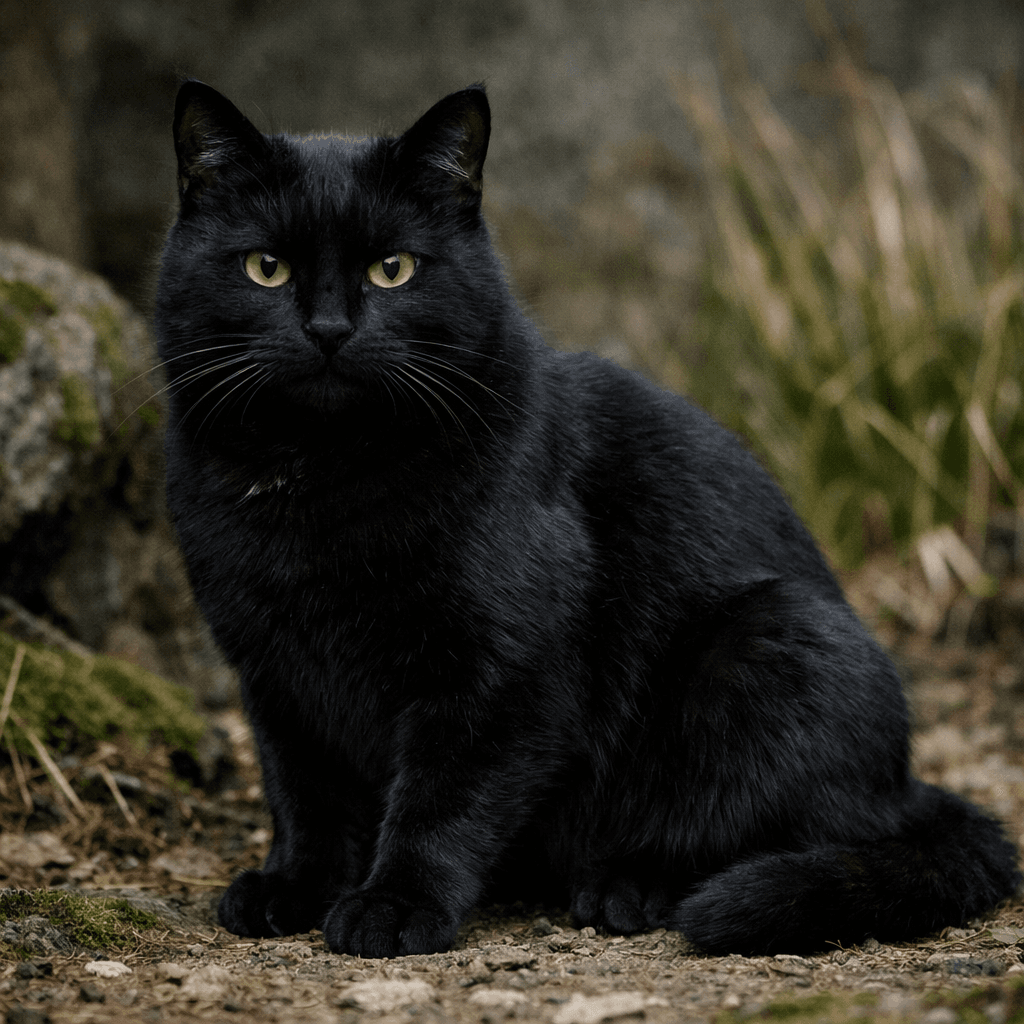
The Kellas Cat is not a registered domestic breed, but it deserves a place in any complete discussion of Scottish cat breeds. It is a natural hybrid between the Scottish Wildcat (Felis silvestris grampia) and feral domestic black cats. First formally documented in the village of Kellas, in Moray, Scotland, in 1984, the Kellas Cat is noticeably larger than a domestic cat, entirely black, and carries a distinctly semi-wild temperament.
Appearance: The Kellas Cat is substantially larger and longer-legged than a typical domestic cat, with a lean, muscular build built for hunting. Its coat is entirely black no markings and shorter than most domestic shorthairs. The face is narrower and more angular than any domestic Scottish breed, and the ears are upright and pointed.
Temperament and Status: The Kellas Cat is not kept as a pet and does not tame reliably. It is a wild hybrid that exists on the margins of human habitation in parts of the Scottish Highlands and Moray. Its significance lies in what it tells us about the survival of wildcat genetics in Scotland and it is part of the reason Scottish cat diversity extends beyond what any official registry documents.
Are Scottish Cats Smart?
Yes Scottish cat breeds are considered intelligent and highly trainable among domestic cats. TICA describes both the Fold and Straight as “inquisitive” and “intelligent.” Many owners report that Scottish cats learn to open cabinet doors, play fetch, come when called by name, and solve puzzle feeders quickly.
Scottish cats are clever in the way cats are clever observant, routine-aware, and fast to pick up on patterns. They are not as hyperactively curious as a Bengal or Abyssinian, but among calm, family-friendly breeds, they rank comfortably above average in trainability and problem-solving engagement. This makes them ideal for owners who want an interactive cat without the constant high-energy demands of working breeds.
What Cat Has the Most IQ?
No standardized feline IQ test exists, but behavioral researchers and veterinary behaviorists generally consider the Abyssinian, Siamese, and Bengal to be the most cognitively active domestic cat breeds. These breeds demonstrate strong problem-solving ability, rapid trick-learning, and high curiosity in unfamiliar environments.
Scottish cats sit solidly in the middle-to-upper range of feline intelligence. They are more interactive and trainable than many calm, low-energy breeds, but the hyperactive curiosity of a Bengal is a different experience entirely. For owners who want a trainable cat that is also calm and child-friendly, a Scottish Fold or Scottish Straight is often a more practical choice than the highest-energy options. You may also find our list of 10 Best Cat Breeds for First-Time Owners useful, which covers the most adaptable and family-friendly breeds across all types.
Which Cat Breed Is Most Lazy?
The Persian is widely considered the lowest-energy domestic cat breed. Persians prefer lounging over almost any physical activity and can sit contentedly in the same spot for hours, requiring very little mental or physical stimulation compared to active breeds.
Other notably low-energy breeds include the Ragdoll and British Shorthair. Scottish Folds and Straights lean toward the calmer end of the spectrum TICA notes they are “not as energetic as other breeds” but they still need daily interactive play to maintain a healthy weight and keep their joints in good condition, especially Folds.
If you want a relaxed, low-maintenance companion, any Scottish cat breed sits comfortably between a hyperactive Abyssinian and a truly sedentary Persian. They are calm without being indifferent.
What Is the Least Wanted Cat Color?
Black cats have historically faced the lowest adoption rates in UK and US shelters a trend consistently documented by animal welfare organizations for decades. The reasons are partly cultural (historical superstitions around black cats) and partly practical: black cats photograph less distinctively on shelter websites, making them appear less individual in adoption listings.
Interestingly, this has no bearing on health or personality. Some research suggests that the genetic pathway responsible for solid black coloring may confer marginal immune benefits. If you are considering a Scottish cat and come across a solid black Scottish Straight or Fold, the color is not a reason to hesitate. They make excellent, affectionate companions and in many shelters, a black cat genuinely needs a home more than most.
Scottish Cat Breeds: Quick Comparison
| Breed | Ear Type | Coat | Size | Energy Level | Recognised by TICA |
|---|---|---|---|---|---|
| Scottish Fold | Folded | Short | Medium | Low-Moderate | Yes |
| Scottish Fold Longhair | Folded | Long | Medium | Low-Moderate | Yes |
| Scottish Straight | Straight | Short | Medium | Low-Moderate | Yes |
| Scottish Straight Longhair | Straight | Long | Medium | Low-Moderate | Yes |
| Kellas Cat | Straight | Short | Large | Wild | No |
Buying or Adopting a Scottish Cat in the UK or US
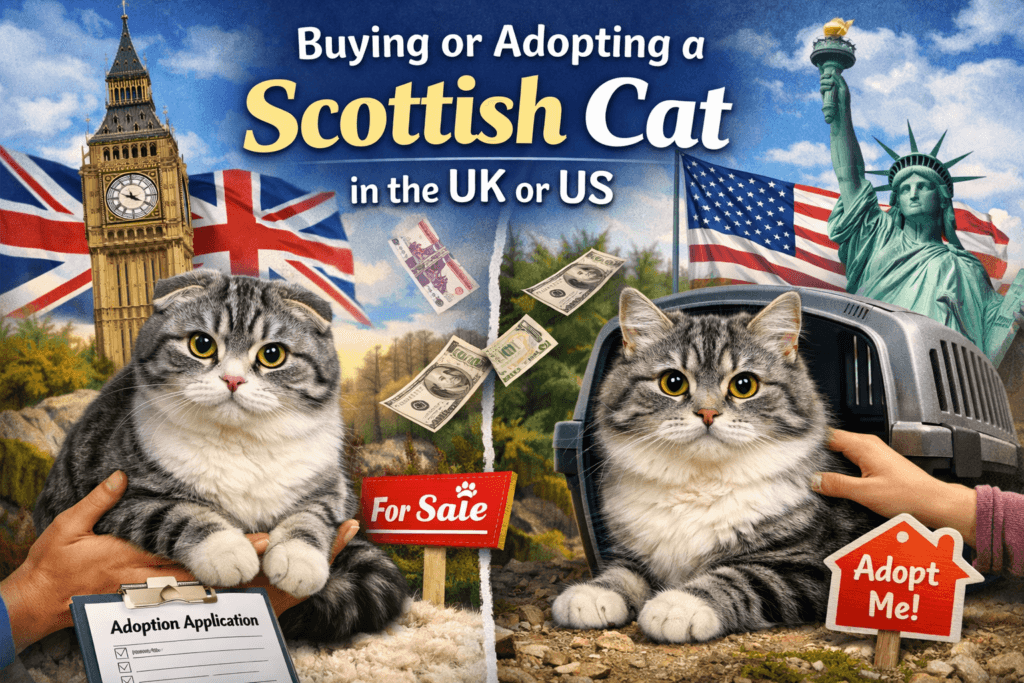
Whether you are in the UK or the US, finding a reputable breeder for Scottish cat breeds starts with the TICA global breeder directory, where verified breeders have signed the TICA Code of Ethics. Always request documented health screening results covering HCM and PKD before committing to a kitten. For Folds specifically, ask for proof that the breeding pair included at least one Scottish Straight parent this is the single most important question to ask any Fold breeder.
Rescue and rehoming is also a valid route. Scottish cat breeds appear in breed-specific rescues with some frequency, particularly as rising demand for the Fold has led to irresponsible breeding in some markets. Adopting a rescue Scottish cat means giving a home to a cat that genuinely needs one.
What to look for when evaluating a kitten:
- Clear, bright eyes with no discharge
- Clean ears and no strong odor
- Confident, curious temperament not withdrawn or hiding
- Breeder allows you to visit the premises and meet at least one parent
- Scottish Fold kittens should be showing the ear fold by the time they are ready to go home (12–14 weeks)
- Health documentation should be provided in writing before you pay a deposit
If a breeder offers very young kittens (under 10 weeks), refuses a visit, or cannot provide health test documentation on request, do not proceed.
My Final Thoughts on Scottish Cat Breeds
Scotland has produced a small but genuinely distinctive group of domestic cat breeds. All four recognized Scottish cat breeds the Fold and Straight in both coat lengths share a temperament that is hard to match: calm, deeply affectionate, curious, and loyal to their families without being demanding.
Whether you choose the folded or straight ear version, the longhair or shorthair, you are getting a cat with documented heritage, a well-studied health profile, and real character. The decision between a Fold and a Straight ultimately comes down to your personal preference for the look and your comfort with the fold gene health considerations. Both are excellent choices for households in the UK and US.
If you are already caring for a Scottish cat, explore our complete care series from kitten nutrition in the first year to training techniques for Scottish Folds so your cat lives the healthiest, happiest life possible.
How many Scottish cat breeds are there?
There are four officially recognized Scottish cat breeds according to TICA: the Scottish Fold (shorthair), Scottish Fold Longhair, Scottish Straight (shorthair), and Scottish Straight Longhair. The Kellas Cat a wild hybrid native to the Scottish Highlands is sometimes counted as a fifth type, though it is not a domestic breed and is not registered with any cat association.
Are Scottish Fold cats rare?
Scottish Folds are not globally rare breeders can be found across the UK, US, and many other countries. However, finding a genuinely healthy Fold from an ethical breeder who performs proper health testing for HCM, PKD, and osteochondrodysplasia is significantly harder. In Scotland itself, breeding restrictions mean locally sourced, well-bred Folds are genuinely difficult to find.
What is the difference between a Scottish Fold and a Scottish Straight?
The Scottish Fold has folded ears caused by an incomplete dominant gene, while the Scottish Straight has normal upright ears. Both breeds have the same round body structure, calm temperament, and health requirements except the Straight carries no risk of the fold-related joint condition osteochondrodysplasia, making it the lower-risk choice.
Are Scottish cats smart?
Yes. Scottish Folds and Straights are described by TICA as intelligent and inquisitive. They learn routines quickly, respond reliably to their names, and can be trained to fetch and solve puzzle feeders. They sit in the upper-middle range of feline intelligence among all domestic cat breeds.
What health problems do Scottish Fold cats have?
Scottish Folds are prone to osteochondrodysplasia (a painful joint and cartilage disorder), hypertrophic cardiomyopathy (HCM), and polycystic kidney disease (PKD). The joint disorder risk is highest when two Fold-eared cats are bred together responsible breeders always pair a Fold with a Straight to minimize this. Always ask breeders for health screening documentation before buying.
What cat breed is the laziest?
The Persian is generally considered the laziest domestic cat breed, followed by the Ragdoll and British Shorthair. Scottish Folds and Straights lean toward the calmer end of the spectrum but still need regular interactive play to maintain a healthy weight and keep their joints active.
What is the least adopted cat color?
Black cats consistently have the lowest adoption rates in UK and US shelters. This is linked to historical superstition and the fact that black cats photograph less distinctively in online listings. It has no bearing on their health or temperament black Scottish cats make just as excellent companions as any other color.
What is the Kellas Cat?
The Kellas Cat is a natural hybrid between the Scottish Wildcat (Felis silvestris grampia) and domestic black cats, first formally documented in the village of Kellas in Moray, Scotland, in 1984. It is large, entirely black, and semi-wild in temperament. It is not kept as a pet and is not registered with any breed association.





3 Responses