


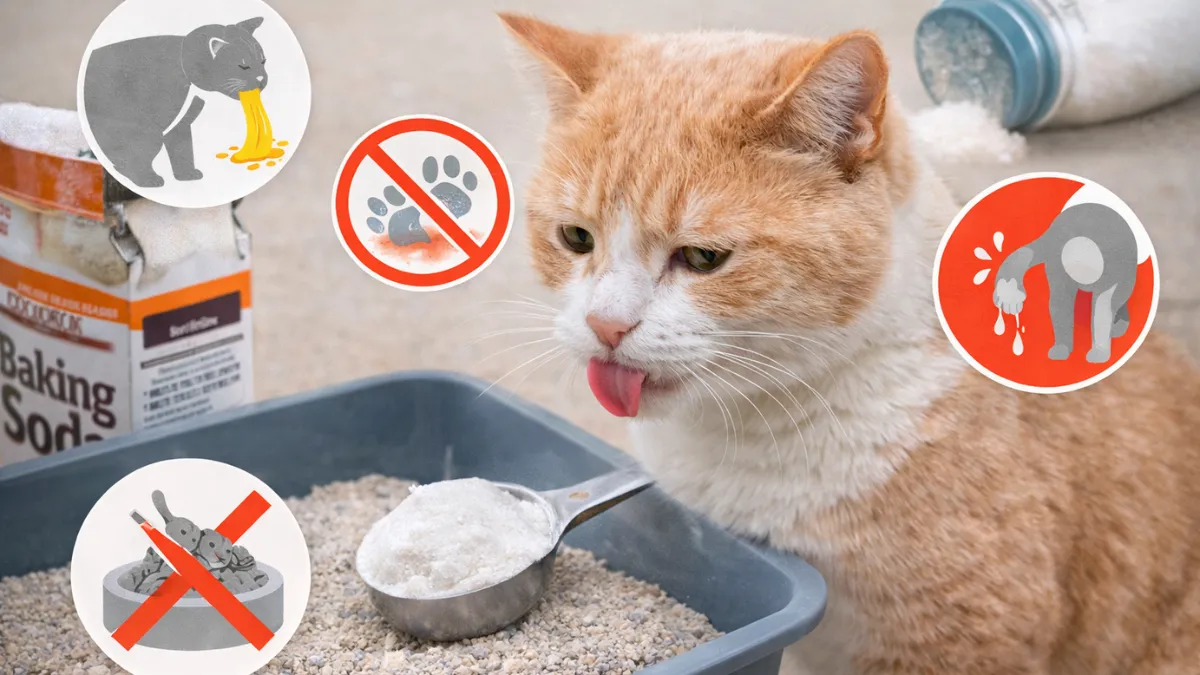
If you live with a cat, baking soda is probably already in your home. It is commonly used for cleaning, deodorizing carpets, or controlling odors in litter boxes. Because it is often described as natural, many cat owners assume it must be safe. The reality is more nuanced.
Baking soda is not classified as toxic to cats. But it is toxic to cats if consumed in large amounts.
Table of Contents
Is Baking Soda Safe for Cats to Eat or Lick?
Veterinary sources do not classify baking soda as a toxic substance like antifreeze or certain plants. Small accidental exposure is unlikely to cause life threatening poisoning.

However, baking soda is sodium bicarbonate, an alkaline salt. Cats are much smaller than humans and far more sensitive to changes in electrolytes and acidity. Because of that, baking soda can still cause digestive upset, irritation, or more serious symptoms if a cat eats it or comes into repeated contact with it.
So while baking soda is not deadly in tiny amounts, it should not be freely used around cats without care.
Why Vets Say Baking Soda Is Not Safe for Cats
Cats groom themselves constantly. Anything that touches their fur or paws is likely to be ingested later. Baking soda that seems harmless on a surface can end up inside a cat’s body.
Veterinary pharmacology sources explain that ingestion of sodium bicarbonate can disrupt acid base balance and electrolyte levels in animals with small body weight. Even amounts that seem minor to humans may be significant for cats.
Cat owners often assume that everyday household items are harmless, especially when they are described as natural. However, just like some common houseplants like aloe vera or even decorative flowers like carnations, baking soda can still cause problems for cats if they come into direct contact with it.
How Cats Get Exposed to Baking Soda at Home
Understanding how exposure happens is more important than the baking soda itself.
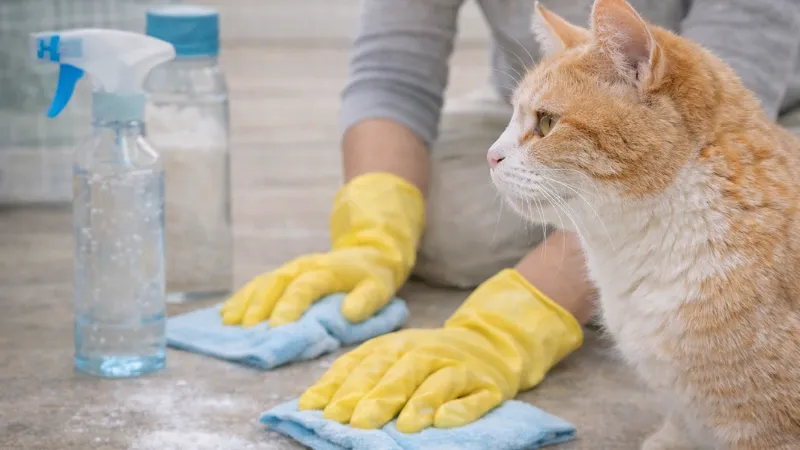
Accidental Eating or Licking
Cats may lick baking soda from floors, carpets, or countertops. They may also step in it and ingest it while grooming.
Veterinary reports note that ingestion can lead to drooling, stomach irritation, vomiting, diarrhea, gas, and lethargy. In larger amounts, sodium imbalance may cause tremors or weakness. These reactions are usually mild but should not be ignored.
Smelling Baking Soda During Cleaning
Baking soda does not release toxic fumes. However, cats have an extremely sensitive sense of smell. Strong odors can cause sneezing, avoidance behavior, or visible stress.
Good ventilation and keeping cats out of the area during cleaning usually prevents this discomfort.
Skin Fur and Paw Contact
Direct contact with baking soda can irritate a cat’s skin or paws, especially if it is damp. Because cats groom afterward, this increases the risk of ingestion.
This is why veterinary sources advise against applying baking soda directly to a cat’s body.
Is It Safe to Put Baking Soda in Cat Litter?
One of the most common questions is whether baking soda can be added to cat litter to control odors.
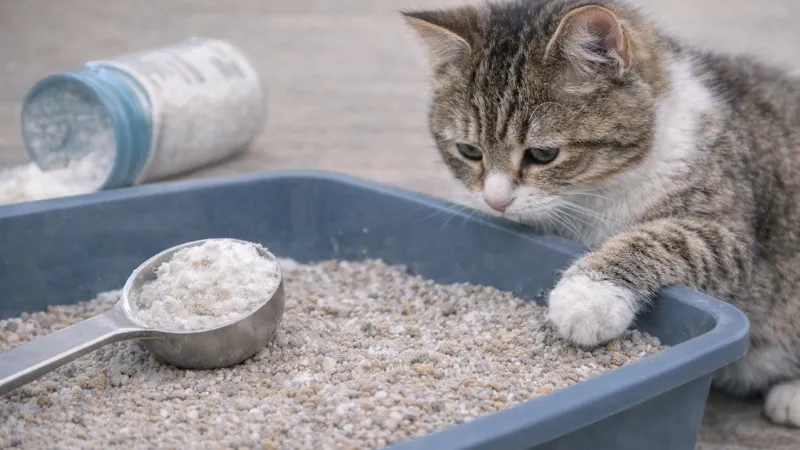
Veterinary guidance does not recommend adding loose baking soda directly to a litter box. Cats may inhale or ingest it, or it may cling to their paws and fur.
Some commercial litters contain baking soda, but these products use controlled amounts and specific formulations designed for pet safety. This is very different from pouring household baking soda into a litter box.
Is It Safe to Put Baking Soda in Cat Litter?
This is one of the most common questions cat owners ask about baking soda. The short answer is no. Veterinary sources do not recommend adding loose household baking soda directly to your cat’s litter box.
The idea makes sense on the surface. Baking soda neutralizes odors and it seems harmless. But the way cats use their litter box creates real risks that most people do not think about.
Why Vets Do Not Recommend Loose Baking Soda in Litter
Cats spend significant time in their litter box every day. When loose baking soda is mixed into litter, it creates fine powder particles that float into the air every time your cat digs, scratches, or moves the litter around.
Your cat then breathes those particles in at close range. Cats that already have respiratory sensitivity or feline asthma are at higher risk of irritation from repeated inhalation.
On top of that, cats groom their paws after using the litter box. Any baking soda that clings to their paws gets licked off and swallowed. Over time this repeated low level ingestion adds up, especially in smaller or younger cats.
Commercial Litters with Baking Soda | Are They Different?
Yes, and this is an important distinction.
Some well known cat litter brands like ARM and Hammer include baking soda as part of their formula. These products are not the same as pouring raw baking soda into your cat’s litter box. Commercial litters go through safety testing, use controlled and minimal amounts of baking soda, and bind it into the litter itself so it does not create loose powder.
If you want the odor control benefits of baking soda in your cat’s litter, a commercially formulated litter that contains it is a much safer option than adding it yourself at home.
How Much Baking Soda in Litter Is Dangerous?
There is no established safe DIY amount for adding baking soda to cat litter. Veterinary sources have not confirmed any specific quantity that is safe for home use because the risks depend on too many variables including your cat’s size, age, health condition, and how often they use the box.
Kittens and cats with kidney problems or respiratory conditions face higher risk even from small amounts. The safest approach is to avoid it entirely and use a commercial product if odor control is your priority.
Better Alternatives for Cat Litter Odor Control
If baking soda is not recommended, here are safer options that actually work:
Enzyme based litter deodorizers break down the compounds in cat waste that cause odor. They are effective and safe for cats when used as directed.
Activated charcoal litter additives absorb odors without releasing particles into the air. Several pet safe options are available specifically designed for litter boxes.
Unscented clumping litter with good absorption controls odor better than most additives. Scooping the litter box once or twice daily removes waste before odor builds up, which is more effective than any additive.
Good ventilation in the room where the litter box is kept makes a bigger difference than most cat owners expect. A litter box in a closed bathroom with no airflow will smell no matter what you add to it.
If odor is a persistent problem, the most effective solution is more frequent cleaning combined with a high quality clumping litter rather than additives of any kind.
Is Baking Powder Safe for Cats? Is It the Same as Baking Soda?
Baking powder and baking soda are not the same thing, and baking powder is actually the more dangerous one for cats.
Baking soda is pure sodium bicarbonate. Baking powder contains sodium bicarbonate plus additional acidic ingredients like cream of tartar or sodium aluminum sulfate. These extra ingredients make baking powder harder for a cat’s body to process and increase the risk of digestive problems and electrolyte imbalance if ingested.
Both should be stored securely away from cats. Neither is safe for cats to eat, lick, or come into repeated contact with. If your cat has ingested either one, follow the same steps as you would for baking soda exposure and contact your vet if any symptoms appear.
Symptoms of Baking Soda Exposure in Cats
Most reactions are mild, but symptoms can include:
- Vomiting or diarrhea
- Drooling
- Lethargy
- Increased thirst
- Abdominal discomfort
More serious symptoms such as muscle tremors, confusion, or weakness require immediate veterinary attention.
What To Do If a Cat Eats Baking Soda
If a cat consumes a small amount and shows no symptoms, monitoring may be sufficient. Do not induce vomiting unless directed by a veterinarian.
If symptoms appear, or if you suspect a larger ingestion, contact your veterinarian or an animal poison helpline promptly. Early advice can prevent complications.
Can Baking Soda Be Used Safely Around Cats
Baking soda can be used cautiously for household cleaning if basic precautions are followed.
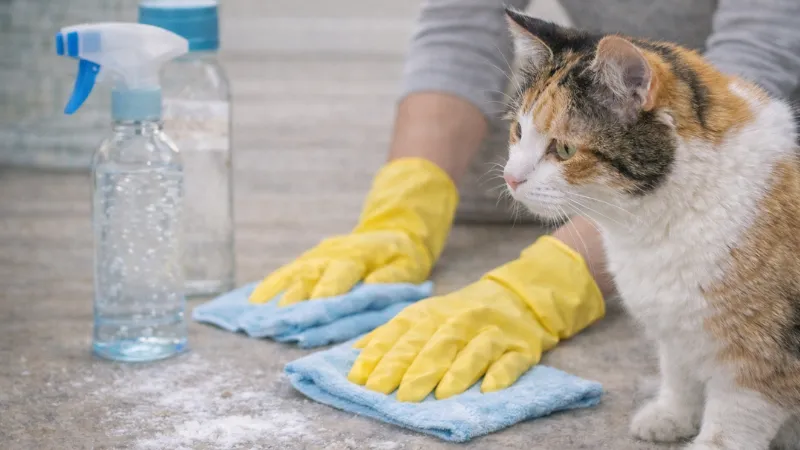
Dilution with water, thorough rinsing of surfaces, allowing floors to dry completely, and keeping cats away during cleaning significantly reduces risk.
If you are concerned about cleaning safety, you may also want to read our guide on Is Pine Sol Safe for Cats, which explains similar household exposure risks.
Why Baking Soda Should Not Be Used as a Home Remedy for Cats
Online advice often promotes baking soda for fleas, skin issues, or odors. Veterinary sources do not support these uses.
Applying baking soda directly to a cat’s skin or coat increases irritation and ingestion risk. Proven veterinary treatments are always safer and more effective.
Safer Alternatives in Cat Homes
If odor control or cleaning is the goal, pet safe cleaning products and litters designed specifically for cats are a better choice. These products are formulated to reduce irritation and accidental ingestion risks.
Final Thoughts From a Veterinary Perspective
Baking soda is not a poison, but it is also not risk free for cats. Most problems occur through ingestion or repeated contact, not from brief exposure.
Many household risks for cats are not obvious at first glance. Products and plants that seem safe to people, including things like decorative flowers such as carnations, often require extra caution when cats share the same space.
In my experience working with cat health and safety topics, issues usually arise when household products are used casually without considering how cats interact with their environment. Prevention and informed use remain the safest approach.
Common Questions
Is baking soda toxic to cats?
Baking soda is not classified as a toxic poison for cats by veterinary sources. However, if a cat ingests baking soda, it can cause digestive upset or electrolyte imbalance. It should not be considered harmless.
Is baking soda safe for cats to smell?
Baking soda does not release toxic fumes, but strong odors can irritate a cat’s sensitive sense of smell. Some cats may sneeze, avoid the area, or show stress during cleaning.
Is baking soda safe to use in cat litter boxes?
Adding loose baking soda directly to a cat’s litter box is not recommended. Cats can ingest it while grooming. Commercial cat litters that contain baking soda use controlled amounts designed for pet safety.
What happens if a cat eats baking soda?
If a cat eats a small amount of baking soda, symptoms may include drooling, vomiting, diarrhea, or lethargy. Larger amounts can lead to sodium imbalance and require veterinary attention.
Can baking soda be used safely in homes with cats?
Baking soda can be used carefully for household cleaning if it is diluted, surfaces are rinsed well, and cats are kept away until everything is completely dry.
Should baking soda be used as a home remedy for cats?
Veterinary sources do not recommend using baking soda directly on cats for fleas, skin issues, or odors. Home remedies increase the risk of irritation and ingestion and are not proven safe.
Is baking soda safer for cats than other household cleaners?
Baking soda is generally less hazardous than strong chemical cleaners, but it still requires caution. Pet safe cleaning products formulated specifically for homes with cats are a safer choice.
Is it safe to put baking soda in cat litter?
Veterinary sources do not recommend adding loose household baking soda directly to cat litter. Cats spend extended time in their litter box and can inhale baking soda particles or ingest it through paw grooming. Some commercial litters contain baking soda in controlled amounts and specific formulations, which is very different from adding raw baking soda yourself. If odor is your concern, an enzyme based litter deodorizer is a safer option.
Is baking powder safe for cats?
No. Baking powder is not safe for cats and is actually considered more risky than baking soda. It contains sodium bicarbonate plus acidic compounds like cream of tartar or sodium aluminum sulfate. These additional ingredients increase the risk of digestive upset and electrolyte disruption if a cat ingests it. Keep baking powder stored securely away from cats at all times.
What happens if my cat licked baking soda?
A single small lick of baking soda is unlikely to cause serious harm. Monitor your cat for symptoms such as drooling, vomiting, diarrhea, lethargy, or loss of appetite over the next few hours. Offer fresh water. If your cat consumed a larger amount, appears unwell, or if symptoms persist, contact your vet or the ASPCA Animal Poison Control Center at 888 426 4435 immediately.
Can baking soda kill a cat?
Baking soda is unlikely to be fatal from a single small exposure. However large amounts can cause serious electrolyte imbalance and metabolic alkalosis, which are conditions that require veterinary treatment. A cat that has ingested a significant quantity of baking soda needs prompt veterinary attention. Do not wait for symptoms to become severe before calling your vet.
Is the smell of baking soda bad for cats?
Baking soda does not release toxic fumes. However cats have a sense of smell approximately 14 times stronger than humans. Strong concentrations of baking soda, particularly when used as a cleaning powder, can cause sneezing, irritation, or avoidance behavior. Always ventilate the room well when cleaning with baking soda and keep cats out of the area until surfaces are fully rinsed and dry.
Sources and Veterinary References
Catster Vet Reviewed Guide on Baking Soda and Cats: https://www.catster.com/ask-the-vet/is-baking-soda-safe-for-cats/
American College of Veterinary Pharmacists: https://vetmeds.org/pet-poison-control-list/baking-soda/#!form/PPCDonations
Baking Soda Allergy in Cats Veterinary Reports: https://www.dailypaws.com/cats-kittens/cat-safety-tips/baking-soda-safe-for-cats
Veterinary Guidance PetMD: https://www.petmd.com/dog/slideshows/9-baking-soda-uses-pet-owners



One Response
Thanks for some other informative web site. Where else could I am getting that kind of
information written in such a perfect manner? I’ve a mission that I’m just now running
on, and I have been at the glance out for such information.