

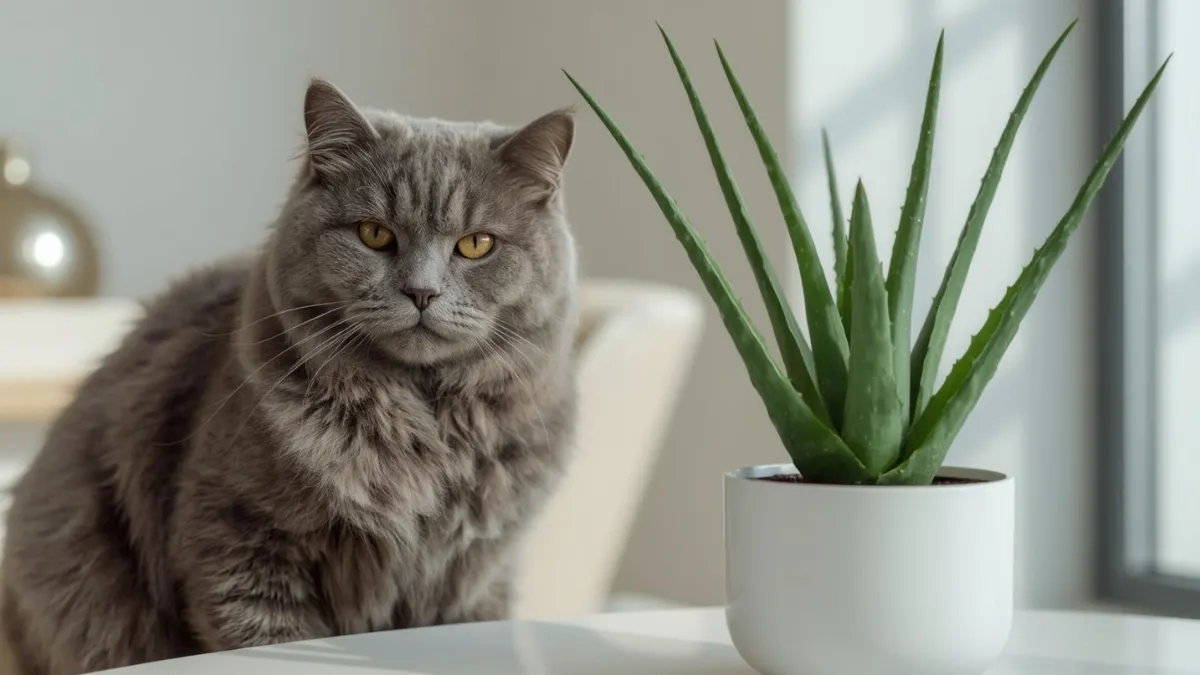
If your cat just licked aloe vera gel or chewed on an aloe plant, you need a clear answer fast. Aloe vera is not safe for cats. The plant can make your cat sick, especially when they chew the leaves or lick products that contain aloe.
Aloe is great for humans. It soothes burns and skin problems. But a cat’s body works very differently. What helps us can hurt them.
This guide explains exactly what is toxic, what is not, and what you should do if your cat was already exposed.
Quick Answer for Cat Owners
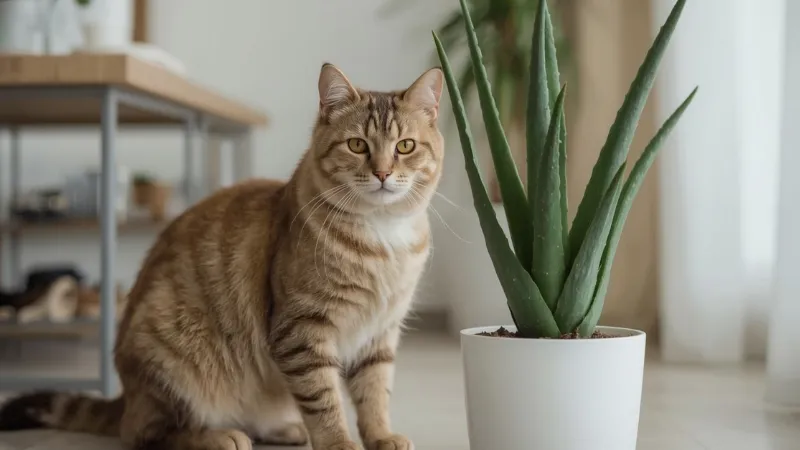
Aloe vera plants are toxic to cats. The outer part of the leaf contains a white sap called latex. This latex has compounds called saponins and anthraquinones. These irritate a cat’s stomach and digestive system.
The clear inner gel is less harmful. But it is still not recommended for cats because cats groom themselves. Anything on their fur or skin will likely be swallowed later.
Keep aloe plants out of reach. Do not apply aloe products to your cat without asking a vet first.
Table of Contents
Why Aloe Vera Is Not Safe for Cats?
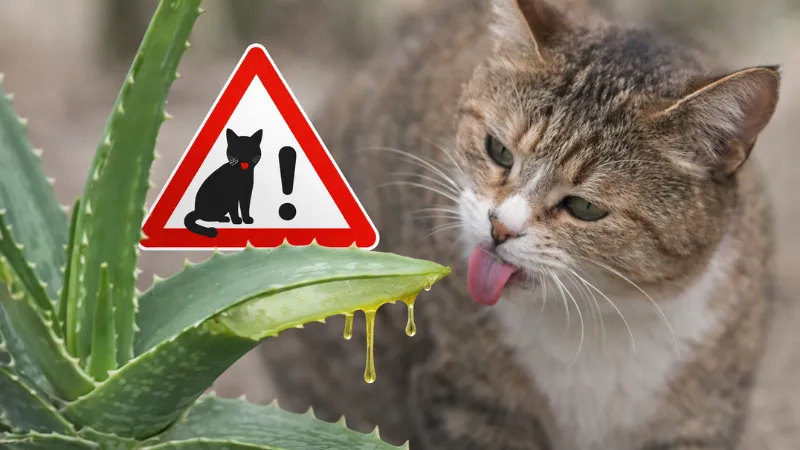
Cats have sensitive digestive systems. They cannot break down certain plant chemicals the way humans do.
Aloe vera contains natural compounds that act as a defense for the plant. These compounds are useful for humans but harmful to cats. Even a small amount can cause stomach irritation.
This is why aloe vera is listed as a toxic plant for cats by major veterinary organizations including the ASPCA.
Which Part of the Aloe Plant Is Harmful
This is where many cat owners get confused.
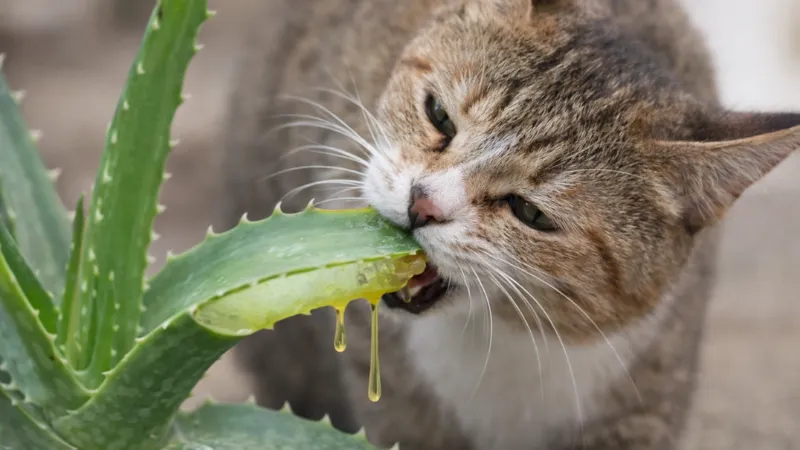
When you break open an aloe leaf, you see two things. There is a clear gel in the center. Around the edges, there is a yellowish white sap. That sap is the latex, and it is the most harmful part for cats.
The clear inner gel has lower toxicity. But the outer sap and the full plant leaf are the main problem. When a cat bites into an aloe plant, it contacts this latex right away.
Most cases of aloe poisoning in cats come from chewing the plant directly, not from processed gel products.
My Cat Licked Aloe Vera Gel. What Should I Do Now?
If your cat licked a small amount of aloe gel from a product, do not panic. A tiny lick is unlikely to cause serious harm.
Watch your cat for the next few hours. Look for drooling, vomiting, or loose stools. If none of these appear within a few hours, your cat is likely fine.
If your cat chewed on an actual aloe plant leaf, that is more serious. The outer sap gets into their mouth right away. Remove the plant from reach immediately and monitor closely. Call your vet if any symptoms appear or if your cat ate a large amount.
What Happens If a Cat Eats Aloe Vera
Symptoms usually appear within a few hours after eating aloe. In most cases the reaction is mild, but it should not be ignored.
The compounds in aloe speed up movement in the digestive tract. This causes cramping, diarrhea, and vomiting. If your cat keeps vomiting or has diarrhea for several hours, dehydration becomes a risk.
Most cats recover well with vet care. Serious poisoning is rare unless a very large amount was eaten.
Common Symptoms of Aloe Vera Exposure in Cats
After aloe ingestion, cats commonly show these signs:
Vomiting, diarrhea, lethargy, loss of appetite, excessive drooling or salivation, abdominal cramping, and general weakness.
Excessive drooling is one of the early signs that many owners miss. If your cat is drooling more than usual after being near an aloe plant, take it seriously.
The severity depends on how much was eaten and how sensitive your individual cat is.
Is Aloe Vera Gel Safe for Cats
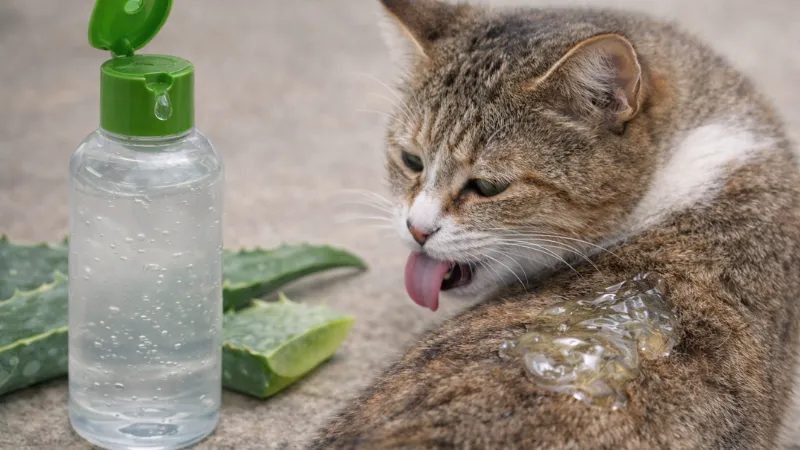
This is one of the most question question, We receive from cat owners.
Processed aloe gel sold in stores has often had the toxic latex removed. This makes it less dangerous than the raw plant. However, it is still not recommended for cats.
The reason is simple. Cats groom themselves constantly. If you apply aloe gel to your cat’s skin or fur, your cat will lick it off. Even processed gel can cause mild stomach upset when swallowed in larger amounts.
Do not apply aloe gel to your cat unless a vet specifically tells you it is safe.
Is Aloe Vera Safe for Cats to Lick or Taste
Accidental licking of a very small amount is unlikely to cause severe poisoning. It may still cause mild drooling or stomach discomfort.
Most cats dislike the bitter taste of aloe and stop on their own. But repeated exposure should always be avoided.
Is Aloe Vera Safe for Cats Skin Fur Eyes and Ears
Do not apply aloe to your cat’s skin, fur, eyes, or ears.
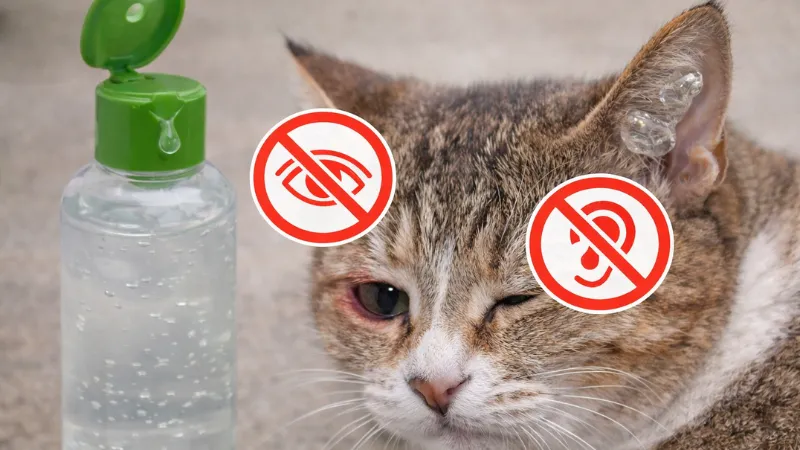
When applied to skin or fur, your cat will groom it off and swallow it. Near the eyes, aloe can cause irritation and inflammation. Near the ears, it can cause similar irritation.
Veterinary sources do not support using aloe as a home treatment for any feline skin or ear problem. If your cat has a skin issue, see a vet instead of trying home remedies.
Can Aloe Vera Be Used on Cats for Wounds or Skin Problems
Many people use aloe on their own cuts or burns and assume it will help their cat too. This is a common mistake.
Cats behave differently from humans. They lick their wounds and groom their fur all day. Any substance applied to their body ends up in their stomach.
There are no vet approved aloe treatments for cats. If your cat has a wound or skin problem, always contact a veterinarian for safe treatment options.
Is Aristaloe Aristata Safer Than Aloe Vera for Cats?
Some cat owners come across aristaloe aristata, also called lace aloe or torch plant. It looks similar to aloe vera and is sold in many plant stores.
Aristaloe aristata generally has lower aloin content than regular aloe vera. Aloin is one of the main toxic compounds. This makes it slightly less potent, but it is still not considered safe for cats.
Vets recommend keeping all aloe related plants away from cats. The small difference in toxicity is not enough to make aristaloe a safe choice in a home with cats.
What To Do If Your Cat Eats Aloe Vera
Follow these steps right away.
First, remove your cat from the plant and take the plant out of reach. Second, check how much your cat ate. A small nibble is different from chewing through several leaves. Third, watch your cat for vomiting, drooling, diarrhea, or weakness over the next few hours. Fourth, call your vet if any symptoms appear or if your cat ate a noticeable amount.
At the vet, your cat may receive treatment to remove the plant material from the stomach and IV fluids if dehydration has occurred.
Are Aloe Vera Plants Safe to Keep in Homes With Cats
Aloe plants are best placed completely out of cat reach or removed from the home entirely.
Indoor cats chew on plants out of curiosity and boredom, even when they are well fed and cared for. High shelves are not always enough because cats can jump and climb.
If you want to keep aloe in your home, use a locked room your cat cannot enter. Otherwise, consider replacing it with a cat safe plant like spider plants, Boston ferns, or cat grass.
For more plant safety information, read our guide on are jade plants toxic to cats and are fake plants safe for cats.
Why Aloe Vera Is Often Misunderstood by Cat Owners
Aloe has a strong reputation as a natural healing plant. Many people hear the word natural and assume it is safe for everyone including pets.
This is not true. Many natural substances are harmful to cats. Onions, grapes, and certain essential oils are all natural and all toxic to cats.
The word natural does not mean safe. Always research a plant or product before letting your cat near it.
Final Thoughts From a Veterinary Perspective
Aloe vera is not the most dangerous plant for cats, but it is not safe either. The biggest risk comes from cats chewing the plant or grooming aloe products off their skin.
Prevention is always easier than treatment. Keep aloe plants out of reach, avoid applying aloe products to your cat, and contact your vet if your cat was exposed and shows any symptoms.
For more household safety guides, read our article on is vinegar bad for cats and are candles bad for cats.
Common Questions
Is aloe vera poisonous to cats?
Yes. The aloe plant is toxic to cats, mainly because of the latex sap in the outer leaf. It contains saponins and anthraquinones that irritate the digestive system.
What happens if my cat licked aloe vera gel?
A small lick of processed aloe gel is unlikely to cause serious harm. Watch for drooling, vomiting, or loose stools for a few hours. If symptoms appear, contact your vet.
Is the aloe vera plant toxic to cats or just the gel?
The full plant and its outer latex are the most toxic parts. The clear inner gel is less harmful but still not safe because cats will swallow anything they groom off their body.
Can I put aloe vera on my cat’s wound?
No. Cats lick their wounds constantly. Any aloe applied will be swallowed, which can cause stomach upset. Always ask a vet about safe wound care for cats.
Is aloe vera safe for cats on skin?
No. Applying aloe to a cat’s skin or fur leads to ingestion during grooming. Vets do not recommend aloe as a home treatment for any cat skin problem.
What should I do if my cat eats aloe?
Remove the plant immediately. Check how much was eaten. Watch for vomiting, drooling, or diarrhea. Call your vet if any symptoms appear or if your cat ate more than a small amount.
Sources and veterinary references
Animal Wellness Magazine: https://animalwellnessmagazine.com/aloe-vera-safe-dogs-cats/
Wag Walking Veterinary Guide: https://wagwalking.com/cat/condition/true-aloe-poisoning
National Center for Biotechnology Information (NCBI / PMC): https://www.mdpi.com/2072-6651/15/5/346
Pretty Litter: https://www.prettylitter.com/blog/is-aloe-safe-for-cats









2 Responses