



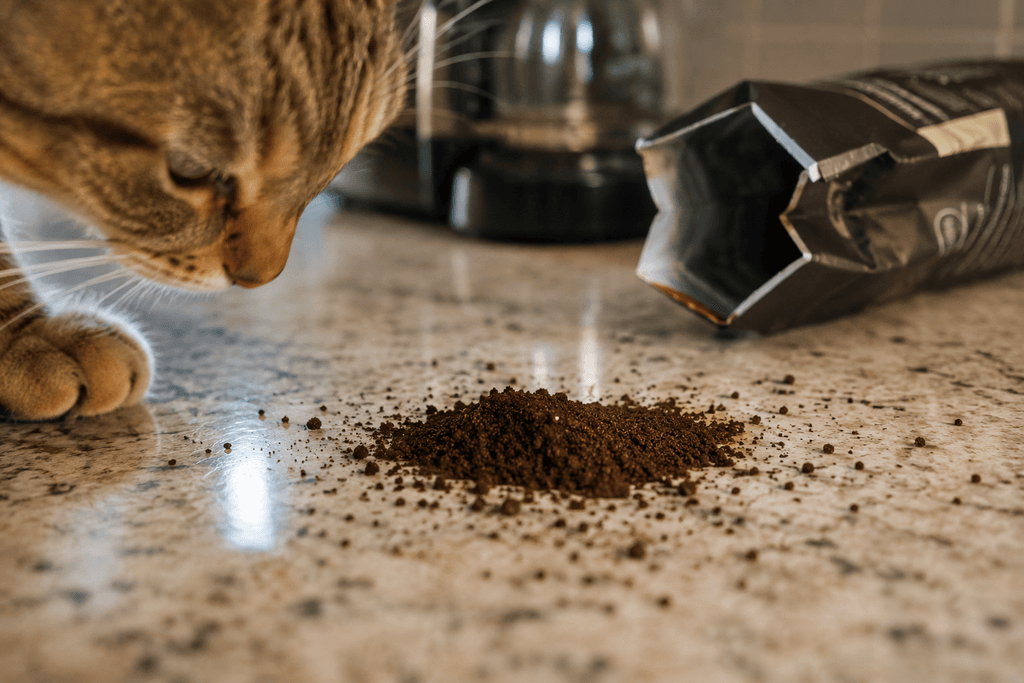
Yes, coffee grounds are toxic to cats. Even a small amount, as little as a teaspoon for an average-sized cat, can trigger caffeine poisoning. Coffee grounds are actually more concentrated in caffeine than a brewed cup, which makes a spilled scoop on the counter more dangerous than most owners realize. Here’s exactly why they’re harmful, how much is dangerous, and what to do if your cat gets into them.
Why Are Coffee Grounds Toxic to Cats?
Understanding why coffee grounds toxic to cats reactions happen starts with a single compound: caffeine.
Caffeine and the Feline Body
Coffee grounds are toxic to cats because of their caffeine content, a stimulant that affects the central nervous system and heart. Cats lack the liver enzymes needed to break caffeine down efficiently, so it stays active in their system far longer than it would in a human, building up toxic effects even from what looks like a small dose.
Why Grounds Are More Dangerous Than Brewed Coffee
Brewing coffee dilutes caffeine into water, but dry or used grounds still hold a concentrated amount in a much smaller volume. That means a spoonful of spilled grounds can contain more caffeine than an entire mug of brewed coffee, making grounds one of the riskier forms of caffeine exposure in a typical kitchen.
How Much Coffee Grounds Is Toxic to Cats?
This is the question that matters most in an emergency, since knowing how much coffee grounds is toxic to cats can help you gauge how urgently to act.
Toxic Dose by Body Weight
Veterinary sources generally place the toxic threshold for caffeine at roughly 36 to 68 mg per pound of body weight. In practical terms, that means as little as one teaspoon of dry coffee grounds can be enough to cause poisoning in an average-sized cat, and any amount beyond that should be treated as a genuine emergency rather than something to simply watch.
Used vs Unused Grounds
Unused, dry grounds are the most concentrated, but used grounds still retain a meaningful amount of caffeine even after brewing, so a cat getting into your used filter or a discarded pod isn’t automatically safe either.
Symptoms of Caffeine Poisoning in Cats
Recognizing coffee grounds toxic to cats symptoms early can make a real difference in how quickly your vet can help.
Early Signs (Within 30 to 60 Minutes)
Caffeine is absorbed quickly, and early symptoms often include restlessness, pacing, vomiting, and unusual hyperactivity or agitation.
Severe Signs Requiring Emergency Care
As toxicity progresses, symptoms can escalate to rapid or labored breathing, an elevated or irregular heart rate, muscle tremors, and in severe cases, seizures.
Symptom Timeline Table
| Timeframe | Typical Symptoms |
|---|---|
| 30 to 60 minutes | Restlessness, vomiting, pacing, hyperactivity |
| 1 to 2 hours | Rapid breathing, elevated heart rate, drooling |
| Untreated, severe cases | Muscle tremors, seizures, collapse |
Other Risks Beyond Caffeine Toxicity
Gastrointestinal Blockage Risk
Coffee grounds are gritty and don’t break down easily in a cat’s digestive system, so ingesting a larger amount can occasionally contribute to a blockage separate from the caffeine toxicity itself.
Mold and Bacteria in Used Grounds
Used coffee grounds left sitting out, especially in a damp filter or compost bin, can develop mold or bacterial growth, adding a secondary risk on top of caffeine exposure.
What to Do If Your Cat Eats Coffee Grounds
If you’re dealing with a coffee grounds toxic to cats situation right now, speed matters more than anything else.
Immediate Steps
Contact your veterinarian or an animal poison control hotline right away, and try to estimate how much your cat may have ingested, since this genuinely changes the urgency and treatment approach.
What NOT to Do
Don’t try to induce vomiting at home without direct guidance from a vet or poison control, since doing it incorrectly can cause additional harm.
What the Vet Will Likely Do
Depending on the timing and amount involved, a vet may induce vomiting, administer activated charcoal to limit further absorption, provide IV fluids, and monitor or treat heart rate and tremors as needed.
Decaf Coffee Grounds, Are They Safe?
Decaf still contains a small amount of caffeine, so while decaf grounds are considerably less risky than regular grounds, they aren’t entirely caffeine-free and shouldn’t be treated as completely safe for a curious cat.
How to Keep Coffee Grounds Safely Away From Cats
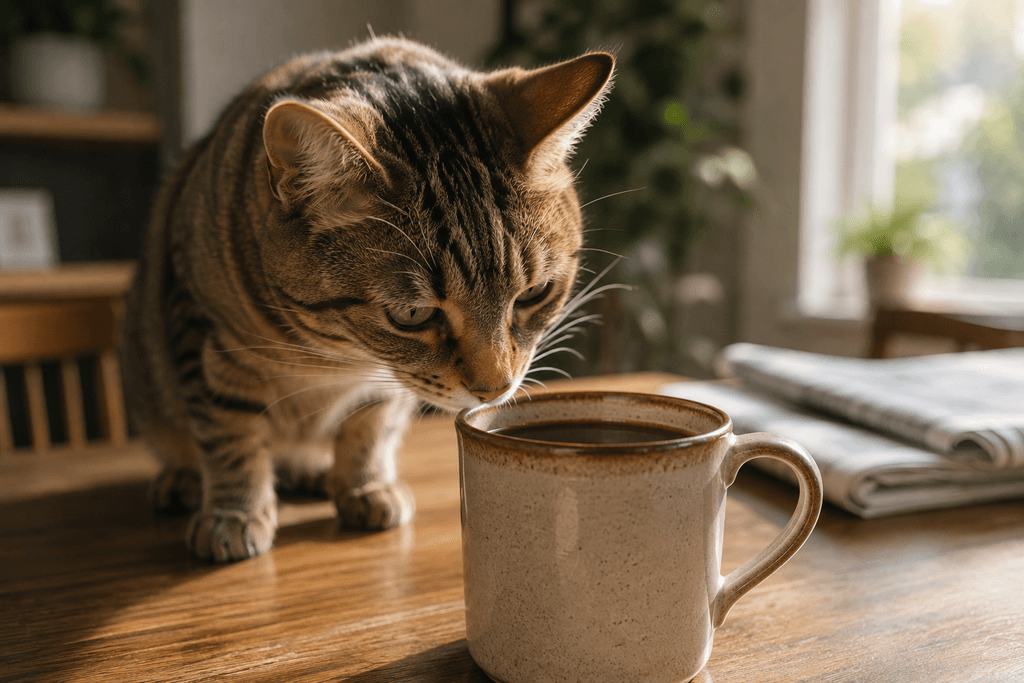
Since coffee grounds toxic to cats incidents usually come down to a simple accident rather than a determined cat, a few storage habits go a long way.
Storage Tips
Keep both used and unused grounds in a sealed container rather than an open bin, and wipe up spills immediately rather than leaving them for later.
Composting Safely With Cats Around
If you compost coffee grounds, use a covered bin rather than an open pile, particularly if your cat has any access to the yard or garden area.
Frequently Asked Questions (FAQ)
A few more common questions about coffee grounds toxic to cats risks, answered directly.
Can one sniff of coffee grounds hurt a cat?
Simply smelling coffee grounds isn’t dangerous. The risk comes specifically from ingestion, not from the aroma itself.
Are coffee grounds more dangerous than brewed coffee?
Generally yes, because grounds contain a more concentrated amount of caffeine in a smaller volume compared to a diluted brewed cup.
How long do caffeine poisoning symptoms last?
Mild cases may resolve within several hours with supportive care, while more severe poisoning can take a day or more of veterinary treatment and monitoring to fully resolve.
Is decaf safe for cats?
Decaf is lower risk but still contains trace caffeine, so it should be kept away from cats just like regular coffee grounds.
What other household items also contain caffeine?
Tea bags, chocolate, energy drinks, and some over-the-counter medications also contain caffeine or related stimulants and should be stored just as carefully.
Conclusion
Coffee grounds toxic to cats risks are easy to overlook precisely because the dangerous dose is so small. Keeping grounds sealed, cleaning up spills right away, and knowing the early warning signs of caffeine poisoning are the simplest ways to keep a curious cat safe.
Related Reads
- Can Cats Have Turmeric? What Research and Vets Actually Say
- Is Vinegar Bad for Cats?
- Is Baking Soda Safe for Cats?
For further guidance on caffeine and pet safety, see the Pet Poison Helpline’s caffeine toxicity resource.
This article provides general educational information about cat health and safety and is not a substitute for professional veterinary advice. If you suspect your cat has ingested coffee grounds or any caffeine-containing product, contact a veterinarian or animal poison control immediately.









One Response