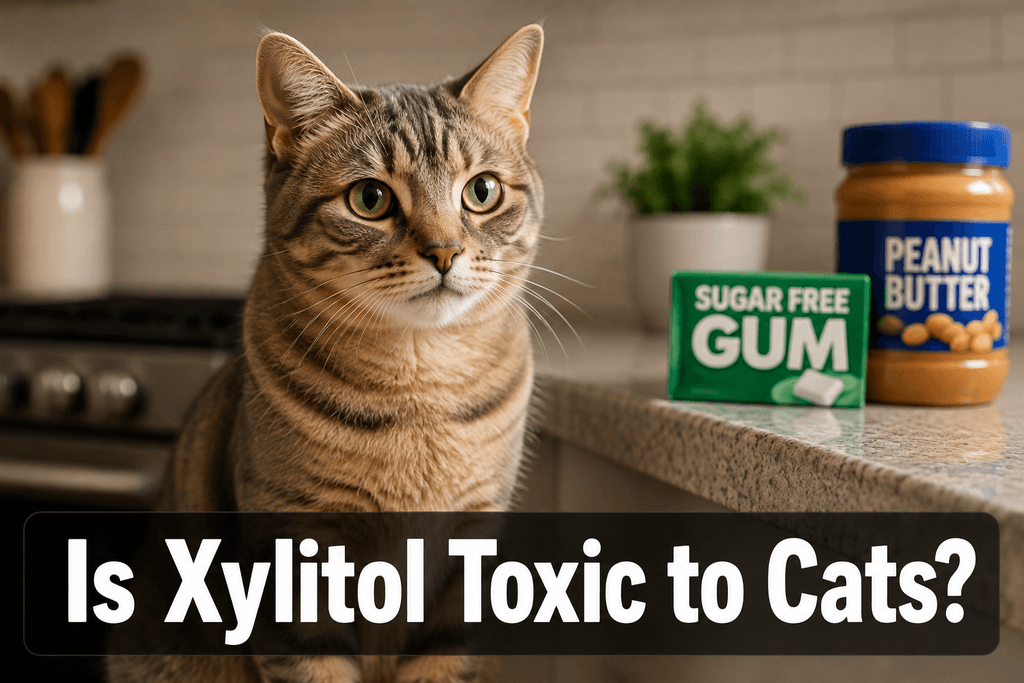


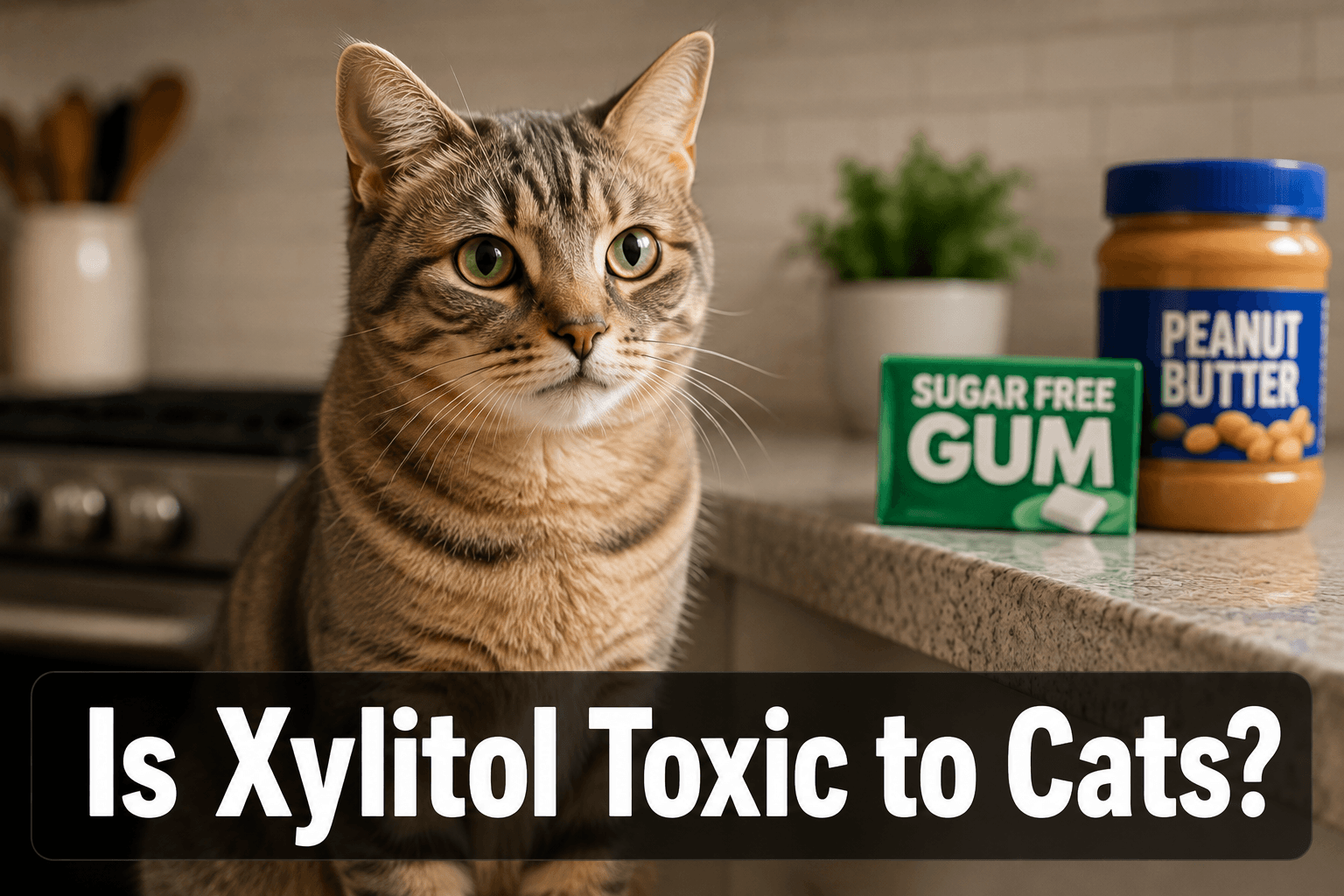
No, xylitol does not appear to be seriously. Xylitol toxic to cats the way it is to dogs. The ASPCA states plainly that while xylitol can be dangerous for dogs, it does not cause serious problems in cats, and a 2018 published study found no significant drop in blood sugar even at high doses. That said, research is still limited, and most vets recommend keeping xylitol products away from cats out of caution rather than certainty. Here’s what the actual evidence says.
Why Xylitol Is Dangerous for Dogs, But Not the Same for Cats
The xylitol toxic to cats question keeps coming up mainly because of how well-known the danger is in dogs, so it’s worth separating the two clearly.
How Xylitol Affects Dogs
In dogs, xylitol triggers a rapid, dangerous surge of insulin release from the pancreas, causing blood sugar to crash within about 30 minutes of ingestion. In severe cases, it can also cause liver damage or liver failure, making it one of the more serious human-food hazards for dogs.
Why Cats Respond Differently
Cats don’t appear to have the same insulin response to xylitol that dogs do. A 2018 study gave xylitol orally to six cats at doses as high as 1000 mg per kg of body weight, doses that would be dangerous or fatal in dogs, and found no significant change in blood glucose beyond a mild increase at the highest dose.
What the Research Actually Shows
Most of what we know about xylitol toxic to cats risk comes down to a single, small but genuinely informative study.
The Key 2018 Study
The study, published and indexed on PubMed, tested three dose levels (100, 500, and 1,000 mg/kg) in healthy adult cats and monitored their blood glucose and general health throughout. None of the cats developed hypoglycemia, the dangerous low-blood-sugar reaction seen in dogs.
Why Vets Still Recommend Caution
The study only included six cats, which is a small sample size, and poison control hotlines have received very few, if any, confirmed reports of feline xylitol poisoning. Because of this, most veterinarians describe xylitol as “unlikely to be seriously toxic to cats” rather than “definitively safe,” and still recommend keeping it out of reach.
Dogs vs Cats, Quick Comparison
| Dogs | Cats | |
|---|---|---|
| Insulin surge | Yes, rapid and dangerous | No significant response found |
| Hypoglycemia risk | High, even at small doses | Not observed in available studies |
| Liver damage risk | Documented in severe cases | Not documented in cats |
| Vet recommendation | Emergency-level toxin | Caution advised, not emergency |
Possible Symptoms If a Cat Eats Xylitol
Even with a low xylitol toxic to cats risk overall, it helps to know what mild exposure can still look like.
Mild, Non-Specific Signs
Because cats generally aren’t drawn to sweet flavors the way dogs are, large accidental ingestions are uncommon. If symptoms do occur, they tend to be mild, such as vomiting, diarrhea, or temporary lethargy, rather than the severe hypoglycemic crash seen in dogs.
When to Still Call a Vet
Even with reassuring research, it’s worth calling your vet if your cat eats a meaningful amount of a xylitol-containing product, especially if you notice vomiting, weakness, or unusual behavior afterward.
What Products Contain Xylitol?
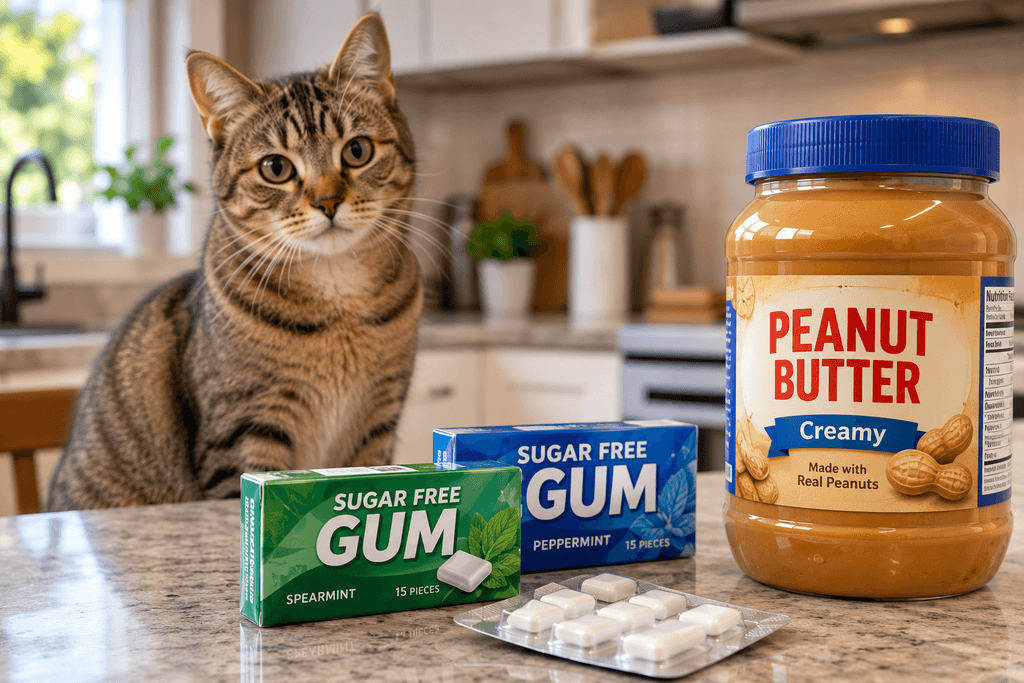
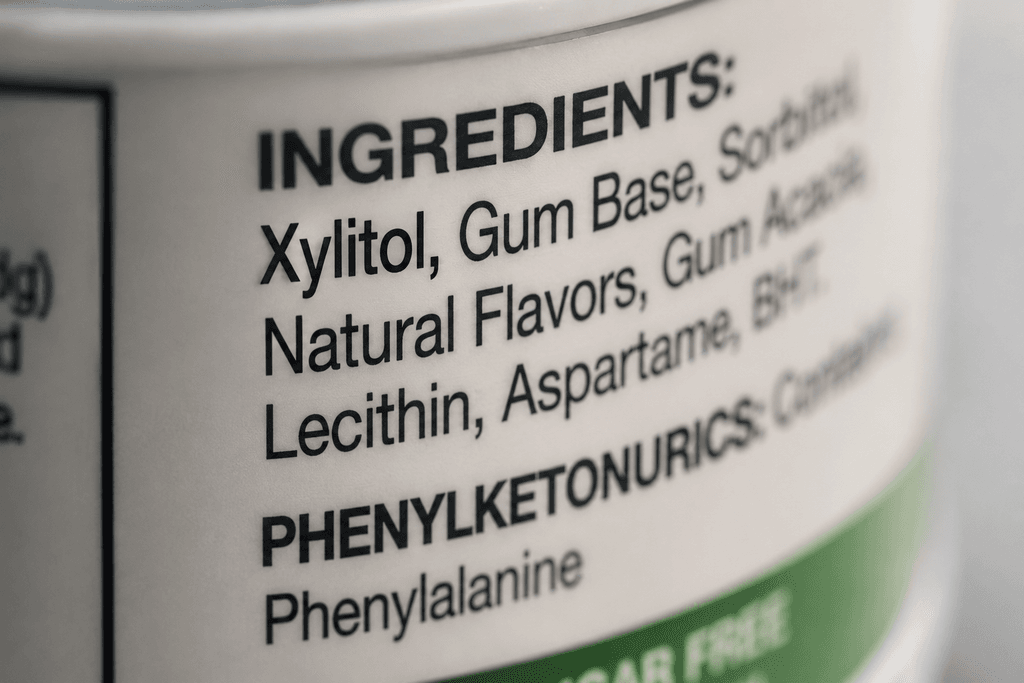
Xylitol shows up in more everyday products than most owners expect, including sugar-free gum, some peanut and nut butters, sugar-free baked goods, certain toothpastes, and a range of sugar-free candies and mints.
Why Cats Are Naturally Lower Risk Than Dogs
Cats Lack Sweet Taste Receptors
Cats are missing the taste receptor that allows most mammals to detect sweetness, which means they’re far less likely to seek out or eat a large quantity of a sweet, xylitol-containing product in the first place.
Cats Tend to Be More Selective Eaters
Beyond taste, cats are generally more cautious and selective about new foods compared to dogs, which further lowers the odds of a large accidental ingestion.
What to Do If Your Cat Eats Something With Xylitol
Stay Calm, But Don’t Ignore It
Given the current research, a small accidental lick or nibble is unlikely to cause serious harm, but it’s still worth noting what was eaten and roughly how much.
Contact Your Vet
If a meaningful amount was consumed, or if any symptoms appear, call your veterinarian for guidance rather than assuming it’s automatically fine based on the research so far.

Frequently Asked Questions (FAQ)
Is xylitol toxic to cats the way it is to dogs?
No. Current research suggests cats don’t experience the same dangerous drop in blood sugar that makes xylitol so hazardous for dogs.
Can a small amount of xylitol hurt my cat?
Based on available studies, a small amount is unlikely to cause serious harm, though mild vomiting or diarrhea is possible.
Should I still keep xylitol away from my cat?
Yes. Research is limited, individual cats can respond differently, and it costs nothing to store xylitol-containing products securely regardless.
What if my cat ate a lot of a xylitol product?
Contact your veterinarian, especially if a large amount was consumed or if you notice vomiting, lethargy, or unusual behavior afterward.
Is xylitol dangerous for other pets besides dogs?
Xylitol is well documented as dangerous in dogs, and while cats appear far less affected, caution with any pet is generally the safer approach until more research exists.
Conclusion
Xylitol toxic to cats concerns turn out to be far less alarming than the well-documented danger it poses to dogs. The available research suggests cats simply don’t react to xylitol the same way, but with only a small number of studies to go on, keeping xylitol products stored away from your cat remains the sensible, low-effort precaution.
Related Reads
- Are Coffee Grounds Toxic to Cats?
- Can Cats Have Turmeric? What Research and Vets Actually Say
- Is Baking Soda Safe for Cats?
For further reading on the original research, see the published study on xylitol administration in cats on PubMed.
This article provides general educational information about cat health and safety and is not a substitute for professional veterinary advice. If your cat has eaten a xylitol-containing product and shows any symptoms, contact a veterinarian promptly.