

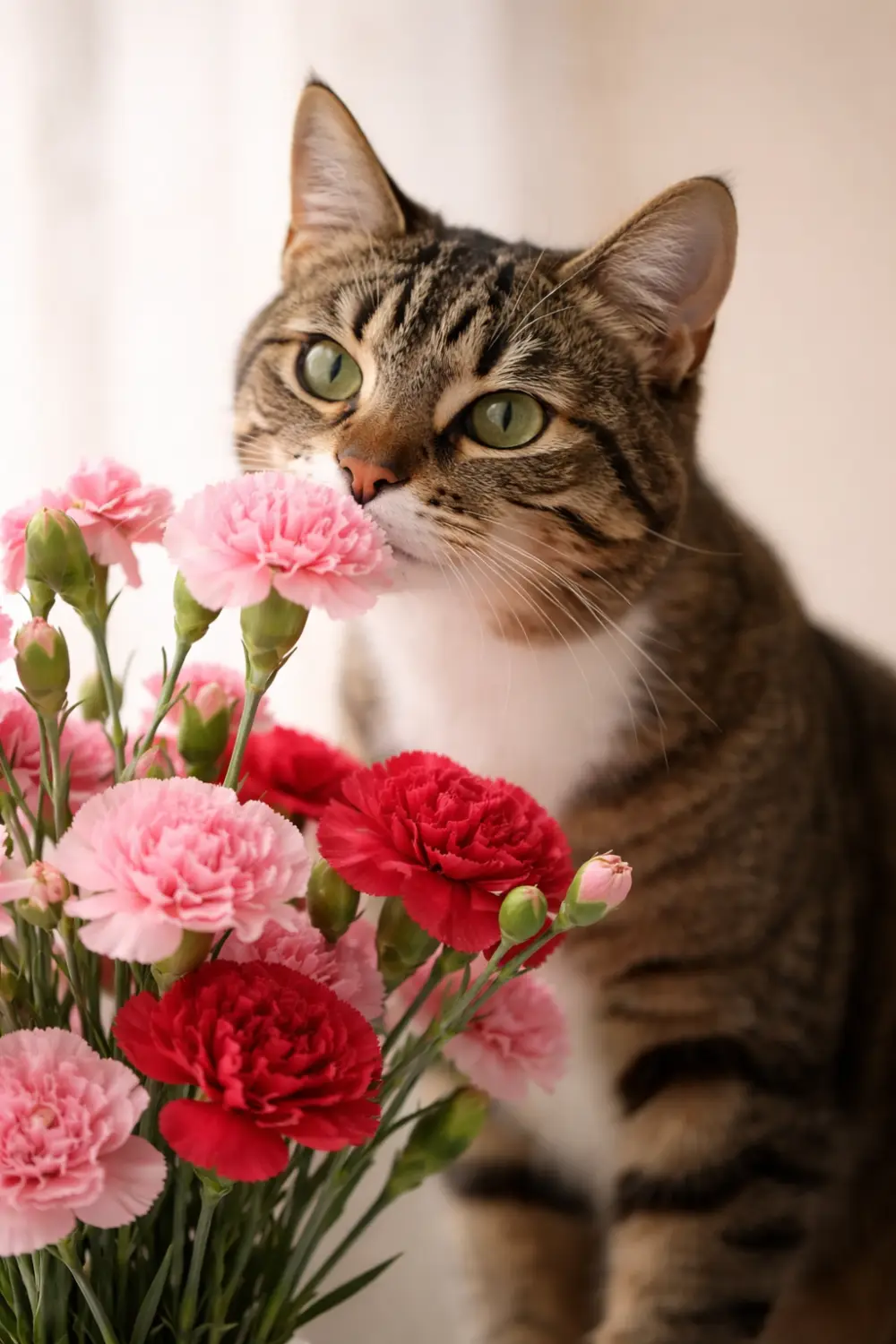
If you live with a cat and love keeping flowers at home, it is completely normal to wonder whether carnations are safe for cats. The short and honest answer is no. Carnations are not considered safe for cats and should be kept out of their reach.
According to veterinary and pet toxicology sources, carnations contain compounds that can cause mild toxicity in cats when eaten or chewed. While they are not as dangerous as lilies, they can still make a cat sick and uncomfortable.
Why Carnations Are Not Safe for Cats?
Carnations, scientifically known as Dianthus caryophyllus, contain natural chemical compounds believed to be triterpenoid saponins. These substances act as irritants when a cat chews the leaves, petals, or stems.
Veterinary sources consistently describe carnation toxicity in cats as mild, but mild does not mean harmless. Cats have very sensitive digestive systems, and even small exposure can lead to unpleasant symptoms.
In real world veterinary cases, cats usually become sick after nibbling on the plant rather than simply being near it.
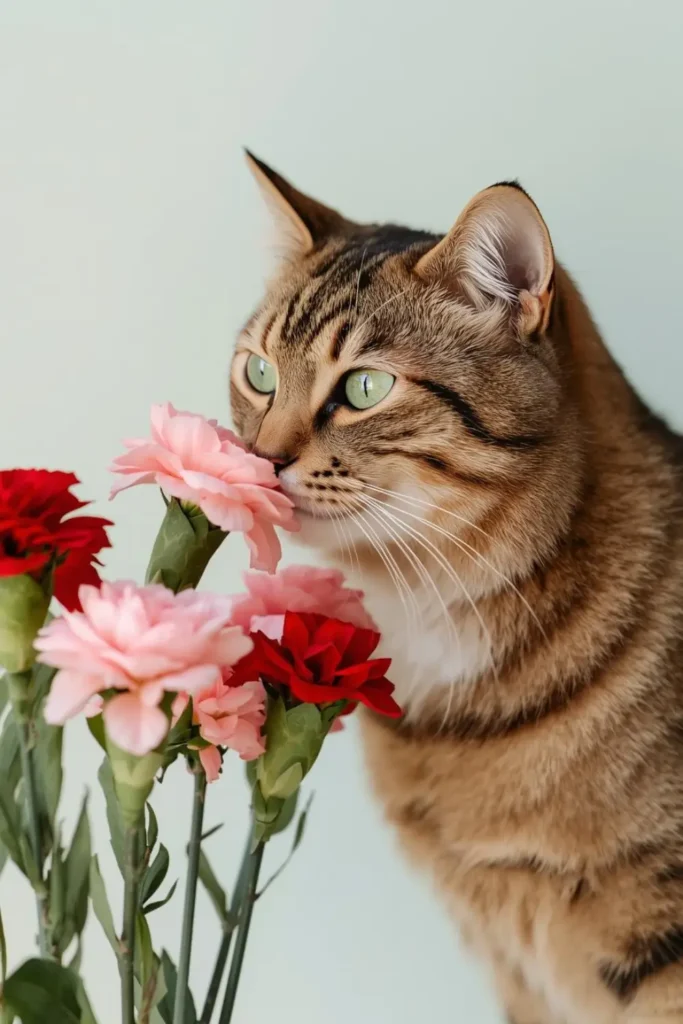
Similar mild reactions have also been reported with other household plants, such as jade plants, which are commonly found indoors but are not considered safe for cats either.
Are Carnations Safe for Cats to Smell?
This is a very common concern, especially for cat owners who keep bouquets on tables or shelves.
The fragrance of carnations alone is not known to be toxic to cats. Smelling the flower briefly is unlikely to cause poisoning. However, problems can arise when a cat rubs against the flower, gets pollen or sap on their fur, or chews on any part of the plant.
Because cats groom themselves frequently, even indirect contact can lead to ingestion later. For this reason, veterinarians generally advise against keeping carnations in homes with cats, even if the cat only seems interested in smelling them.
What Happens If a Cat Eats Carnations?
When a cat eats carnations, symptoms usually appear within a few hours. The most reported signs include vomiting, diarrhea, drooling, reduced appetite, and lethargy. Some cats may also show mild mouth irritation or skin irritation if the plant sap touches their skin.
These symptoms are usually short lived, but that does not mean they should be ignored. A cat that continues vomiting or becomes weak and dehydrated should always be examined by a veterinarian.
From a veterinary perspective, most cases of carnation poisoning resolve with supportive care and monitoring. There is no specific antidote, but prompt attention helps prevent complications.
Are Carnations Safe for Cats to Eat or Be Around?
Carnations are not safe for cats to eat, even in small amounts. Cats do not need to consume a large quantity to experience stomach upset.
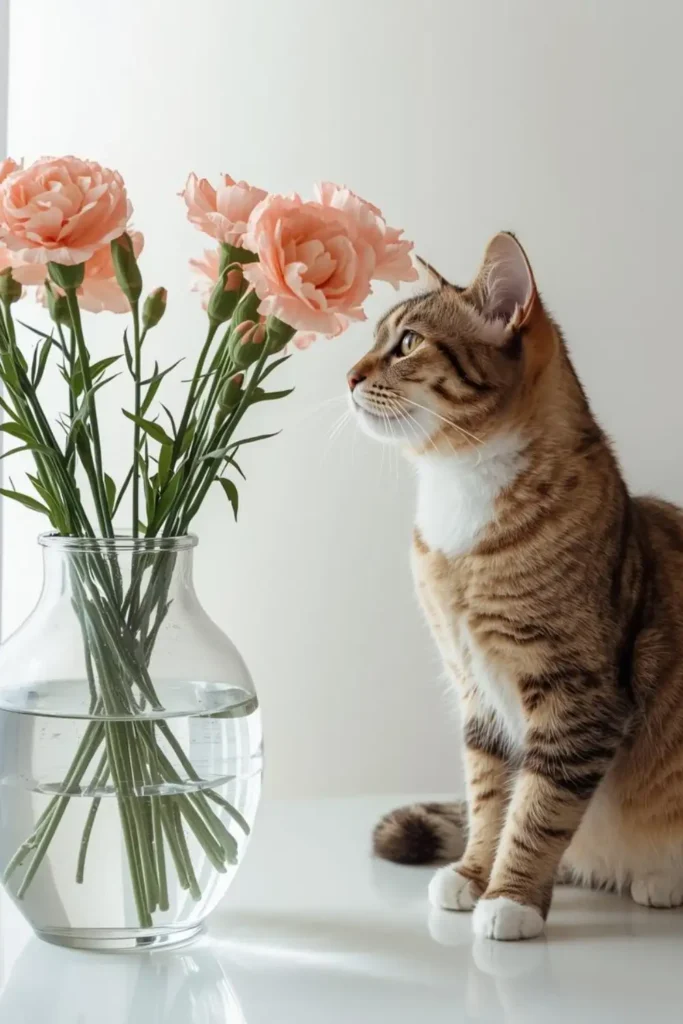
Being around carnations without contact is less risky, but cats are curious by nature. A bouquet placed within reach can quickly turn into a chewing opportunity, especially for kittens or indoor cats who explore with their mouths.
For safety, the best option is to avoid bringing carnations into a home with cats altogether.
Are Mini Carnations and Spray Carnations Safe for Cats?
Mini carnations, spray carnations, and standard carnations all belong to the same plant species. Veterinary sources do not differentiate between these types when it comes to toxicity. Size does not change the risk.
Whether the carnation is small, large, fresh, or dried, it should be treated as unsafe for cats.
Does Color Matter? White, Pink, Red, Lavender Carnations
White, Pink, Red, and Lavender Carnations
Color does not affect toxicity. White carnations, pink carnations, red carnations, lavender carnations, and even specially dyed varieties such as blue carnations all pose the same risk.
The toxic compounds are part of the plant itself, not the pigment. Changing color does not make a carnation safer for cats.
Are Carnations Toxic to Dogs and Humans?
Carnations are also considered mildly toxic to dogs, causing similar digestive symptoms such as vomiting or drooling. Dogs are generally less sensitive than cats, but the plant is still not considered pet safe.
For humans, carnations are not toxic. In rare cases, people with sensitive skin may experience mild irritation after handling the plant, but this is not considered dangerous.
Are Roses and Carnations Safe for Cats?
This question comes up often because roses and carnations are commonly sold together in bouquets.
True roses are considered non toxic to cats, according to veterinary plant safety sources. The main risk with roses is physical injury from thorns, not poisoning.
Carnations, however, are mildly toxic. When roses and carnations are mixed in a bouquet, the bouquet as a whole should be considered unsafe for cats.
What Flowers Are Safe for Cats?
If you love flowers and share your home with a cat, there are safer options available. Veterinary toxicology references list several flowers that are generally considered non toxic to cats, including roses, orchids, sunflowers, African violets, and snapdragons.
Even with safe flowers, placement matters. Keeping plants out of reach reduces the risk of chewing and accidental ingestion.
What To Do If Your Cat Eats Carnations
Common Symptoms to Watch For
If you suspect your cat has eaten part of a carnation, observe them closely. Mild vomiting or diarrhea may resolve on its own, but ongoing symptoms should never be ignored.
Contact your veterinarian if symptoms last more than a few hours, worsen, or if your cat becomes unusually quiet or weak. Early guidance can prevent dehydration and discomfort.
From a veterinary standpoint, it is always better to ask early than to wait and hope symptoms pass.
Final Thoughts From a Veterinary Perspective
Carnations are not among the most dangerous plants for cats, but they are not safe. Mild toxicity still means stress, stomach upset, and potential veterinary visits for your cat.
In my experience working with cat health and safety topics, most plant related poisonings happen simply because flowers are placed within easy reach. The safest choice is always prevention.
If you share your home with a cat, choosing cat safe plants or keeping all flowers completely inaccessible is the best way to protect their health.














4 Responses