

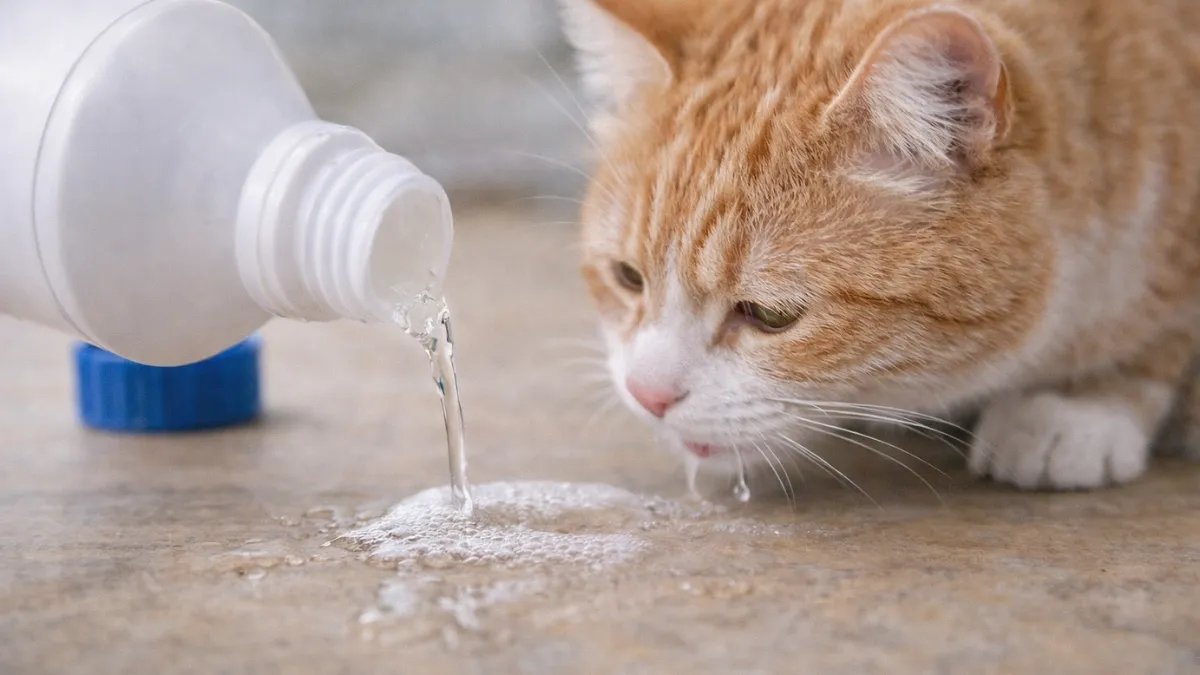
Hydrogen peroxide is a common household product. Many cat owners reach for it when cleaning wounds, disinfecting surfaces, or after a cat licks something questionable. The question sounds simple, but the answer depends on how hydrogen peroxide is used and where it comes into contact with your cat.
Veterinary sources do not consider hydrogen peroxide a safe everyday product for cats. While small accidental exposure may not always cause serious harm, routine or direct use can irritate tissues and slow healing.
Table of Contents
Quick Answer for Cat Owners
Hydrogen peroxide is not recommended for use on cats.
Veterinary guidance advises against using it on wounds, skin, ears, eyes, or mouth. Accidental licking usually causes irritation rather than poisoning, but it should never be used intentionally on a cat.
Why Cat Owners Ask About Hydrogen Peroxide
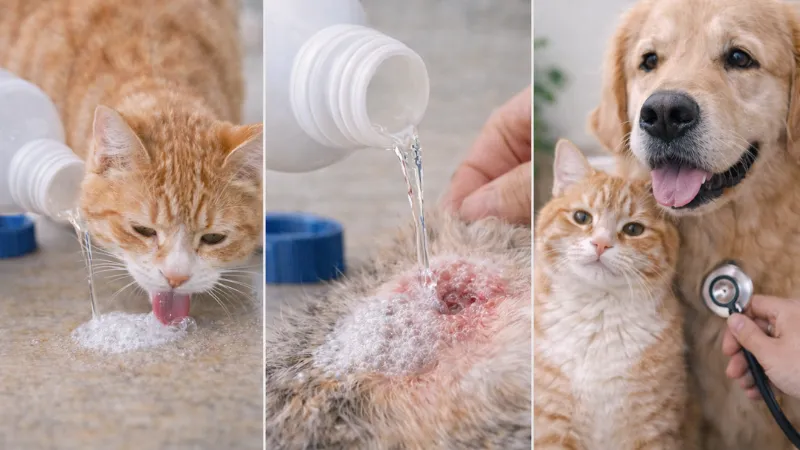
Most cat owners search this topic after one of these situations:
- A cat licks hydrogen peroxide from a surface
- A small wound needs cleaning at home
- Old advice suggests peroxide kills bacteria
- Confusion between dog and cat care
Modern veterinary medicine has moved away from hydrogen peroxide for pet care, especially for cats.
How Hydrogen Peroxide Affects Cats
Hydrogen peroxide releases oxygen bubbles when it contacts tissue. This bubbling looks effective, but it damages healthy cells along with bacteria.
What Happens if a Cat Licks Hydrogen Peroxide
According to Pet Poison Helpline and Catster, licking hydrogen peroxide can cause drooling, mouth irritation, nausea, and vomiting. The taste and fizzing sensation irritate the mouth and stomach lining.
Symptoms usually appear quickly and are often mild, but repeated exposure increases risk.
What Happens if a Cat Drinks Hydrogen Peroxide
Ingesting hydrogen peroxide is more concerning. Veterinary sources warn it can cause stomach irritation, vomiting, abdominal discomfort, and foaming. It is not used to induce vomiting in cats and should never be given orally.
Is Smelling Hydrogen Peroxide Harmful for Cats
Fumes are not considered toxic, but strong smells can stress cats. Cats have sensitive respiratory systems, and exposure should be limited by good ventilation.
Can You Use Hydrogen Peroxide on Cat Wounds
Veterinary consensus is clear. Hydrogen peroxide should not be used to clean cat wounds.
Why Vets No Longer Recommend It
Sources including Preventive Vet and Vet Garofalo explain that hydrogen peroxide damages fibroblasts. These are the cells responsible for healing. Killing bacteria is not helpful if healing tissue is destroyed in the process.
How Hydrogen Peroxide Slows Healing
Repeated use delays wound closure, increases inflammation, and may worsen irritation. What looks clean on the surface may actually heal slower underneath.
When Peroxide Is Mentioned but Still Avoided
Some older guides mention peroxide for initial debris removal. Modern veterinary advice recommends safer alternatives instead.
Is Hydrogen Peroxide Safe for Cat Ears Eyes or Teeth
Hydrogen peroxide should never be used in these areas.
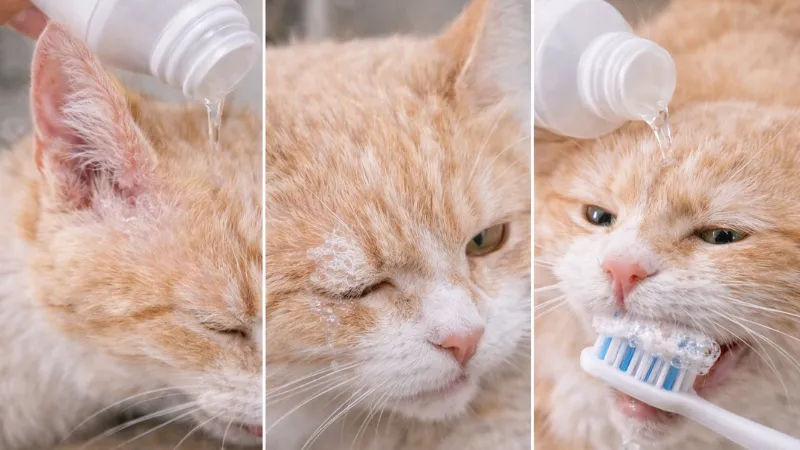
- Using it in ears can irritate the ear canal and worsen inflammation.
- Using it near eyes risks chemical irritation and injury.
- Using it on teeth or gums can damage oral tissues.
Catster and BLVD Vet Chicago clearly advise against these uses.
What To Do If Your Cat Is Exposed to Hydrogen Peroxide
Most cases do not require emergency treatment, but monitoring is important.
If exposure is small and symptoms are mild, watch for drooling, vomiting, or refusal to eat.
Contact a veterinarian immediately if vomiting continues, your cat becomes lethargic, or a large amount was ingested.
Safer Alternatives Vets Recommend Instead
Veterinary sources recommend gentle, non-irritating options.
For wound care, saline solution or clean water is preferred.
For household cleaning, cat-safe products should be used with good ventilation.
If you are comparing household products, you may find our guides on vinegar safety around cats and baking soda use in cat homes helpful, as they explain similar risks and precautions.
Hydrogen Peroxide Compared to Other Household Substances
Hydrogen peroxide is often grouped with items like vinegar, baking soda, and aloe vera. Each has different risks.
Some products are irritating but not toxic. Others can cause digestive upset if ingested. This is why using a product because it is natural does not automatically make it safe.
Is Hydrogen Peroxide More Dangerous for Cats Than Dogs
Yes. Cats process chemicals differently than dogs. Dogs are sometimes treated with hydrogen peroxide under veterinary supervision. Cats are not.
This difference is why advice meant for dogs should never be applied to cats.
Common Myths About Hydrogen Peroxide and Cats
Many myths persist online.
Hydrogen peroxide does not safely clean cat wounds.
It should not be used to induce vomiting in cats.
Diluting it does not make it safe for routine use.
These myths are addressed repeatedly in veterinary publications.
Final Safety Advice for Cat Owners
Hydrogen peroxide has a place in human first aid, but not in routine cat care. When in doubt, avoid home remedies and choose gentle, vet-approved options. Cats heal best when irritation is minimized.
Questions About Hydrogen Peroxide and Cats
Can hydrogen peroxide kill cats
Hydrogen peroxide is not classified as a deadly poison, but improper use can cause serious irritation and complications.
Can I dilute hydrogen peroxide for my cat
Dilution does not make it safe for wounds, ears, eyes, or ingestion.
What should I use instead to clean my cat’s wound
Veterinary sources recommend saline solution or clean water.
Should I call a vet if my cat licked hydrogen peroxide
If symptoms are mild, monitor closely. Call a vet if vomiting or lethargy develops.
Sources and Veterinary References
BLVD Vet Chicago: Hydrogen Peroxide Dog and Cat Safety
Vet Garofalo: Hydrogen Peroxide on Wounds in Dogs and Cats
Pet Poison Helpline: Is Hydrogen Peroxide Bad for Cats
Catster: Can I Use Hydrogen Peroxide on Cats
Preventive Vet: Why Peroxide Is Not for Cleaning Pet Wounds













One Response