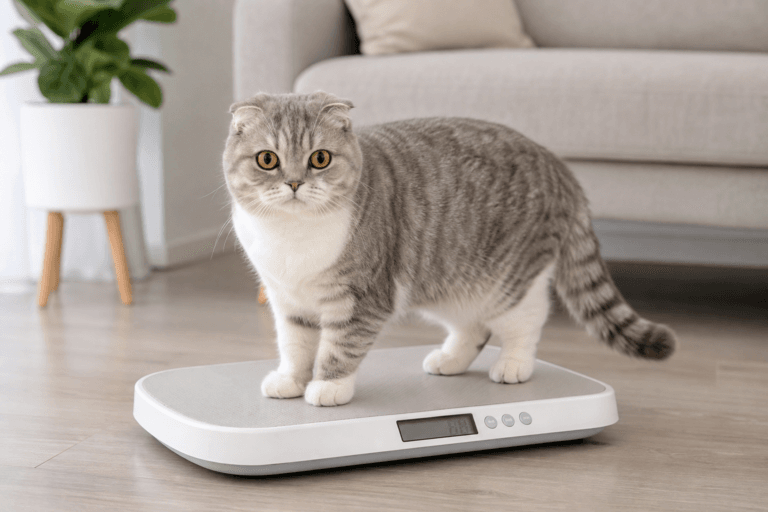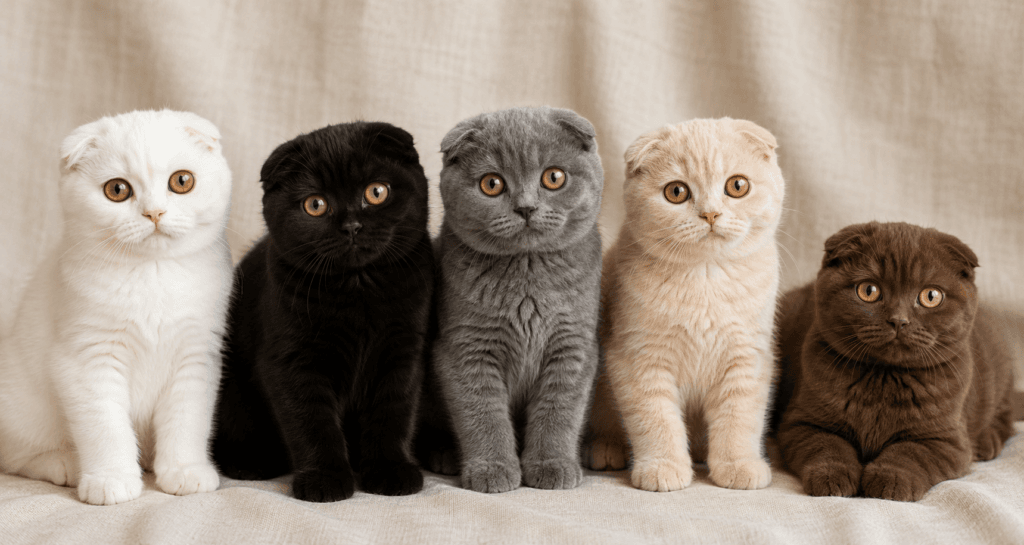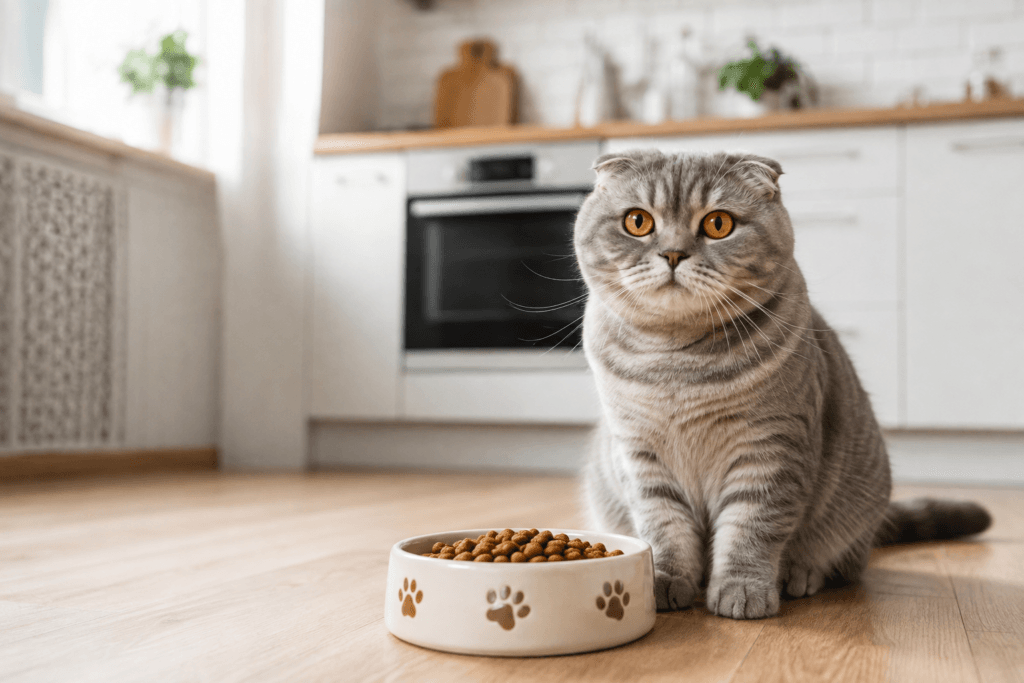


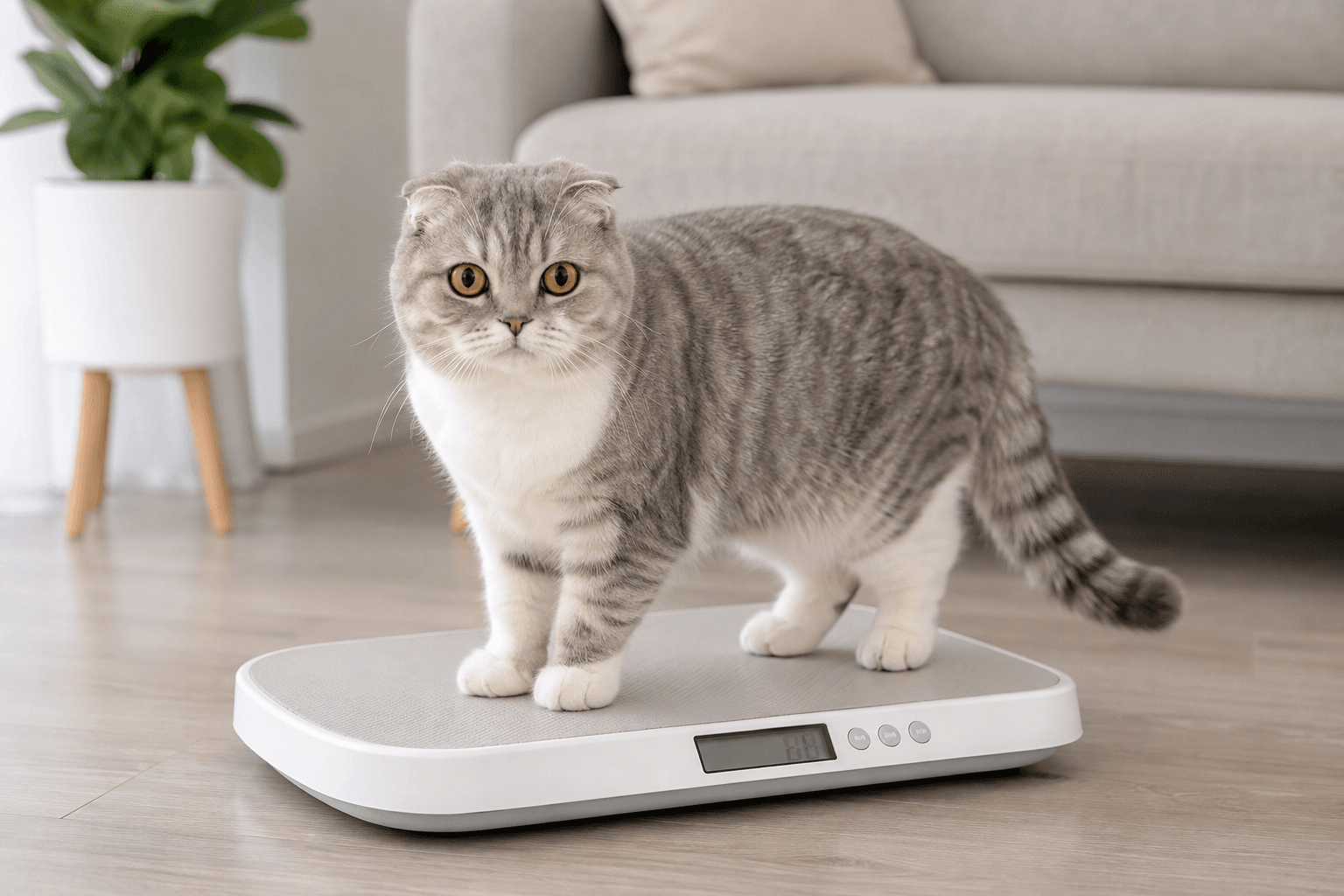
Scottish Fold weight management matters more for this breed than most, because their naturally round, stocky build makes early weight gain easy to miss. Unlike leaner breeds where a few extra grams show up quickly, a Scottish Fold can quietly cross from “healthy” into “overweight” while still looking like their normal cuddly self. Add in their genetic tendency toward joint sensitivity, and unmanaged weight gain becomes a real long-term health risk rather than just a cosmetic issue. This guide breaks down exactly how much a Scottish Fold should weigh, how to check their body condition at home, and a practical, vet-informed plan for keeping them lean without starving them.
Why Scottish Fold Weight Management Deserves Extra Attention
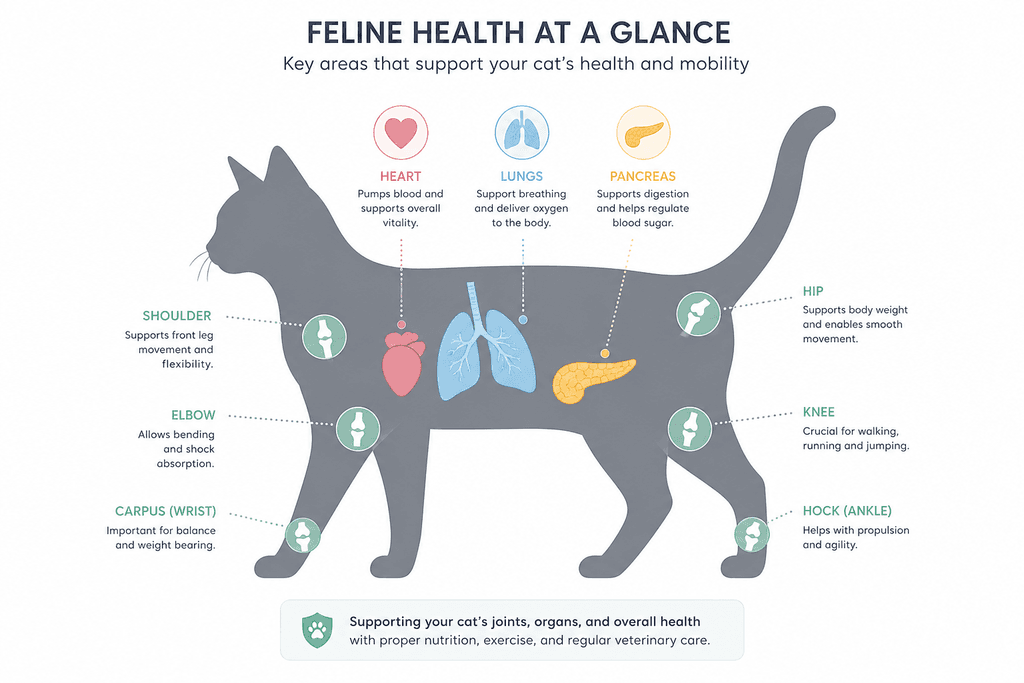
Good Scottish Fold weight management isn’t just about appearance, it directly protects several major organ systems.
Their Round Body Shape Hides Early Weight Gain
Scottish Folds have a naturally dense, rounded frame, which means the visual cues owners rely on for other breeds, like a visible waistline, often aren’t obvious until the cat is already carrying significant extra weight. This is exactly why hands-on checks matter more than eyeballing for this breed.
Weight Gain Adds Pressure to Already Vulnerable Joints
Scottish Folds carry a cartilage-related gene mutation (the same one behind their folded ears) that can make their tail, ankles, and knees more sensitive than average. Extra body weight multiplies the mechanical stress on these joints, which is one of the biggest reasons Scottish Fold weight management and joint health go hand in hand. If you haven’t already, our guide on Scottish Fold joint support food covers this connection in more depth.
Long-Term Health Risks of an Overweight Scottish Fold Cat
An overweight Scottish Fold cat faces a higher risk of heart strain, breathing difficulty, diabetes, and reduced mobility over time. Consistent Scottish Fold weight management from adulthood onward is one of the simplest ways to add healthy years to your cat’s life.
How Much Should a Scottish Fold Weigh?
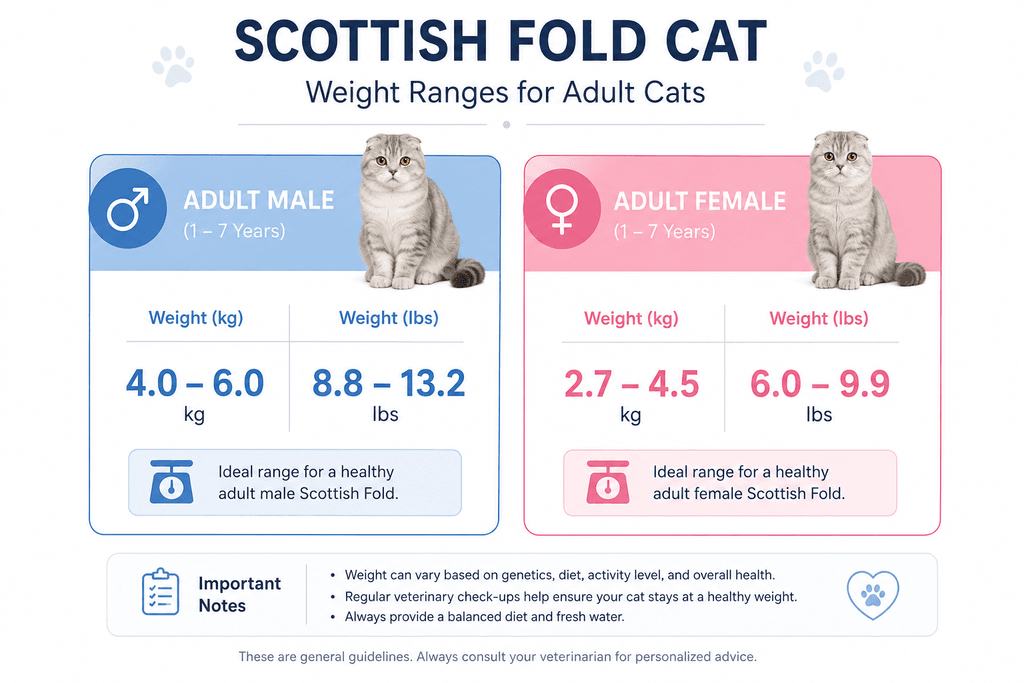
There’s no single perfect number, since bone structure and frame size vary, but general healthy ranges for the breed look like this:
| Category | Typical Healthy Weight |
|---|---|
| Adult female Scottish Fold | 2.7–4 kg (6–9 lbs) |
| Adult male Scottish Fold | 4–5.9 kg (9–13 lbs) |
| Spayed/neutered adults | Often slightly lower calorie needs than intact cats |
| Kittens | Weight varies by age; steady weekly growth matters more than a fixed number |
Veterinary body-weight research on pedigree cats also shows that breed size class matters more than a single universal “ideal weight” figure, which is why body condition scoring (below) is considered more reliable than the scale alone.
Is 7kg Too Heavy for a Scottish Fold?
For most Scottish Folds, 7kg (about 15.4 lbs) is above the healthy range and would typically be classified as overweight to obese, especially for females. Some naturally large-framed males may sit closer to this without being unhealthy, but it’s worth a vet check to rule out excess fat rather than assume it’s “just a big cat.”
How to Check Body Condition at Home (Better Than the Scale Alone)
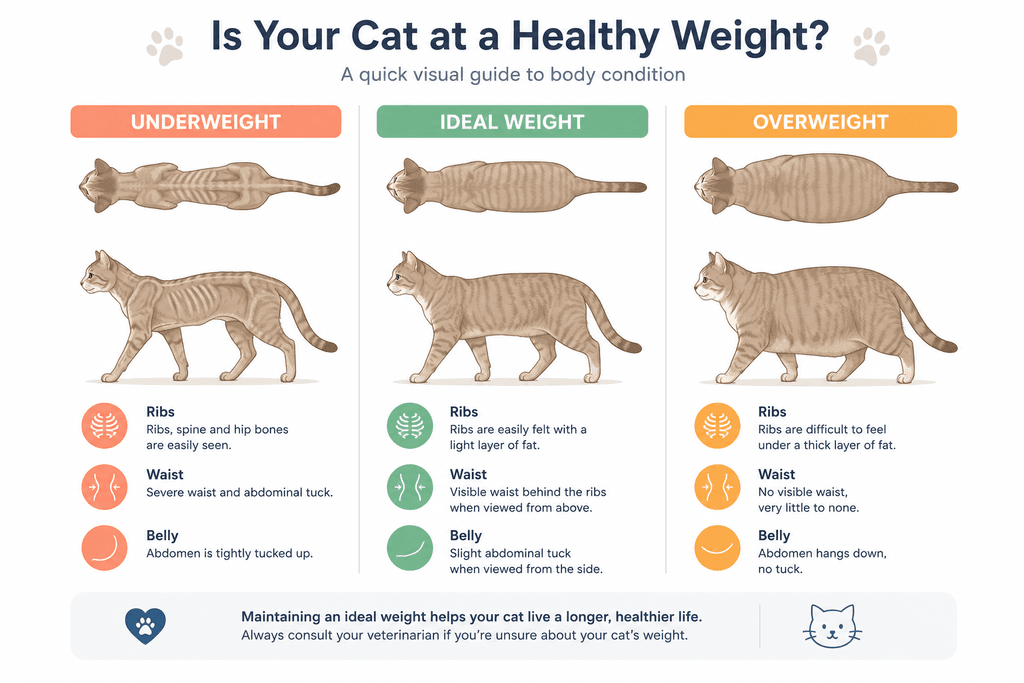
Scale numbers alone don’t tell the full story. These three hands-on checks are far more accurate for real Scottish Fold weight management.
1. The Rib Check
Run your hands gently along your cat’s sides. You should be able to feel the ribs with light pressure, similar to feeling the back of your hand. If you have to press firmly to find them, your cat likely carries excess weight.
2. The Waistline Test
Look down at your cat from above. A healthy Scottish Fold should show a slight inward curve behind the ribcage. A straight or outward-curving line usually signals extra weight.
3. The Side Profile Check
From the side, there should be a subtle upward “tuck” where the belly meets the hind legs. Note that a loose skin pouch near the belly (the primordial pouch) is normal in many cats and isn’t the same as fat accumulation, a rounded, sagging stomach is the real warning sign.
Signs of an Overweight Scottish Fold Cat
- Ribs are difficult to feel even with firm pressure
- No visible waistline from above
- Reduced activity, jumping, or interest in play
- Heavy or audible breathing after mild activity
- Difficulty grooming the lower back, leading to a matted or unkempt coat
If you notice two or more of these signs, it’s a good time to start a structured Scottish Fold weight management plan and speak with your vet.
Scottish Fold Weight Loss Diet: What Actually Works
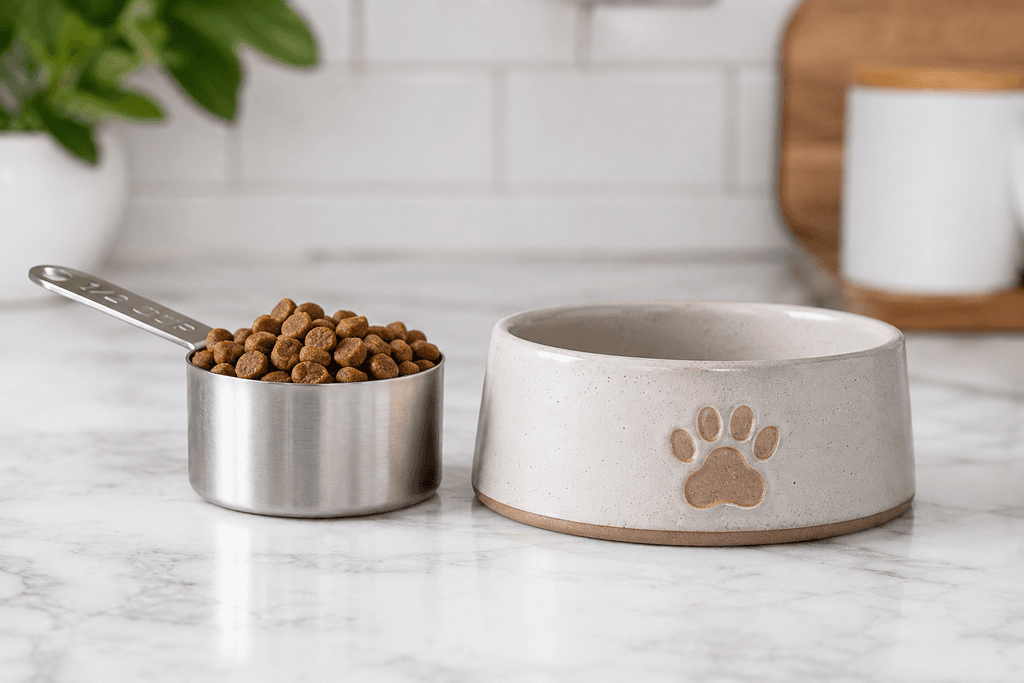
Crash diets and sudden food cuts are unsafe for cats and can trigger serious liver problems. A safe Scottish Fold weight loss diet is gradual and structured.
Prioritize Protein, Limit Fillers
Choose food where a named animal protein (chicken, turkey, or fish) is the first ingredient, with minimal corn, wheat, or soy filler content. Higher protein helps preserve lean muscle while reducing calories.
Wet Food Often Works Better for Weight Loss
Wet food is generally lower in calorie density and higher in moisture than dry kibble, which can help a cat feel full on fewer calories, a useful tool within any Scottish Fold weight loss diet.
Measure Every Meal
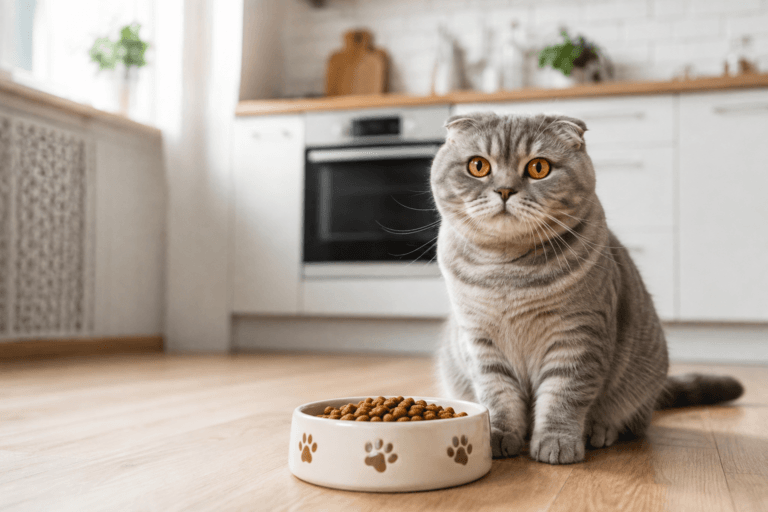
Free-feeding or “eyeballing” portions is one of the most common causes of slow, unnoticed weight gain. Use a kitchen scale or measuring cup, and follow calorie guidance based on your cat’s target weight and activity level rather than the general bag instructions, which are often generous.
Set Fixed Meal Times
Two to three scheduled meals a day, rather than constant grazing, gives you far more control over total daily calories and makes Scottish Fold weight management dramatically easier to track.
Keep Treats Under 10% of Daily Calories
Treats add up quickly in a small-bodied animal. Single-ingredient freeze-dried options (like plain chicken or salmon) are a lower-calorie way to still reward your cat.
Sample Weekly Weight Management Routine
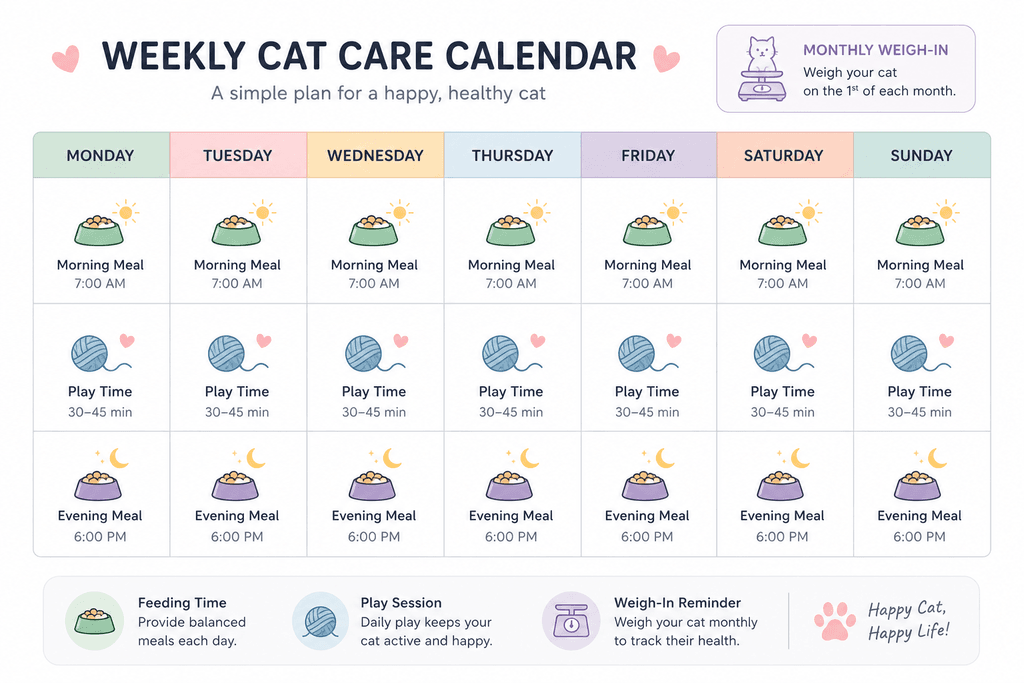
- Daily: Two to three measured meals, no free access to dry food
- Daily: 10–15 minutes of active play, split into two short sessions
- Weekly: Quick rib and waistline check
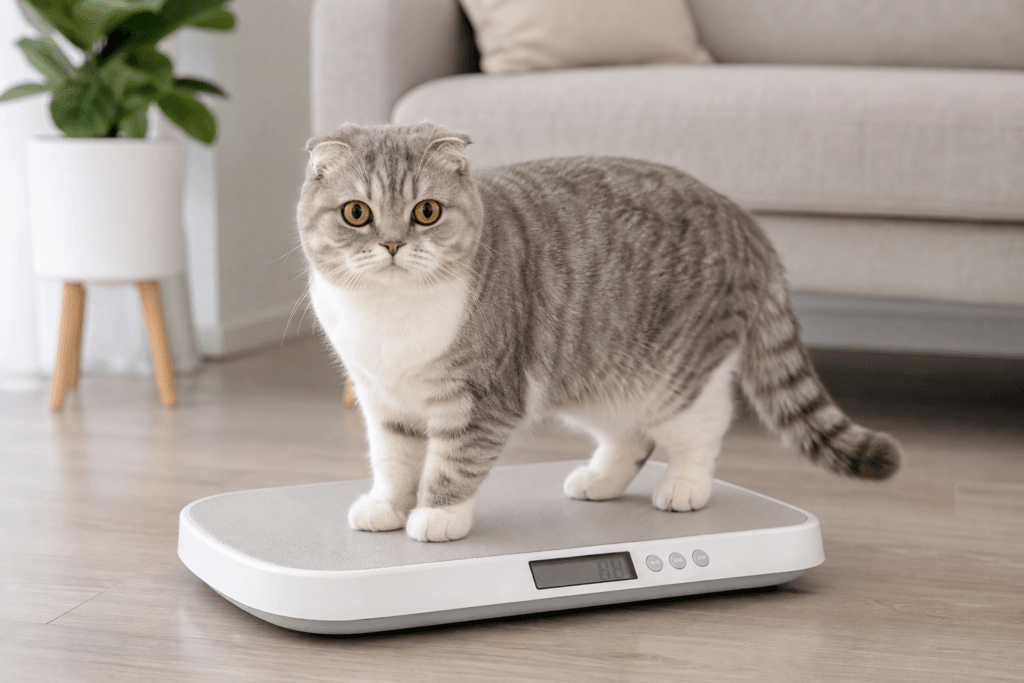
- Monthly: Full weigh-in using a pet or baby scale, logged in a notes app or simple chart
Small, consistent habits like this outperform occasional strict diets for long-term Scottish Fold weight management.
Should Scottish Fold Kittens Be Put on a Diet?
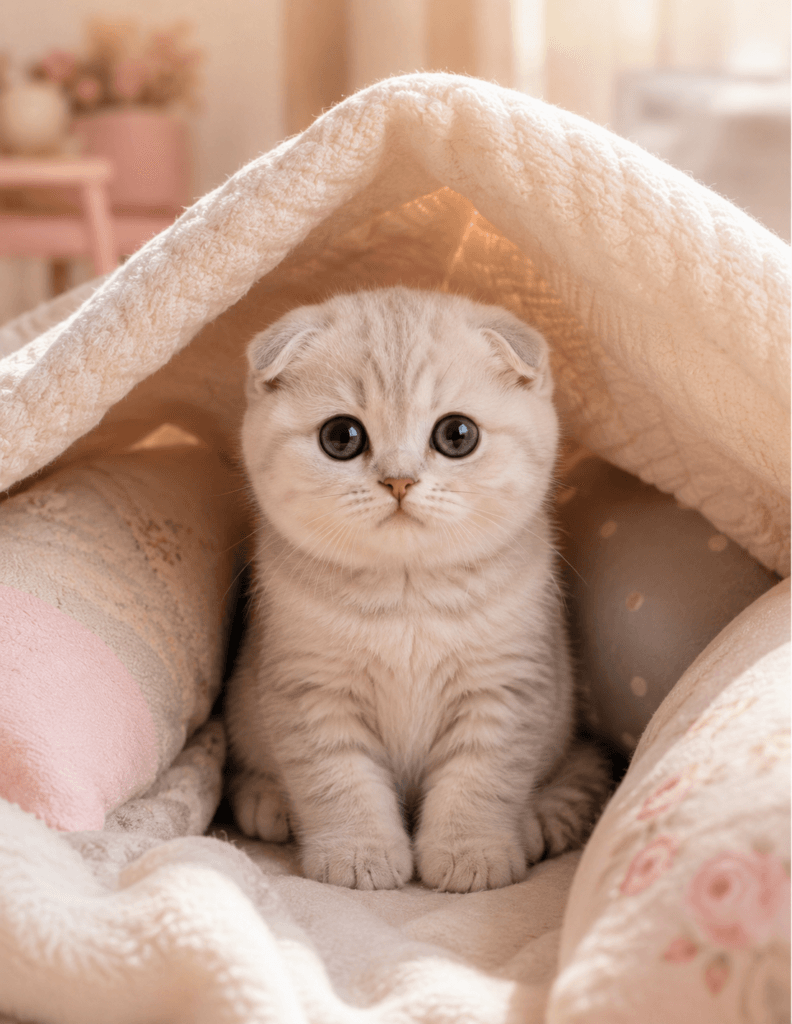
No. Kittens need consistent, calorie-dense nutrition to support healthy growth and should never be calorie-restricted. A slightly rounded kitten is normal and expected; the goal is steady, proportional weekly growth rather than restriction. Structured weight management should generally begin once a Scottish Fold reaches adulthood, unless a vet advises otherwise for a specific medical reason.
When to See a Vet About Your Scottish Fold’s Weight
Book a vet visit if you notice:
- A weight change of more than roughly half a pound (around 0.2 kg) in a single month
- Constant hunger despite normal feeding
- Weight gain even with reduced food intake
- Signs of joint pain, stiffness, or limping alongside weight gain, which can point to both obesity and the breed’s cartilage sensitivity
Sudden, unexplained weight changes can also signal thyroid issues or other underlying conditions that need medical diagnosis rather than diet adjustments alone.
What is the best diet for a Scottish Fold cat?
The best diet for a Scottish Fold cat is a high-protein, moderate-fat food with a named animal protein as the first ingredient, fed in measured portions rather than free-fed, with treats kept under 10% of total daily calories.
What are common Scottish Fold problems?
Common Scottish Fold problems include joint and cartilage issues linked to osteochondrodysplasia, a tendency toward weight gain due to their low-activity build, and occasional ear-related sensitivity connected to the same folding gene.
Is 7kg too heavy for a cat?
For most domestic cats, including Scottish Folds, 7kg is above the typical healthy range and usually indicates overweight or obesity, though very large-framed individuals should be assessed by a vet rather than judged on weight alone.
What can I feed my cat to help her lose weight?
A measured, high-protein, lower-calorie wet food combined with reduced treats and consistent portion control is generally the safest way to help a cat lose weight gradually, ideally under veterinary guidance.
How to slim down an obese cat?
Slimming down an obese cat safely involves gradual calorie reduction (never a sudden crash diet), portion measuring, scheduled meals instead of free-feeding, increased daily play, and regular vet-monitored weigh-ins.
Conclusion
Scottish Fold weight management isn’t about strict diets or obsessive scale-watching, it’s about building small, consistent habits: measured meals, regular body condition checks, daily play, and monthly weigh-ins. Because this breed hides early weight gain so well under their naturally round frame, staying proactive rather than reactive is what actually protects their joints, energy, and long-term health. Combine a well-portioned diet with the joint-support strategies in our related guide, and your Scottish Fold has the best possible foundation for a long, comfortable life.
Related Reads (Internal Links)
- Scottish Fold Joint Support Food: A Complete, Vet-Informed Guide
- The Complete Guide to Scottish Fold Cat Diet
- The Best Dry Food for Scottish Fold Cats: A Complete Feeding Guide
- Scottish Fold Cats Care and Grooming
This article provides general educational information about Scottish Fold weight management and is not a substitute for professional veterinary advice. If you’re concerned about your cat’s weight, consult a licensed veterinarian for a proper diagnosis and a tailored plan.