


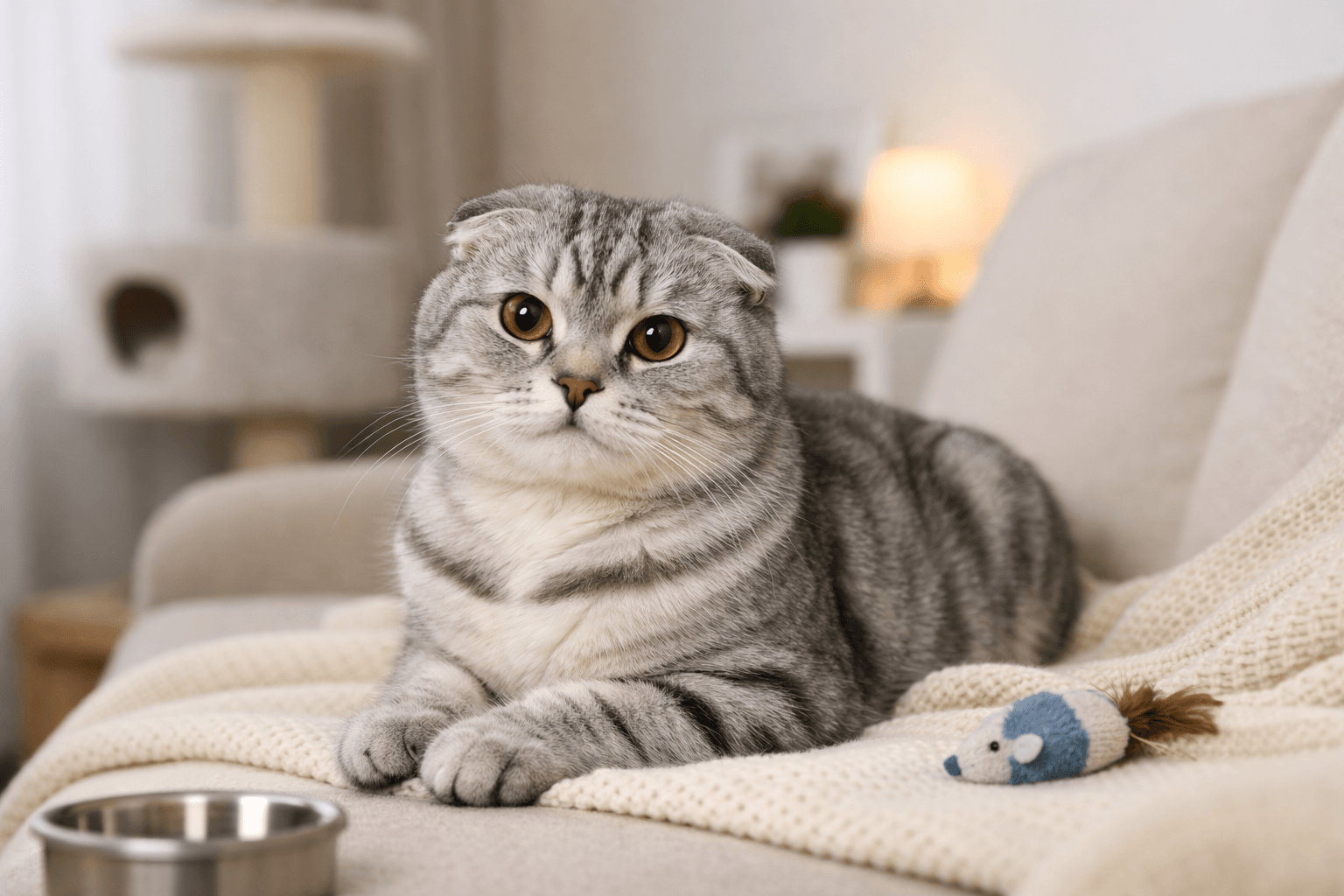
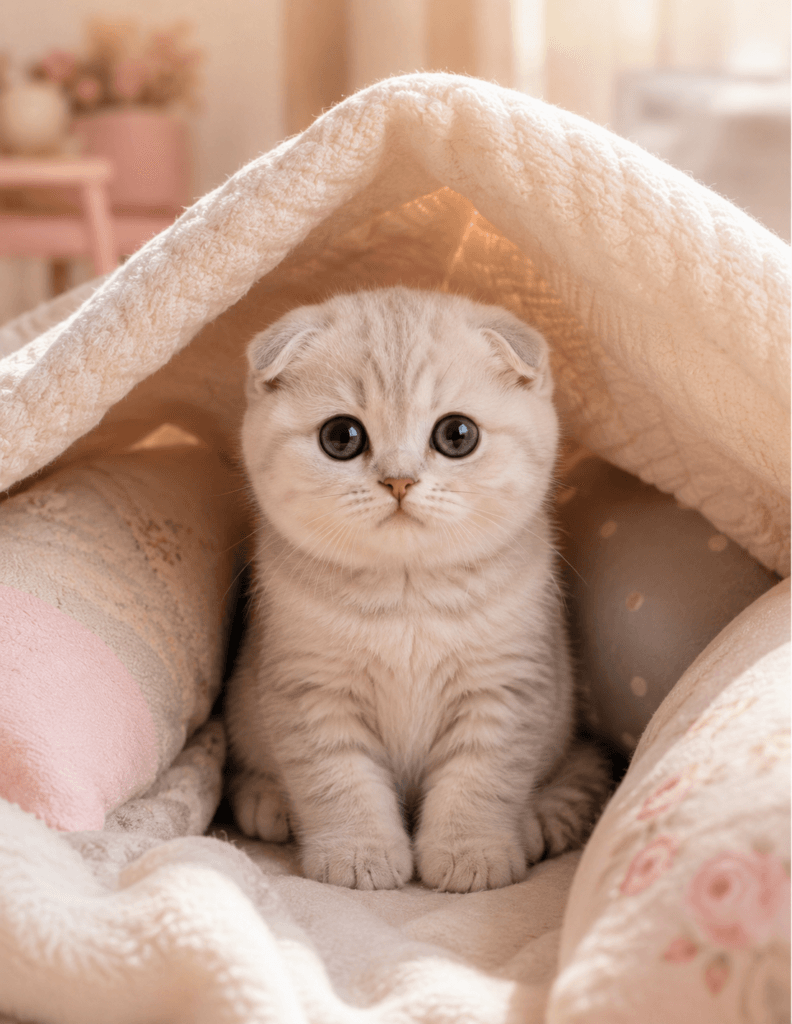
Bringing a cat home for the first time is exciting and a little overwhelming. Cats may have a reputation for being independent, but they have real, consistent needs that every new owner must understand from day one. Whether you have adopted a curious kitten, a calm adult cat, or one of the Scottish breeds like a Scottish Fold or Scottish Straight, the fundamentals of Scottish Fold cat care tips for beginners remain the same.
This guide walks you through everything a first-time cat owner needs: setting up your home, feeding correctly, grooming, litter training, vet care, and the specific considerations that apply if you own a Scottish cat. If you are looking for one comprehensive reference to bookmark and return to, this is it.
Setting Up Your Home for a Scottish Fold care Cat

Scottish Fold Cat care tips for beginners always start before the cat steps through the door. Preparation matters far more than most new owners realise. Cats are sensitive to their environment, and the first few days in a new home set the tone for how comfortable and confident your cat will feel for months to come.
Start by designating one quiet room as your cat’s introduction space. This gives them a manageable territory to explore without being overwhelmed by an entire house. Place their bed, food and water bowls, litter box, and a scratching post all in this room. Once your cat is visibly relaxed typically after several days you can gradually allow access to the rest of the home.
Cat-proofing is non-negotiable. Remove or secure anything that could be dangerous: electrical cables, toxic houseplants (lilies are particularly lethal to cats), open washing machines and dryers, small objects that can be swallowed, and any cleaning products left within reach. A cat’s natural curiosity means they will investigate everything, and a safe environment is the foundation all other Scottish Fold cat care tips for beginners are built on.
Feeding: Diet and Fresh Water

To properly care for a cat at home, a balanced diet is the single most important thing you control daily. Cats are obligate carnivores, which means they require animal protein to survive plant-based diets are not suitable and can cause serious deficiencies over time. A high-quality commercial cat food that lists meat or fish as the primary ingredient covers the basics for most cats.
For most adult cats, two measured meals per day works better than free-feeding. Scheduled feeding helps you monitor appetite, which is one of the earliest signs of illness. Kittens under six months need three to four smaller meals a day to support growth.
Fresh water should always be available, placed separately from the food bowl. Cats instinctively avoid drinking near their food source a behaviour inherited from wild ancestors who associate standing water near prey with contamination. Many cats drink more readily from a pet water fountain than a static bowl, which helps prevent urinary tract issues, a common health problem in cats kept primarily on dry food.
The balance between wet and dry food is worth thinking about carefully. Wet food provides hydration and tends to be higher in protein with fewer carbohydrates. Dry food is convenient and helps with dental health. A combination of both is a practical middle ground for most households. For a full breakdown of what to feed a Scottish Fold care or Straight specifically, our Scottish Fold Cat Diet Guide covers nutrition in detail, and our guide on Best Dry Food for Scottish Fold Cats is worth reading before your next purchase.
Litter Box: Setup and Daily Maintenance
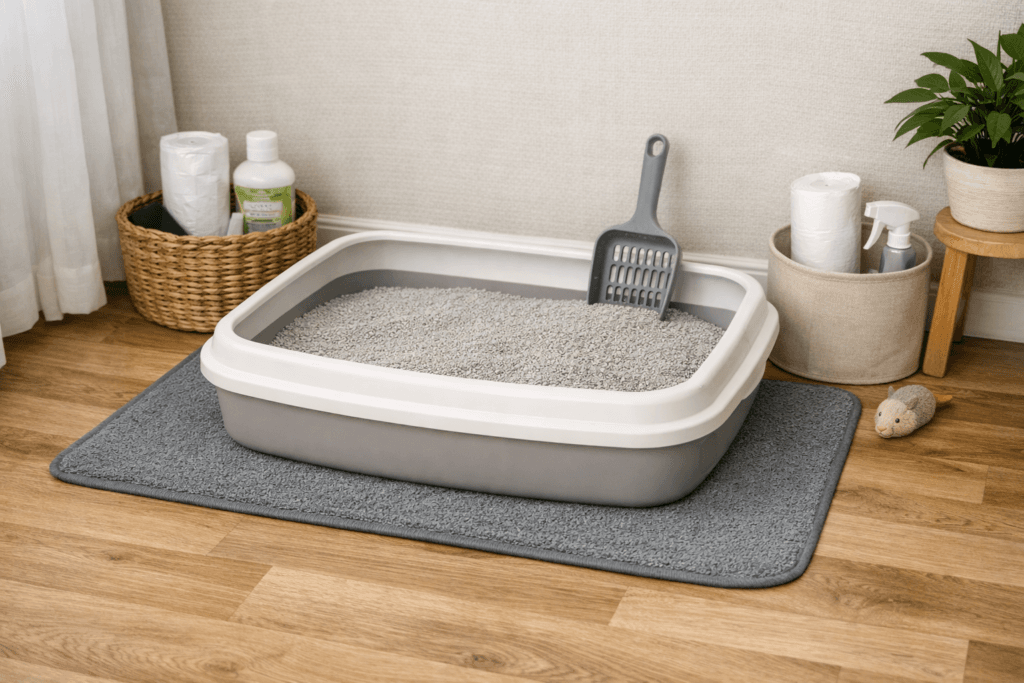
The litter box is one area where new owners frequently make avoidable mistakes. The general rule is one litter box per cat, plus one extra. If you have a single cat in a two-storey home, having one box on each floor is sensible.
Uncovered litter boxes are recommended over covered ones for most cats. Covered boxes trap odours inside, which makes them unpleasant for the cat even when they appear clean to you. Cats that avoid the litter box are often reacting to smell or placement rather than wilful misbehaviour. Place the box in a quiet, low-traffic area where your cat will not be startled while using it. Avoid placing it next to their food and water.
Scoop the litter box daily and do a full clean with mild soap weekly. Clumping, unscented litter works well for most cats strongly scented litters are designed to appeal to owners, not cats, and many cats actively avoid them. If your cat consistently avoids the box, try a different litter type before assuming there is a behavioural problem.
Scratching, Enrichment, and Play

Scratching is not destructive behaviour it is a biological need. Cats scratch to maintain their claws, stretch their muscles, and mark their territory visually and through scent glands in their paws. Providing appropriate scratching posts from the start protects your furniture and satisfies an instinct you cannot train away.
Offer at least one tall, sturdy vertical post that allows your cat to scratch at full stretch. Horizontal scratching pads work well as secondary options. Place posts near sleeping areas and close to any furniture your cat has already shown interest in scratching.
Daily interactive play is one of the most important Scottish Fold cat care tips for beginners that is most often underestimated. Cats are predators by nature, and play mimics hunting. A wand toy or feather teaser used for 10 to 15 minutes twice a day gives your cat the physical and mental stimulation they need. Without this, indoor cats become bored, which leads to destructive behaviour, weight gain, and stress. For Scottish breeds specifically, puzzle feeders work particularly well they are intelligent cats that respond well to problem-solving challenges. Our Scottish Fold Cat Training Guide has practical techniques that work equally well for Scottish Straights.
Veterinary Care and Health Monitoring
Your cat should see a vet at least once a year for a wellness exam, even when they appear perfectly healthy. Cats are experts at hiding illness by the time symptoms are visible, a condition may already be significantly advanced. Annual check-ups include a physical examination, weight assessment, dental check, and discussion of vaccinations and parasite prevention.
Core vaccinations for cats in the UK and US typically cover feline herpesvirus, calicivirus, and panleukopenia. Your vet will advise on the appropriate schedule based on your cat’s age, lifestyle, and local disease prevalence. Regular flea, tick, and worm prevention should also be part of your routine your vet is the best person to recommend products appropriate for your cat’s weight and health status.
Spaying or neutering is strongly recommended unless you are a registered breeder. Beyond preventing unwanted litters, neutering reduces roaming behaviour, certain cancers, and hormone-driven stress in cats. Most vets recommend this procedure at around four to six months of age.
Watch for changes in behaviour at home between vet visits. Reduced appetite, increased thirst, changes in litter box habits, excessive grooming, hiding, or unexplained weight loss are all signals that warrant a vet call. A cat that stops eating entirely for more than 24 hours should be seen by a vet the same day.
Are Scottish Fold Grooming Cats Easy to Take Care Of?
Yes scottish fold grooming cats are considered a good choice for first-time owners, provided the owner is prepared for a few specific care responsibilities. Their calm, affectionate temperament and low-energy lifestyle make daily interaction straightforward. They do not demand constant attention the way some high-energy breeds do, but they are deeply social and dislike being left alone for extended periods.
The main care consideration unique to scottish fold grooming is health monitoring. The same gene responsible for the folded ears can cause osteochondrodysplasia a painful joint and cartilage condition particularly in cats bred irresponsibly from two folded-eared parents. Owners should watch for stiffness, reluctance to jump, or changes in gait, and schedule regular vet checks that include joint assessment. Scottish Folds should also be monitored for hypertrophic cardiomyopathy (HCM) and polycystic kidney disease (PKD) throughout their lives.
Their folded ears require weekly attention. Because the ear canal is partially covered by the fold, wax and moisture accumulate more easily than in upright-eared cats, creating conditions for ear infections. Check the ears weekly they should be clean, pale pink, and odour-free. Use a cotton pad with a vet-approved ear cleaner if needed, and never insert anything into the ear canal. For a complete care and grooming routine, our dedicated guide on Scottish Fold Cats Care and Grooming covers every step in detail.
Scottish Fold Cat Care | A Complete Beginner’s Guide
The Scottish Fold deserves its own section in any guide on Scottish Fold cat care tips for beginners, because this breed has become one of the most popular cats in the UK and US and yet many first-time Fold owners are not prepared for what the breed actually needs day to day. Here is a full breakdown.
Temperament and daily interaction.
The Scottish Fold is famously calm, quietly affectionate, and closely bonded to its family. It follows its owner from room to room, often sitting in what breeders call the “Buddha sit” upright on its haunches with its front paws resting on its belly. It is not a lap cat that demands to be held, but it will always want to be near you. Scottish Folds are sensitive to emotional atmosphere and do not thrive in chaotic or frequently changing households. If you work long hours, consider adopting two Folds together so neither is left alone for extended periods.
Feeding a Scottish Fold
Nutrition for the Scottish Fold is built around joint support as much as general health. Because this breed is prone to osteochondrodysplasia, a diet rich in high-quality animal protein with adequate omega-3 fatty acids helps support cartilage health over the long term. Fish-based wet foods are particularly useful here. Avoid overfeeding Scottish Folds have a compact, round build that gains weight quickly, and excess body weight accelerates joint deterioration significantly. Measure every meal and treat sparingly. For a detailed breakdown, our Scottish Fold Cat Diet Guide covers everything from kitten nutrition to senior feeding adjustments.
Scottish Fold Grooming
The shorthaired Scottish Fold has a dense double coat that sheds moderately year-round and more heavily in spring and autumn. Brushing two to three times a week with a soft bristle brush or rubber grooming mitt keeps the coat healthy and dramatically reduces the amount of loose fur around your home. During shedding season, daily brushing is the most effective approach for a detailed guide on managing seasonal fur loss across all cat breeds, PetsMastery’s guide on cat shedding solutions is worth bookmarking alongside your regular grooming routine.
The longhaired Scottish Fold variety requires combing three to four times a week with a wide-tooth metal comb to prevent matting, particularly behind the ears, under the arms, and at the base of the tail. Bathing is rarely needed but can be introduced gradually from kittenhood for cats that need it.
Ear cleaning
This is the care step most unique to the Scottish Fold among all domestic breeds. The folded ear sits tight against the head, limiting airflow to the ear canal. Check the ears every seven days. A healthy ear is pale pink, dry, and free of odour. If you see dark wax buildup, redness, or smell anything unusual, clean gently with a vet-approved ear solution and cotton pad, and consult your vet if symptoms persist. Ear infections caught early are simple to treat; left too long, they become painful and expensive.
Exercise and mental enrichment
Scottish Folds are not high-energy cats, but they must not be entirely sedentary either. Two play sessions of 10 to 15 minutes daily using a wand toy, feather teaser, or laser pointer keeps their weight stable and their joints moving. Puzzle feeders are excellent for this breed because they engage the Fold’s natural curiosity without requiring intense physical activity. Avoid cat trees with very high platforms that require big leaps; low-to-medium height structures with wide, stable platforms are better suited to a Fold’s joint profile.
Litter box considerations
For Scottish Folds, choose a litter box with a low front entry panel. High-sided boxes require the cat to step up and over, which can be uncomfortable for a Fold with early joint stiffness. Keep the box in a calm, accessible location Scottish Folds are particularly sensitive to using litter boxes in noisy or frequently disturbed areas. Scoop daily, as this breed’s quiet nature means they will simply stop using a dirty box rather than vocalising their displeasure.
Health checks at home
Between annual vet visits, run a quick weekly health check on your Scottish Fold. Look at the eyes they should be clear, bright, and free of discharge. Check the coat for any bald patches, excessive dandruff, or changes in texture. Feel along the spine and legs gently; any flinching or stiffness is worth noting and reporting to your vet. Watch how your Fold moves a cat that has stopped jumping onto its usual spots, or that sits in an unusual posture, may be experiencing joint discomfort. Early intervention makes a significant difference with this breed.
For everything from kitten care in the first year to training your Fold to accept grooming calmly, our Scottish Fold Kitten Behaviour and Training guide and the full Scottish Cat Breeds overview give you the deeper context you need.
How to Take Care of a Scottish Cat
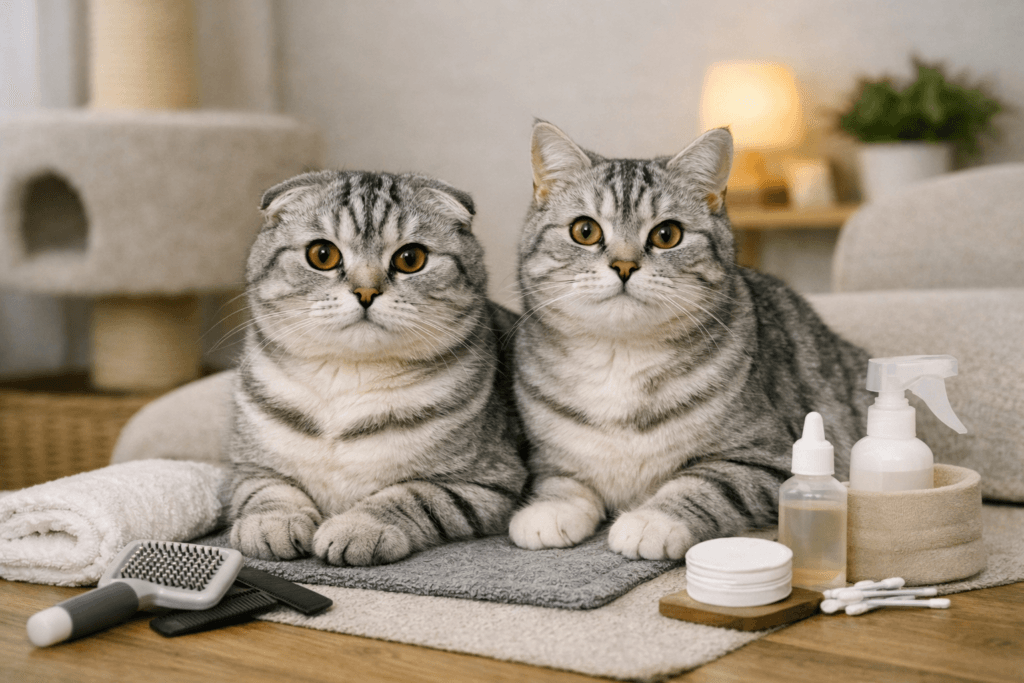
Taking care of a Scottish cat whether a Fold or a Straight follows the same core principles as general Scottish Fold cat care tips for beginners, with a few breed-specific adjustments worth knowing.
Diet is the same as any cat: high-quality protein-based food, fresh water separate from the food bowl, and portion control to avoid obesity. Scottish cats have a naturally compact, rounded build, which means excess weight accumulates quickly and puts additional strain on already-susceptible joints. Measured feeding twice a day is better than free-feeding for this breed.
Exercise and enrichment matter more than their calm temperament might suggest. Scottish cats enjoy gentle play and are curious enough to benefit from puzzle toys and interactive feeders. A 10 to 15 minute play session morning and evening is sufficient. They are not athletes, but they should not spend the entire day inactive. Our article on Scottish Fold Kitten Behaviour and Training is a useful starting point for establishing good habits early.
Environment should be calm and consistent. Scottish cats are sensitive to household stress loud environments, frequent changes in routine, or long stretches of solitude affect them more visibly than more independent breeds. They bond closely with their families and are happiest in a quiet, stable home.
Joint health deserves particular attention. Avoid furniture arrangements that force your Scottish cat to make high jumps. Provide low-entry cat beds and litter boxes with a low front panel. Keep them at a healthy weight, and discuss joint supplements with your vet if they are showing signs of stiffness as they age.
What Are the Grooming Needs of a Scottish Straight Cat?
The Scottish Straight has the same double coat structure as the Scottish Fold, which means grooming needs are virtually identical. The coat is dense and plush, with a soft undercoat that tends to shed seasonally. Regular grooming prevents matting, reduces hairballs, and gives you the chance to check for skin issues, lumps, or parasites.
For shorthaired Scottish Straights, brushing once or twice a week with a soft bristle brush or grooming mitt is sufficient. Brush in the direction of hair growth to remove loose hair and distribute the natural oils that keep the coat healthy. During heavy shedding periods in spring and autumn, daily brushing prevents loose fur from accumulating on furniture and reduces the amount your cat ingests during self-grooming. If shedding seems excessive even with regular brushing, PetsMastery’s breakdown of cat shedding solutions covers the underlying causes and practical fixes in detail.
For longhaired Scottish Straights, a metal wide-tooth comb is preferable to a standard brush because it reaches through to the undercoat where mats form. Aim for combing two to three times a week, paying close attention to the areas behind the ears, under the arms, and at the base of the tail these are the spots most prone to tangling. If a mat is too tight to comb out gently, consult a professional groomer rather than attempting to cut it yourself.
Beyond coat care, a complete Scottish Straight grooming routine includes ear checks weekly, nail trimming every two to three weeks, and dental hygiene. For nails, use a cat-specific clipper and trim only the sharp transparent tip avoid the pink quick inside the nail. For teeth, a cat-formulated toothpaste used several times a week prevents tartar buildup and reduces the risk of dental disease, which is one of the most common health problems in adult cats.
Bathing is rarely necessary for Scottish Straights unless they have gotten into something. When bathing is needed, use a cat-specific shampoo human shampoos disrupt the skin’s pH balance. Introduce bathing gradually from kitten age if possible, using warm water and plenty of calm reassurance.
Grooming sessions also serve as bonding time. A cat that is regularly handled from kittenhood tolerates nail trims, ear checks, and coat brushing far more calmly than one that is only touched during stressful vet visits. Start short and consistent even five minutes a few times a week builds tolerance and trust over the long term.
Bringing It All Together | A Simple Daily and Weekly Routine
Understanding Scottish Fold cat care tips for beginners is one thing building a consistent routine is what actually keeps your cat healthy over the long term. The cats that thrive are the ones whose owners establish good habits early and stick to them.
On a daily basis: feed twice at consistent times, refresh the water bowl, scoop the litter box, and spend 10 to 15 minutes on interactive play. Check your cat over briefly eyes, coat, movement, and mood. Any change from their normal baseline is worth noting.
On a weekly basis: brush the coat, check and clean the ears if needed, and assess the nails to see whether a trim is due. Weigh your cat monthly if possible unexpected weight loss or gain over a short period warrants a vet conversation.
Annually: book a wellness exam even if your cat appears perfectly well, stay current on vaccinations and parasite prevention, and discuss any age-related health concerns with your vet.
If you are specifically caring for kittens in their first year, our Scottish Fold Kittens Nutrition First Year guide covers the additional requirements for cats under twelve months.
Frequently Asked Questions
What are the Scottish Fold cat care tips for beginners most people miss?
Fresh water placed away from the food bowl is the most commonly overlooked tip cats instinctively distrust water near their food. The second most missed is daily interactive play: it is not optional enrichment, it is a genuine health need for indoor cats.
How to take care of a cat essay what are the key points?
To properly care for a cat at home, provide a balanced protein-based diet, fresh water separate from food, an uncovered litter box in a quiet location, a sturdy scratching post, and at least one daily interactive play session. Annual veterinary wellness exams and a cat-proofed indoor environment complete the essentials. Routine, consistency, and observation are what separate good cat care from great cat care.
How to take care of cats at home if you work full time?
Leave enrichment available during the day puzzle feeders, window perches, and safe toys prevent boredom. Consider adopting two cats together so they can keep each other company. Stick to consistent morning and evening feeding and play sessions. If you are away for extended periods regularly, a cat-sitter or automated feeder can bridge the gap.
Are Scottish Fold Grooming cats easy to take care of?
Yes, for most first-time owners. Their calm temperament and moderate activity level make daily care manageable. The extra responsibilities are ear cleaning, joint health monitoring, and sourcing from a health-tested breeder. These are not difficult once you establish the habit, but they are non-negotiable.
How to take care of a Scottish cat specifically?
Follow general cat care principles with added attention to joint health, weekly ear cleaning, and consistent play to prevent obesity. Avoid high-jump furniture arrangements, maintain a calm home environment, and schedule regular vet checks that include a joint and cardiac assessment.
What are the grooming needs of a Scottish Straight cat?
Shorthaired Scottish Straights need brushing once or twice a week. Longhaired Straights need combing two to three times a week with a metal wide-tooth comb. Both need weekly ear checks, nail trimming every two to three weeks, and regular dental hygiene. Grooming sessions from kittenhood make the routine much easier to maintain throughout the cat’s life.












One Response