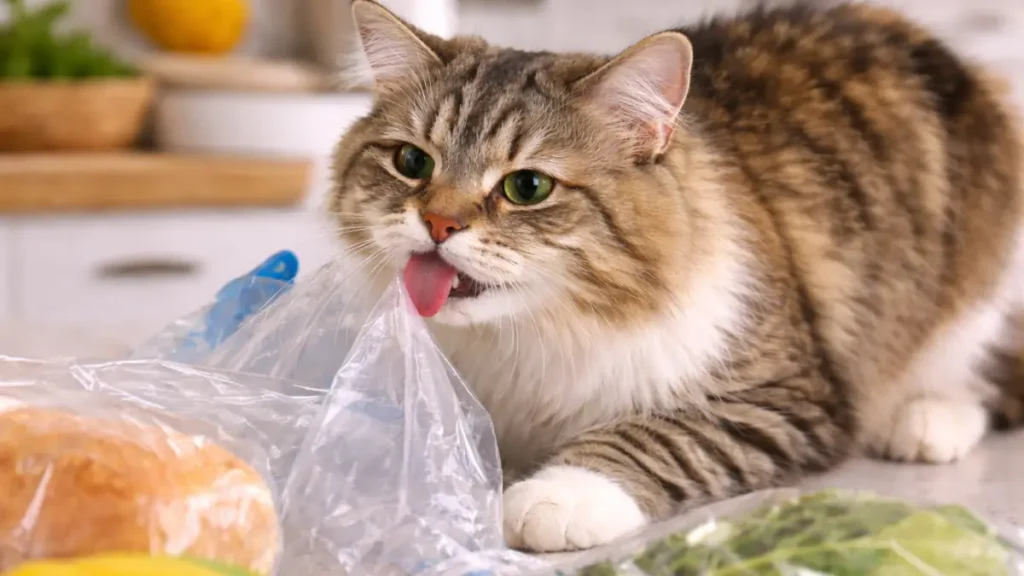


If you have ever caught your cat licking a plastic bag, food wrapper, or even a water bottle, you are not alone. Many cat owners notice this behavior and instantly worry if something is wrong. The short answer is that plastic licking is surprisingly common in cats, but the reason behind it matters a lot.
Some cats only lick plastic once in a while. Others seem obsessed with it. Understanding why this happens helps you decide when to simply manage the behavior and when to take it seriously.
Behaviors like this are part of a wider pattern of feline habits and emotional responses that cat owners often notice in everyday life.
Is It Normal for Cats to Lick Plastic
In many cases, yes. Veterinarians and feline behavior experts agree that plastic licking can fall within normal cat behavior. Cats explore their world through smell and taste more than we realize. Plastic offers a combination of scent, texture, and sound that attracts some cats more than others.
However, normal does not always mean harmless. Licking alone is usually low risk, but repeated licking, chewing, or swallowing plastic can become dangerous. That difference is where many articles fail to explain clearly, and where owners often feel confused.
Why Cats Are Attracted to Plastic Smell and Texture
One of the most common reasons cats lick plastic is smell. Many plastic bags, especially grocery bags, are coated with cornstarch. Cornstarch is plant based and can carry scents that remind cats of food or prey. Some plastic packaging also absorbs oils from meat, fish, or dry food without you noticing.
Texture also plays a role. Plastic has a smooth but slightly resistant surface that feels interesting on a cat’s tongue. The crinkling sound of bags can further stimulate a cat’s curiosity, especially in indoor cats who crave sensory variety.
This is why owners often notice their cat targeting plastic bags more than other household items.
Why Cats Lick Plastic Bags More Than Other Plastic
Not all plastic attracts cats equally. Bags are the most common target, followed by wrappers and thin packaging. Plastic bags combine scent, texture, and movement in one object. When a cat steps on a bag, it moves and makes noise, which can trigger hunting instincts even without actual prey.
Compared to hard plastic bottles or containers, bags are easier to grip with the tongue and teeth. That is why many owners ask why their cat ignores toys but runs straight to grocery bags.
Stress, Boredom, and Emotional Comfort
Another important factor is emotional state. Cats under stress or boredom may lick plastic as a soothing behavior. Indoor cats, cats left alone for long hours, or cats experiencing routine changes sometimes develop repetitive habits that help them self regulate.
Plastic licking can act as a comfort behavior in the same way some cats knead blankets or suckle fabric. This does not automatically mean anxiety disorder, but it does signal that the cat may benefit from more stimulation or routine stability.
This is a major gap in competitor content, where plastic licking is explained chemically but not emotionally.
Can Nutritional Issues Be a Cause
Some owners worry that plastic licking means their cat is missing nutrients. Veterinary sources suggest this is not the most common cause. While pica and nutrient imbalance exist, plastic licking alone does not strongly point to deficiency.
If plastic licking appears suddenly along with weight loss, appetite changes, or digestive issues, then medical causes should be ruled out. Otherwise, behavior and environment are far more likely explanations.
Is Plastic Licking Harmful for Cats
The risk depends on what your cat is actually doing.
Licking alone is usually mild risk. Chewing increases danger. Swallowing plastic is serious.
Plastic cannot be digested. Swallowed pieces may cause intestinal blockage, vomiting, constipation, or require surgery. Thin plastic like bags and wrappers poses the highest risk because it tears easily and can form string like obstructions inside the gut.
This distinction is often missing in other articles, leading owners to either panic unnecessarily or ignore real warning signs.
When Plastic Licking Becomes a Medical Concern
You should take plastic licking seriously if you notice repeated chewing, torn bags, or missing pieces. Warning signs include vomiting, reduced appetite, lethargy, constipation, or hiding behavior.
If your cat has a history of chewing non food items, a vet visit is important. Early intervention prevents emergencies.
How to Stop a Cat From Licking Plastic Safely
The goal is not punishment. It is prevention and redirection.
You can reduce plastic licking by
- removing access to bags and wrappers
- storing groceries immediately
- offering puzzle feeders or interactive toys
- increasing daily play sessions
Some owners also notice improvement when environmental stressors are reduced. If your cat shows curiosity toward household materials, learning which everyday items may pose risks can help. For example, we previously explained how certain cleaning products and household substances can affect cats in unexpected ways, which connects well with managing environmental safety at home.
Should Cats Be Allowed to Play With Plastic Bags
No. Even supervised play carries risk. Cats can panic, chew through plastic, or swallow pieces faster than expected. Safer alternatives include crinkle toys designed for pets, which mimic sound without ingestion risk.
Final Thoughts for Cat Owners
Plastic licking is one of those behaviors that looks strange but often has simple explanations. Most cats are responding to scent, texture, or boredom rather than illness. At the same time, ignoring repeated plastic chewing can lead to serious health risks.
Our experience working through cat safety topics shows that prevention and awareness go much further than fear. When owners understand the reason behind a behavior, they can make small changes that protect their cat without stress.
If you are already thinking about making your home safer for your cat, it may also help to review how common household items and decorative choices can affect feline health. Small details matter more than we realize.
Quick Answers to Common Questions
Is plastic licking common
Yes many cats do it occasionally
Can cats get sick from licking plastic
Licking alone is usually harmless but chewing and swallowing are not
Is plastic licking a sign of pica
Not always. Pica involves repeated ingestion, not just licking
Should I stop my cat from licking plastic
Yes by removing access and offering safer stimulation