
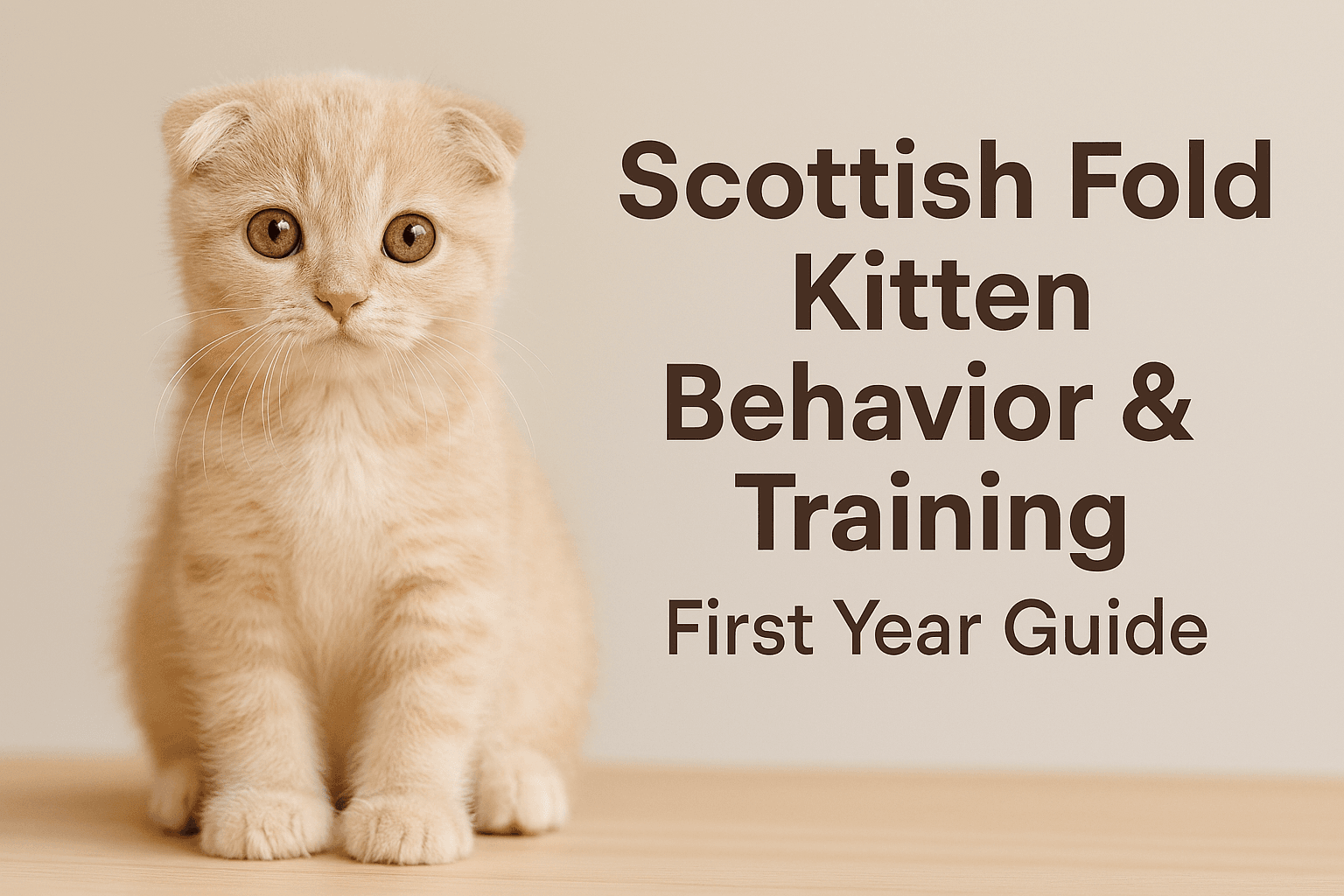
Scottish Fold kitten behavior training are essential aspects of raising a healthy, well-adjusted companion during the first year. While nutrition and grooming shape physical health, behavior and training build the foundation for a strong bond between kitten and owner.
Scottish Folds are known for their gentle, affectionate, and playful temperament. They thrive on human interaction, often following their owners around the house and enjoying quiet companionship. Unlike some more independent breeds, Scottish Folds are highly people-oriented, making them easier to train with consistent routines and positive reinforcement.
Understanding their unique personality traits early on helps owners guide kittens through socialization, litter training, and basic commands. With patience and structure, training not only prevents unwanted behaviors but also strengthens trust, ensuring your Scottish Fold grows into a confident, well-behaved adult cat.
Temperament and Personality of Scottish Fold Kittens
Scottish Fold kitten behavior training are shaped by their naturally calm and affectionate personality. These kittens are often described as gentle companions who enjoy being close to their families. Their playful yet relaxed nature makes them ideal for households that value both affection and quiet companionship.
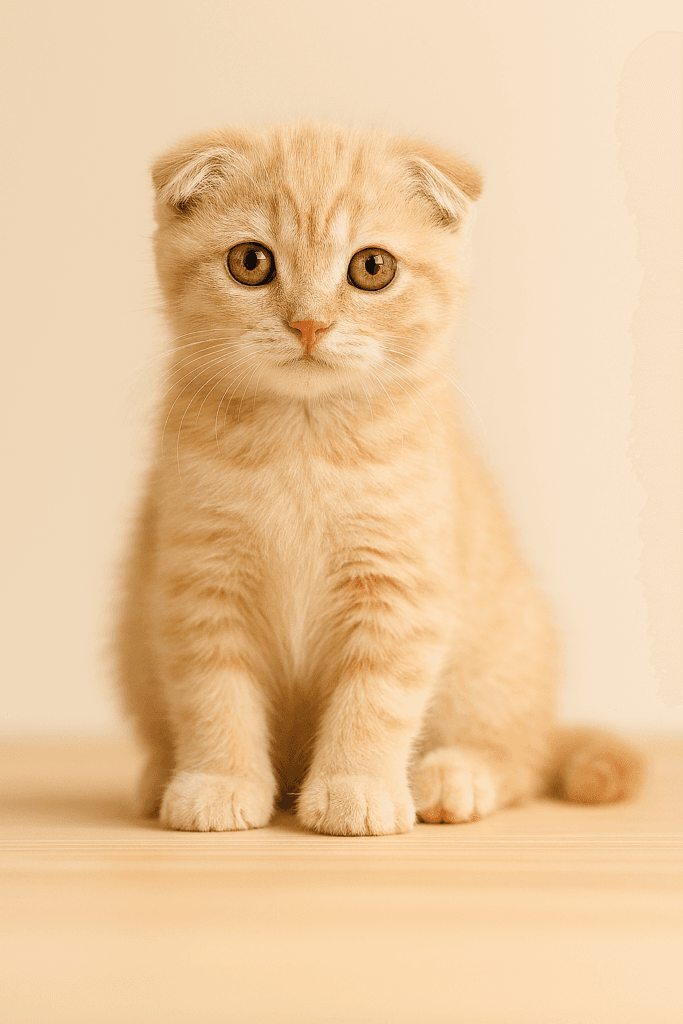
Compared to more independent breeds, Scottish Folds are highly people‑oriented. They tend to follow their owners around, seeking attention and interaction. This strong social bond makes them more responsive to consistent routines and positive reinforcement during training.
The iconic folded ears add to their charm, but they do not influence behavior directly. Instead, the breed’s temperament is defined by a balance of playfulness and serenity. Recognizing these traits early helps owners tailor Scottish Fold kitten behavior training methods to suit their unique personality, ensuring a smooth transition into adulthood.
For more insights into feline habits, explore our detailed guide on cat behavior training at CatsMastery.
Early Socialization (0–3 Months)
Scottish Fold kitten behavior and training begin with proper socialization during the earliest months of life. This stage is critical for shaping a kitten’s confidence, adaptability, and bond with its family.
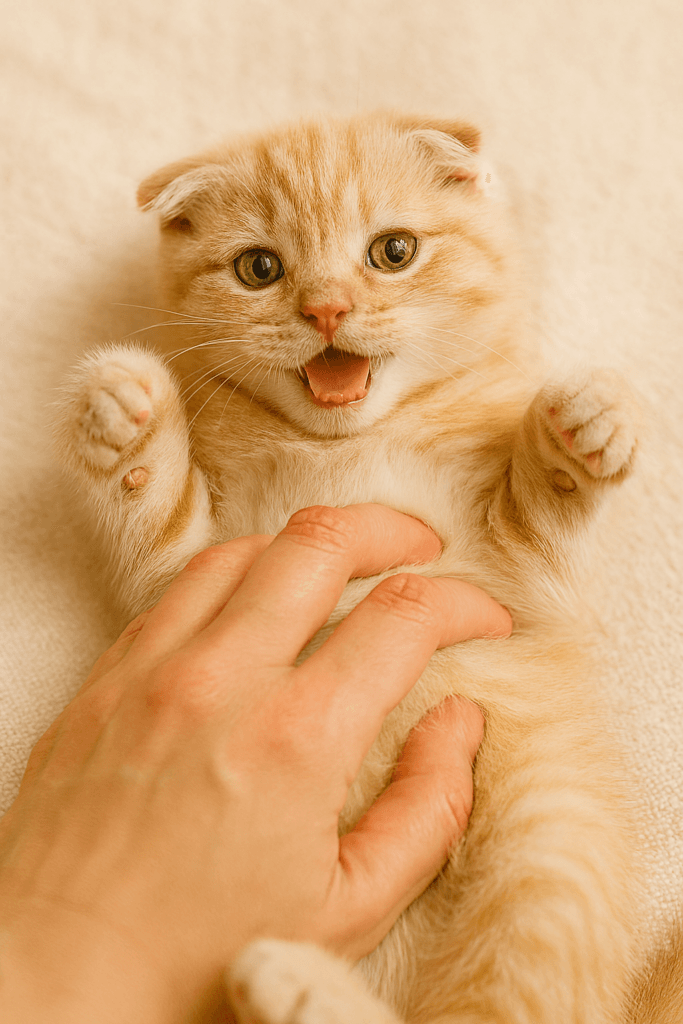
Introducing kittens to family members in a calm and gentle manner helps them feel secure. Allowing them to experience different voices, handling styles, and safe environments builds trust and reduces anxiety later in life. Controlled exposure to household sounds such as the hum of appliances or the doorbell teaches them resilience without overwhelming their senses.
Play and cuddles are powerful tools during this period. Interactive play sessions not only strengthen the bond between owner and kitten but also encourage healthy curiosity. Gentle handling, combined with positive reinforcement, ensures that Scottish Fold kitten behavior training progress smoothly, laying the foundation for a well‑adjusted adult cat.
Gentle handling and grooming routines are essential our resource on cat care and grooming at CatsMastery shows how to build trust early.
Litter Training Scottish Fold kitten behavior training
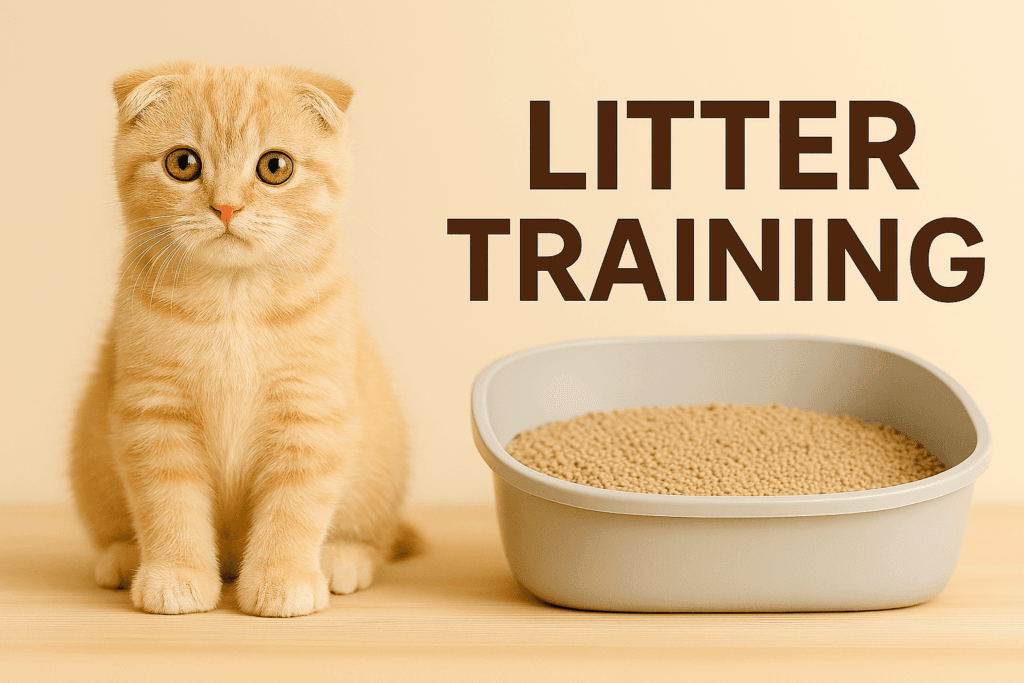
A key part of Scottish Fold kitten behavior and training is establishing proper litter box habits early. Successful litter training ensures hygiene, reduces stress, and prevents unwanted accidents around the home.
Start with a step‑by‑step litter box introduction:
- Place the box in a quiet, accessible area.
- Use unscented, clumping litter to encourage natural digging behavior.
- Gently place the kitten in the box after meals and naps to build routine.
Avoid common mistakes such as a dirty litter box, which discourages use, or placing the box in a noisy, high‑traffic location. Scottish Folds, being sensitive and people‑oriented, respond best to a calm environment.
Positive reinforcement is the most effective technique. Reward your kitten with treats, praise, or gentle petting whenever they use the litter box correctly. Never punish mistakes; instead, redirect them to the box consistently. With patience and consistency, litter training becomes a smooth process that supports overall kitten behavior development.
Balanced diets support healthy routines; check out our cat food nutrition guide at CatsMastery to complement training success.
Basic Training Commands
Effective Scottish Fold kitten behavior training includes teaching simple commands that build communication and trust. These kittens are naturally affectionate and people‑oriented, which makes them responsive to structured routines and gentle guidance.
Start with name recognition — consistently calling your kitten by name during play and feeding helps them associate the sound with positive experiences. Once they respond reliably, you can introduce basic commands such as “come” and “stay.”
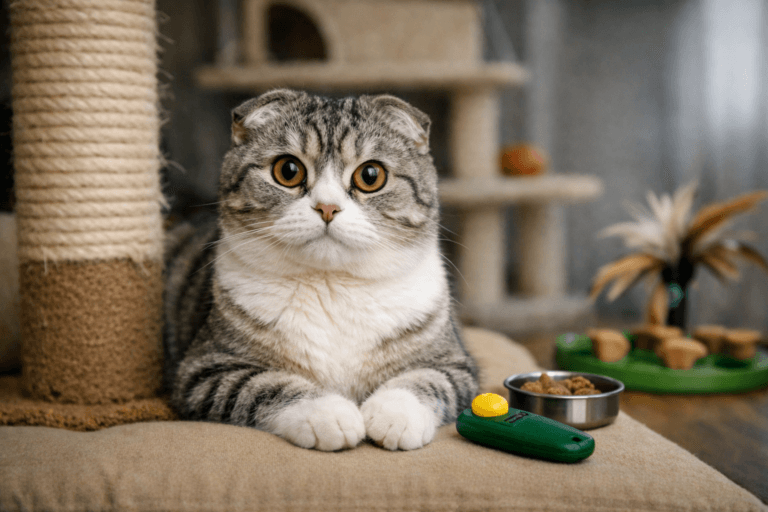
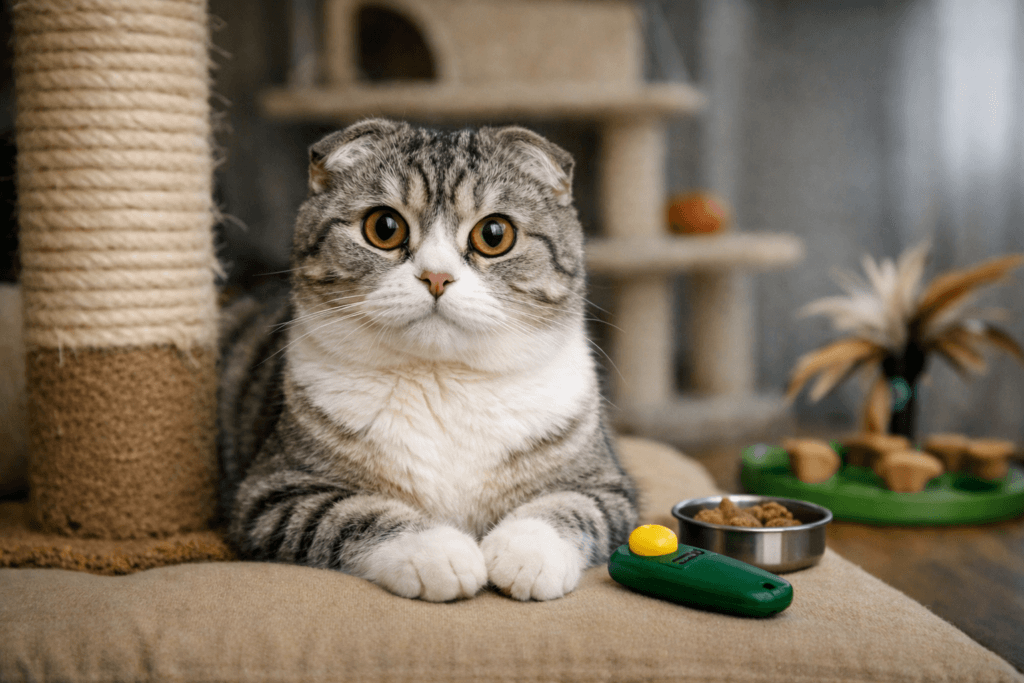
Using treats, praise, and clicker training reinforces good behavior. Keep sessions short, ideally 5–10 minutes, to match a kitten’s attention span. Overly long or repetitive training can cause frustration, while brief, engaging sessions encourage progress.
Consistency is key. Repeating commands in the same tone and rewarding success builds confidence. Over time, these simple steps form the foundation for more advanced kitten training routines, ensuring your Scottish Fold grows into a well‑behaved and cooperative companion.
Play & Enrichment
A vital part of Scottish Fold kitten behavior and training is ensuring proper playtime and enrichment. These kittens are naturally affectionate and curious, and structured play helps them develop both physically and mentally.
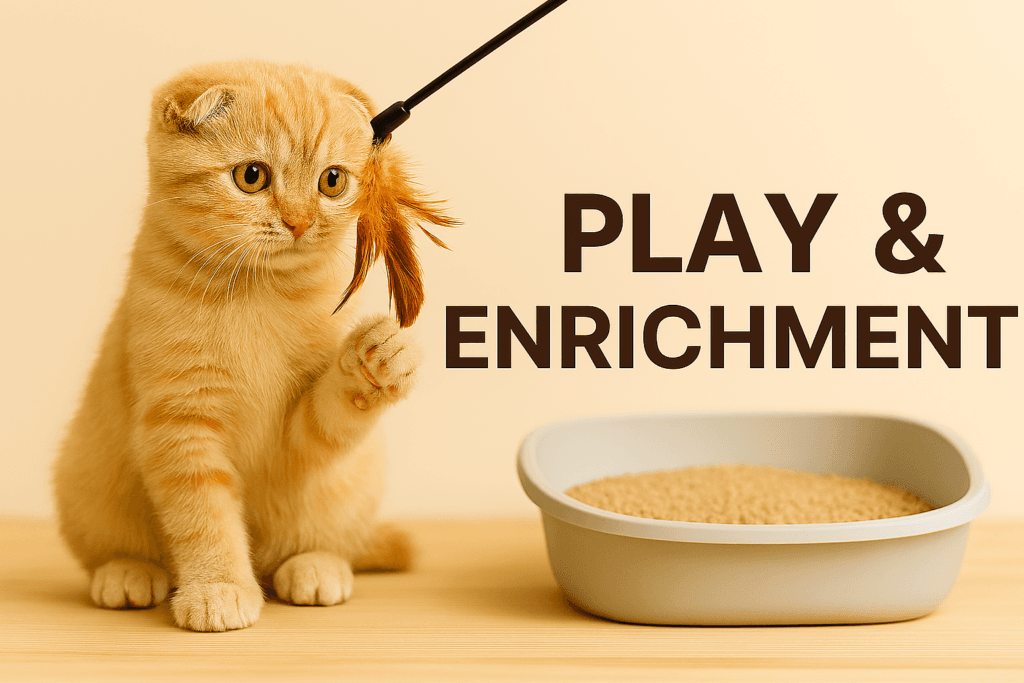
Regular play sessions provide essential mental stimulation for cats, preventing boredom and reducing the risk of destructive behavior. Scottish Folds thrive on interactive activities that engage their intelligence and playful nature.
The best toys for Scottish Folds include interactive puzzles, feather wands, and treat-dispensing toys. These not only encourage exercise but also strengthen the bond between kitten and owner. Rotating toys frequently keeps playtime exciting and prevents kittens from losing interest.
Enrichment goes beyond toys. Creating safe climbing spaces, scratching posts, and cozy resting areas allows kittens to explore their environment confidently. Structured play before bedtime can also reduce night-time activity, helping kittens settle into a calm routine.
By combining play with enrichment, owners support healthy development and reinforce positive kitten behavior patterns, ensuring their Scottish Fold grows into a happy and well-adjusted companion.
Managing Common Behavioral Issues
Even with consistent routines, Scottish Fold kitten behavior training can present challenges. Addressing these issues early ensures a smoother transition into adulthood and prevents habits from becoming ingrained.
One common concern is scratching furniture. Redirect this natural instinct by providing scratching posts or pads in accessible areas. Reward your kitten when they use the post, reinforcing the correct behavior.
Another issue is night‑time activity. Scottish Folds may become restless after dark, leading to unwanted play or noise. Structured play sessions before bedtime help release energy, encouraging a calmer night routine.
Separation anxiety can also affect this affectionate breed. Gradual independence training—such as short periods alone followed by positive reinforcement teaches kittens to feel secure even when owners are away.
By addressing these common challenges with patience and consistency, owners strengthen the bond with their kittens and ensure that overall kitten behavior development remains positive.
Positive Reinforcement Techniques
A cornerstone of Scottish Fold kitten behavior training is the use of positive reinforcement. This method focuses on rewarding desired actions rather than punishing mistakes, creating a safe and encouraging environment for learning.
Rewards can include treats, praise, or playtime, each reinforcing good behavior in different ways. For example, offering a small treat when your kitten responds to a command builds a clear association between the action and the reward. Similarly, verbal praise or gentle petting strengthens the emotional bond between owner and kitten.
Avoiding punishment is critical. Negative responses such as scolding or physical correction can cause fear and anxiety, leading to long‑term behavioral issues. Instead, redirect unwanted actions toward acceptable alternatives—for instance, guiding a kitten from furniture to a scratching post.
Consistency is the key to success. Repeating commands in the same tone and rewarding correct responses ensures that kittens learn quickly and confidently. Over time, these techniques establish strong kitten training routines, helping your Scottish Fold grow into a cooperative and affectionate companion.
Training for Health & Safety
A vital aspect of Scottish Fold kitten behavior and training is preparing them for routines that protect their health and safety. Early exposure to grooming, vet visits, and safe boundaries ensures kittens grow into confident, cooperative adults.
Start with grooming acceptance. Gently introduce brushing, nail trimming, and ear cleaning so your kitten becomes comfortable with regular care. Pair each session with positive reinforcement such as treats or praise to build trust.
Carrier training is equally important. Place the carrier in a familiar space and allow the kitten to explore it freely. Gradually associate the carrier with rewards, making vet trips or travel less stressful.
Establishing safe boundaries within the home prevents accidents. Redirect kittens from unsafe areas like kitchen counters, electrical cords, or open windows. Providing scratching posts, climbing trees, and cozy resting spots encourages healthy exploration while keeping hazards at bay.

By incorporating health and safety routines into daily life, owners reinforce positive kitten training habits and ensure their Scottish Fold thrives in a secure, nurturing environment.
Safe boundaries matter—learn more in our cat health and safety guide at CatsMastery.
Conclusion
Scottish Fold kitten behavior training are not just about teaching commands or managing routines they are about building a lifelong bond between kitten and owner. By focusing on early socialization, consistent litter training, structured play and enrichment, and gentle positive reinforcement techniques, owners create an environment where their kittens feel secure, loved, and confident.
Incorporating health and safety training ensures that Scottish Folds adapt easily to grooming, vet visits, and household boundaries. Addressing common challenges such as scratching furniture, night‑time activity, or separation anxiety with patience and consistency helps prevent long‑term issues.
When approached holistically, behavior and training become part of overall kitten care, complementing nutrition and grooming. With the right guidance, your Scottish Fold will grow into a well‑behaved, affectionate companion—bringing joy, comfort, and companionship for years to come.