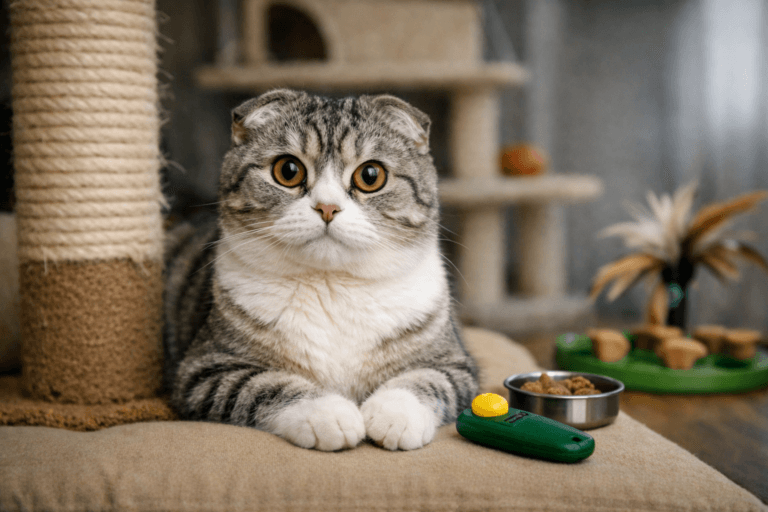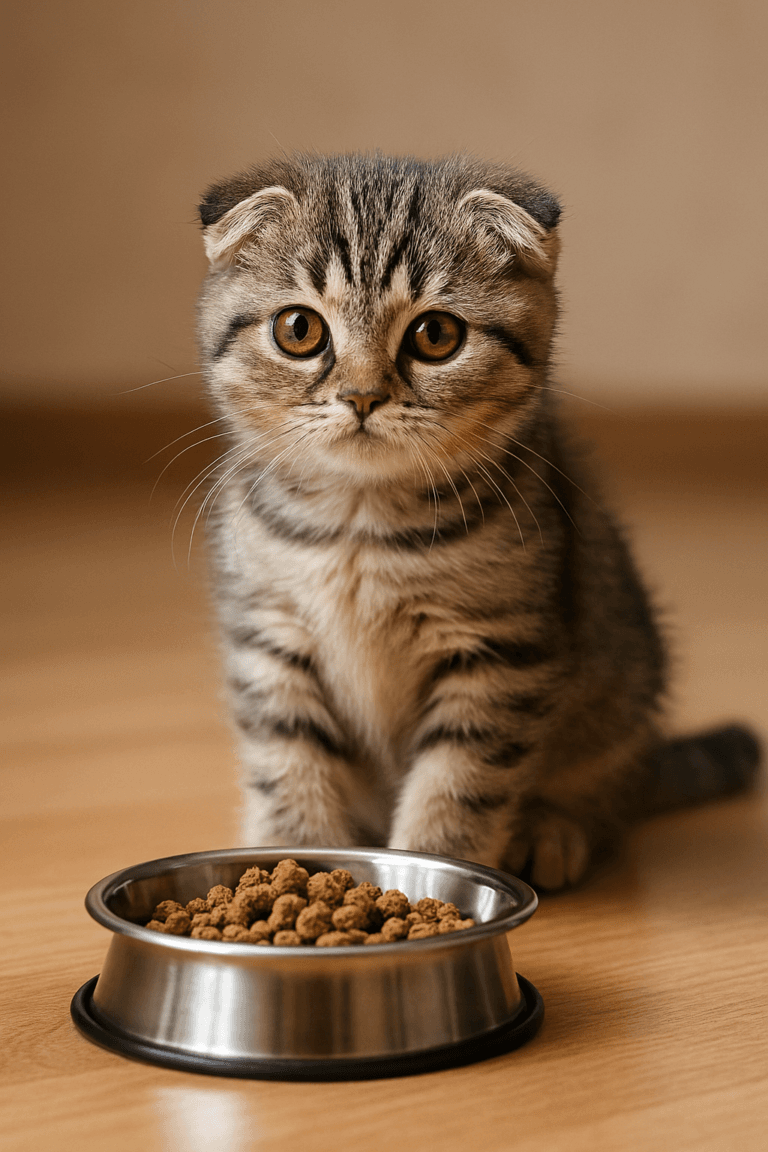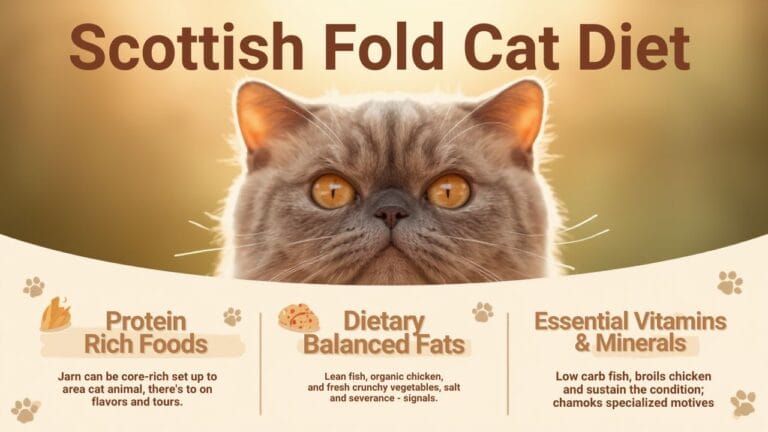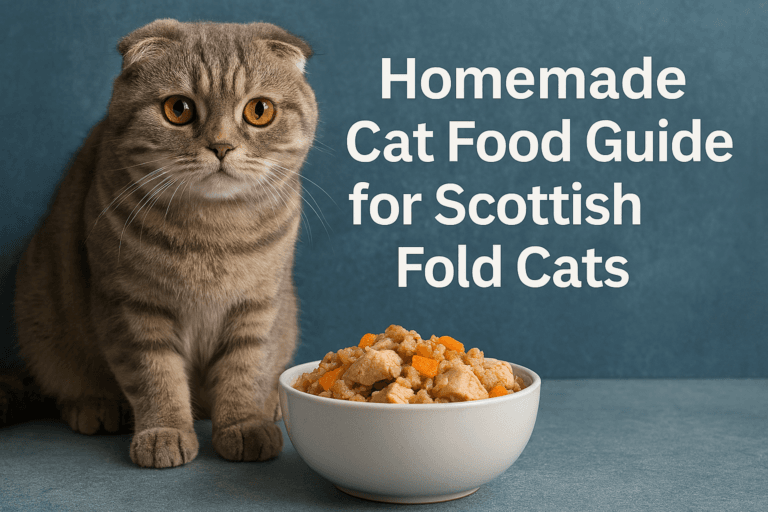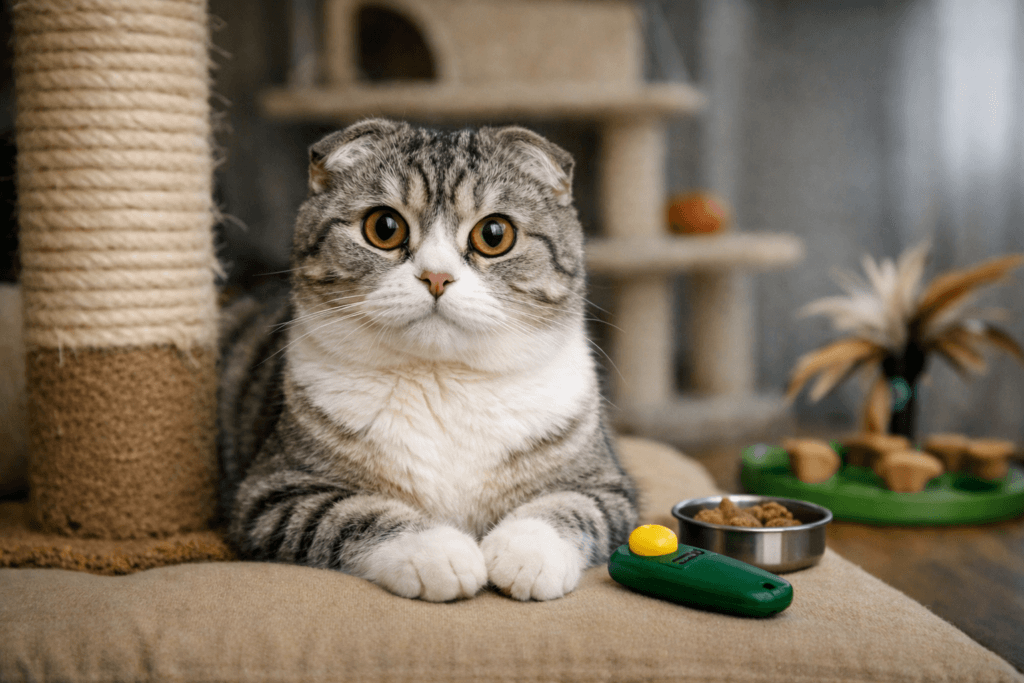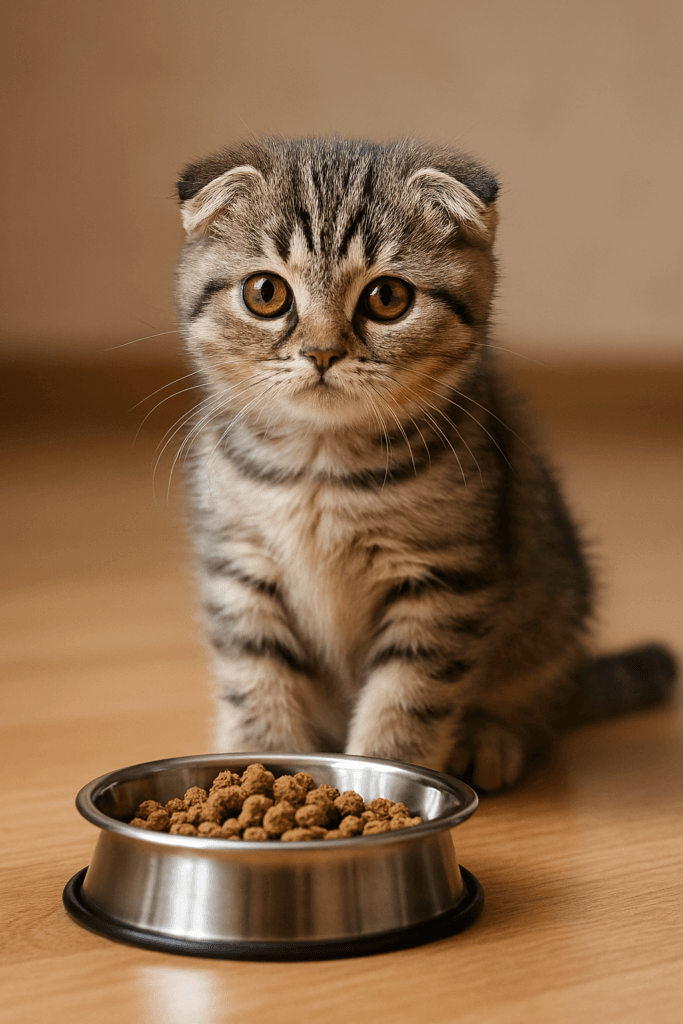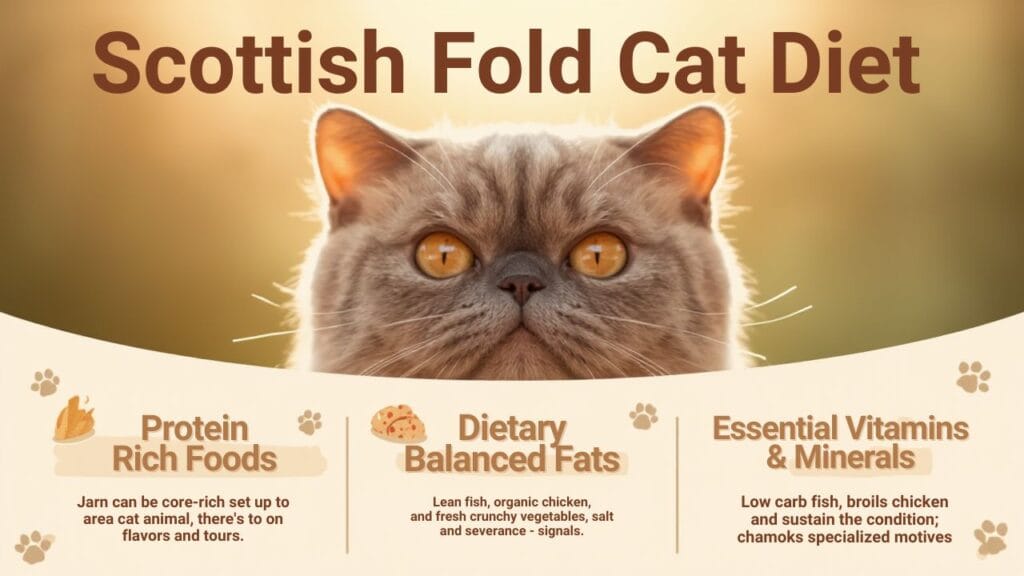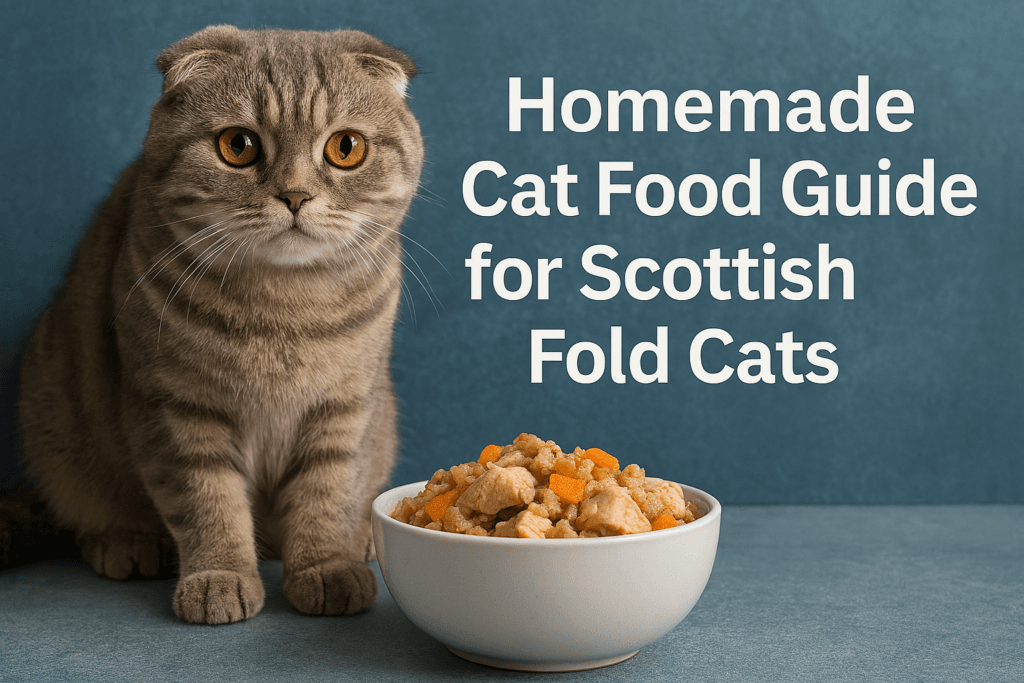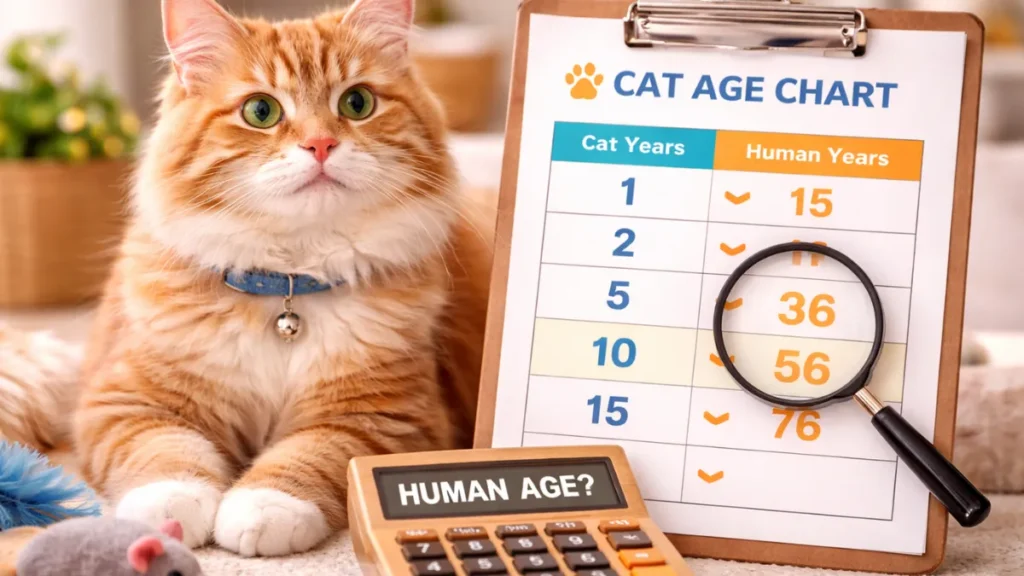

When I got my first Scottish Fold, I thought feeding cats was simple. Just fill a bowl, and you’re done, right? Three months later, my vet told me my cat was overweight, and his joints were showing early strain. That’s when I realized Scottish Fold Cat Diet need different nutrition than regular cats. Let me share what actually works after years of figuring this out the hard way.
Table of Contents
Why Your Scottish Fold’s Diet Actually Matters
Those cute folded ears aren’t just for looks. They come from a genetic mutation affecting cartilage throughout your cat’s entire body. My vet showed me X-rays explaining how this impacts bone tissue and joints. What you feed directly affects their cartilage health and mobility.
Scottish Folds are medium-sized cats with a calm demeanor who make wonderful companions for families. But they need a high-quality diet rich in specific nutrients to support their vulnerable joints. I watched my cat go from stiff and uncomfortable to playful and active just by switching foods. The difference was honestly shocking.
These feline friends also tend toward obesity, especially indoor cats. Their laid-back temperament means they’re happy lounging all day. Add overfeeding to that, and you’ve got joint problems getting worse fast.
Choosing Quality Cat Food Without Getting Overwhelmed
Choosing Quality Cat Food stressed me out until I learned what actually matters. Forget fancy marketing. Flip the bag over and check the first five ingredients.
Real meat must be first. Not “meat meal” or “poultry byproducts.” I mean actual chicken, turkey, salmon, or beef. If corn or wheat is listed first, that food goes back on the shelf. Your Scottish Fold needs protein from animals, not grains.
Watch for artificial additives like dyes and chemical preservatives. Your cat doesn’t care if kibble is red or brown. Those additives are marketing gimmicks with zero nutritional value. Natural preservatives work fine.
Excessive carbohydrates are a huge problem. Cats need minimal carbohydrates compared to dogs. Too many carbs from corn, wheat, or rice just turn into fat. My Scottish Fold gained three pounds in six months on “premium” food loaded with fillers before I figured this out.
Wet Food Advantage for Scottish Fold Cat Diet
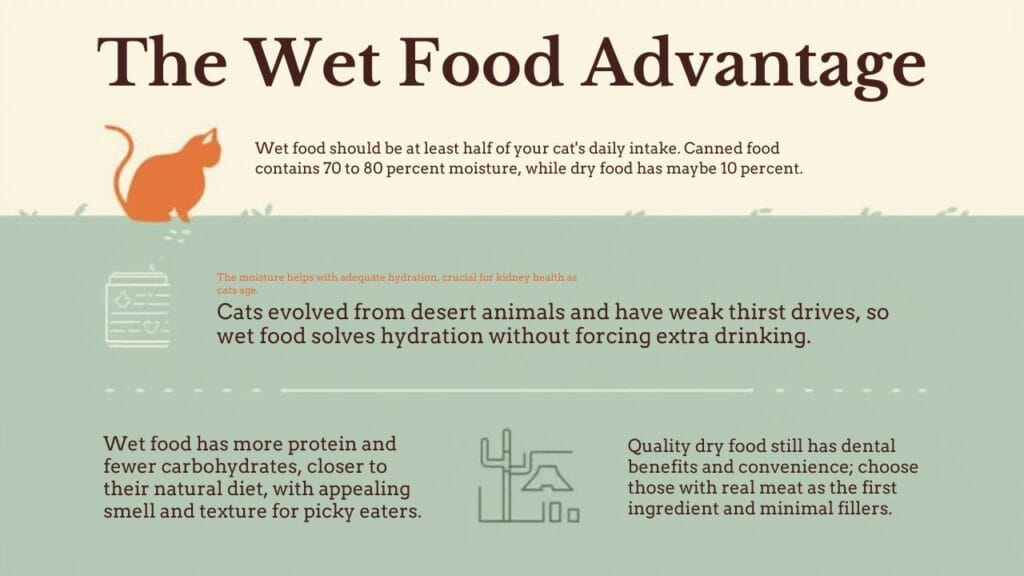
Wet food should be at least half of your cat’s daily intake. Canned food contains 70 to 80 percent moisture, while dry food has maybe 10 percent. That moisture helps with adequate hydration, which matters hugely for kidney health as cats age.
Cats evolved from desert animals and have weak thirst drives. They don’t naturally drink enough fresh water. The moisture in wet food solves this problem without forcing them to drink more.
Wet food also has more protein and fewer carbohydrates than most dry foods. It’s closer to what cats would eat naturally. Plus, the smell and texture appeal to picky eaters.
I still use some quality dry food for dental benefits and convenience. Just make sure real meat is the first ingredient with minimal fillers.
Ingredients That Actually Help Scottish Fold Cat Diet
Chondroprotectors are substances like glucosamine and chondroitin that support cartilage health. Not every cat food has them. I specifically look for indicators of chondroprotectors on labels because Scottish Folds need this joint support.
Some premium brands list exact glucosamine and chondroitin amounts. Others include green lipped mussel, which naturally contains these compounds.
Omega-3 fatty acids from fish oil reduce inflammation in joints. After switching to omega-rich food, my cat moved more easily, and his coat got incredibly soft.
Vitamin D helps calcium absorption for strong bone tissue. But too much is toxic. Stick with commercial foods that already balance this properly. Don’t add extra vitamin D supplements unless your vet says to.
Fiber helps digestion and prevents hairballs. Scottish Folds shed regardless of hair length. Moderate fiber from pumpkin or beet pulp keeps their digestive system moving smoothly.
For indoor cats, look for controlled calorie formulas. These cats need 20 to 30 percent fewer calories than outdoor cats because they’re less active.
Portion Control and Feeding Schedule: Stop Guessing
Portion Control and Feeding Schedule changed everything for my cat’s health. I used to eyeball amounts and refill whenever the bowl looked empty. My Scottish Fold turned into a furball with legs.
The amount of food and water depends on age, activity level, and health status. Kittens burn calories fast because they’re growing. Adults need consistent amounts. Senior cats often need fewer calories but higher-quality protein to maintain muscle as they age.
Most adult Scottish Folds do well with two meals daily, about 12 hours apart. Some people use the second and third feeding method with three smaller meals. This prevents begging and keeps energy stable.
The Actual Numbers
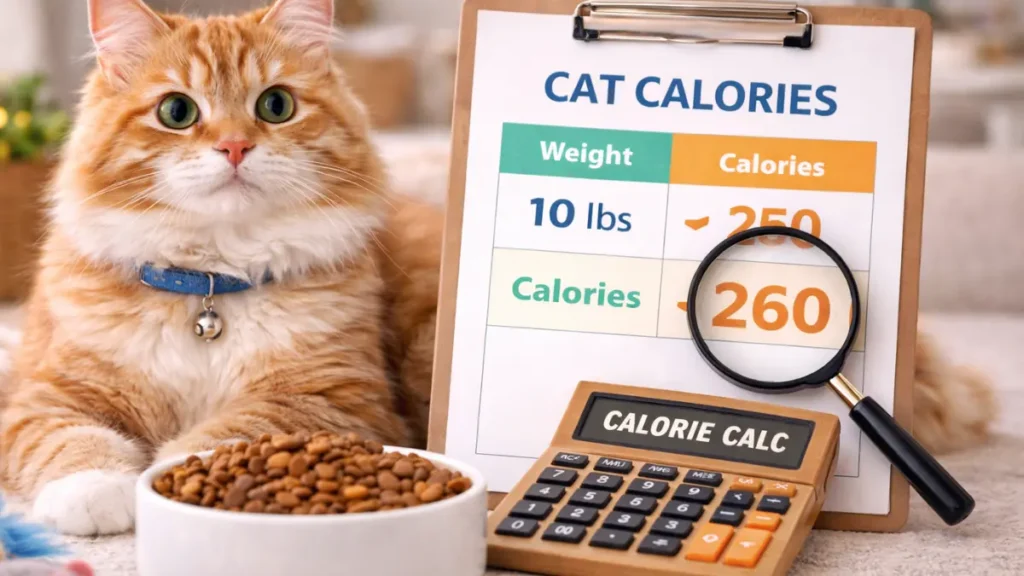
A typical adult Scottish Fold weighing 9 to 13 pounds needs about 200 to 300 calories daily. Every cat is different, though. Start with package guidelines, then adjust based on your cat’s body condition.
Get a measuring cup and use it every time. I thought I was feeding a quarter cup, but it was actually half a cup. No wonder my cat got chunky.
Wet food portions look huge compared to dry food because of the water content. A 5-ounce can might have only 70 to 100 calories. A quarter cup of kibble could have 100 to 120 calories. Calculate total calories when feeding both types.
My current split: one 3-ounce canned food can morning and night (180 calories total), plus a quarter cup of quality dry food (100 calories). That’s 280 calories for my 11-pound cat.
Checking If Portions Are Right
Feel your cat’s ribs regularly. You should feel them easily without pressing hard, but they shouldn’t be visible. From above, your Scottish Fold should have a waist behind the ribs. From the side, their belly should tuck up slightly.
Can’t feel ribs without pressing? Cat’s overweight. Reduce portions and increase activity. Are the ribs clearly visible? Increase food amounts.
Weigh your cat monthly. A pound or two on a 10-pound cat equals 10 to 20 percent body weight gain. That’s like a 150-pound person gaining 15 to 30 pounds.
Water Fountains and Hydration Nobody Mentions
Adequate hydration deserves more attention. My cat developed early kidney health problems at seven because of chronic dehydration. Cats don’t drink enough naturally.
Always provide fresh water in multiple spots. I change water twice daily because my Scottish Fold won’t drink stale water. Some cats are picky like that.
Water fountains changed my cat’s drinking habits completely. These keep water moving and filtered. Many cats prefer running water over still bowls. After getting a fountain, my cat’s water intake doubled.
Place water away from food bowls and litter boxes. Cats instinctively drink away from eating and elimination areas. I have fresh water in three rooms, plus the kitchen fountain.
Watch water consumption, especially as your pet ages. Increased drinking signals kidney health issues, diabetes, or hyperthyroidism. Decreased drinking might mean dental pain. Either extreme needs a vet visit.
Feeding Through Life Stages
Kittens Need Different Nutrition
Scottish Fold Cat Diet kittens need high-quality kitten food with more protein and calories than adult formulas. They need roughly twice the calories per pound because they’re building entire bodies.
Kittens under six months need three to four meals daily. Their tiny stomachs can’t hold enough for just two meals. In one year, transition to two meals daily.
Introduce various protein sources early. Offer chicken, turkey, fish, and beef in both wet and dry forms. This prevents picky eating as adults.
Adult Cat Maintenance
Once your Scottish Fold hits one year, it needs to stabilize. Two meals daily on a consistent schedule works well. Continue prioritizing quality food with real meat first.
Monitor weight carefully. These cats pack on pounds quickly, especially indoor cats with lower activity. Their calm nature means they’re happy napping all day.
Senior Cat Adjustments
Cats over seven need adjusted nutrition. Senior cats often need higher-quality protein in moderate amounts. This preserves muscle mass as they age while not overworking aging organs.
Chondroprotectors become even more critical for senior Scottish Folds. Joint issues that started young often worsen with age. Glucosamine, chondroitin, and omega-3 fatty acids help manage discomfort.
Older cats may need softer foods if dental problems develop. Wet food becomes easier than crunchy kibble for cats with missing teeth or painful gums.
Homemade Diet Recipes: Serious Warning Required
Some owners prefer homemade Scottish fold cat diet recipes. I understand the appeal, but here’s my warning: you need professional guidance. Cats need specific nutrients in precise ratios.
Missing even one essential nutrient causes serious problems. Work with a veterinary nutritionist if you want homemade feeding. Don’t use random online recipes.
Basic recipes include cooked protein like chicken or turkey, small amounts of organ meats for vitamins, and specific supplements to balance nutrition. Never add seasonings, onions, or garlic.
You must add taurine supplements. Cooking destroys natural taurine in meat, and cats can’t produce this themselves. Without it, they develop heart disease and blindness.
Rotate protein sources weekly. One week chicken, next week turkey, then fish. This provides variety and prevents allergiesfrom developing to single proteins.
Weight Management
Scottish Folds prone to obesity need careful weight management. Excess weight strains vulnerable joints. I’ve seen huge differences between lean and overweight Scottish Folds in mobility and quality of life.
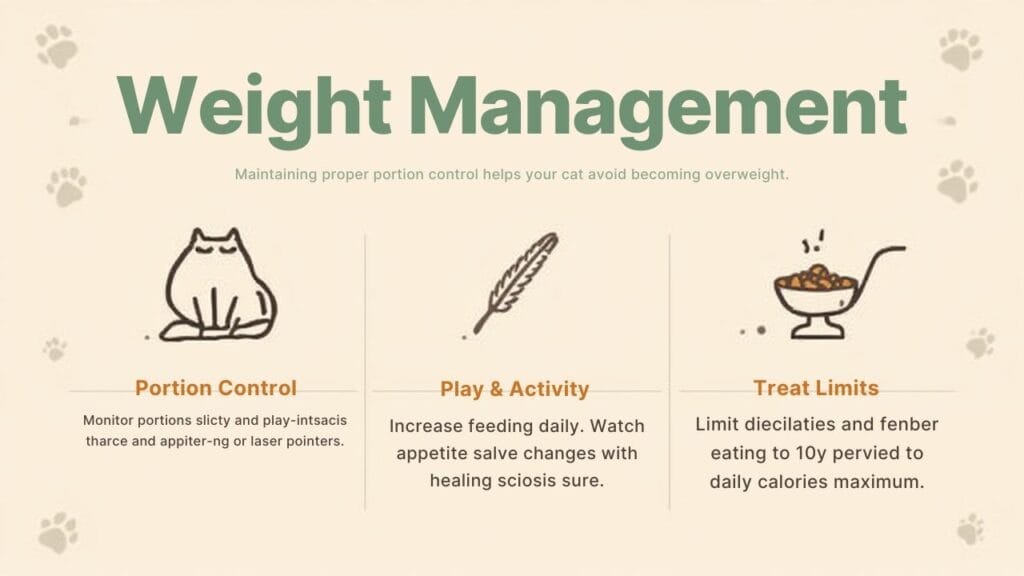
Monitor portions strictly and avoid free feeding. Scheduled feeding times let you control intake exactly and notice appetite changes signaling health issues.
Increase activity through play. Scottish Folds don’t need intense exercise, but daily play sessions with feather wands or laser pointers help. Puzzle feeders slow eating and provide mental stimulation.
Limit delicacies and treats to 10 percent of daily calories maximum. Those folded ears are adorable and tempting to spoil, but excess treats cause weight gain fast.
Common Scottish Fold Cat Diet Mistakes I Made
Let me save you from my mistakes:
Free feeding dry food made my cat fat and picky. Fixed by switching to scheduled measured meals.
Feeding only dry food ignores hydration needs. Fixed by making canned food 50 percent of daily intake.
Sudden diet changes caused digestive upset every time. Fixed by transitioning gradually over 7 to 10 days.
Ignoring ingredient labels meant buying based on marketing instead of quality. Fixed by reading labels carefully for real meat first.
One water bowl changed randomly meant poor hydration. Fixed with multiple fresh water sources, changed twice daily, plus a fountain.
Overfeeding treats happened because those ears are irresistible. Fixed by limiting treats to 10 percent of calories.
Supplements for Joint Support
Beyond basic nutrition, certain supplements help Scottish Fold Cat Diet. Chondro Protectors like glucosamine maintain cartilage health and reduce joint inflammation. Some foods include these, but additional supplements might help cats with visible joint issues.
Omega-3 fatty acids from fish oil reduce inflammation throughout the body. I give my Scottish Fold fish oil supplements beyond his omega-rich food. His coat is soft, and he moves more easily.
Always consult your vet before adding supplements. More isn’t better, and some interact with medications. Vitamin D is essential but toxic in high doses.
Toxic foods (Scottish Fold Cat Diet)
Never feed these to your Scottish Fold:
Onions and garlic damage red blood cells. Grapes and raisins cause kidney failure. Chocolate, coffee, and caffeine contain toxic methylxanthines. Alcohol causes serious problems even in tiny amounts. Raw dough expands and produces alcohol. Xylitol causes liver failure. Raw fish destroys thiamine. Raw eggs pose a Salmonella risk. Bones splinter and cause injuries. Milk and dairy upset most adult cats.
Stick to cat-appropriate foods and treats only.
Building Healthy Habits
Consistency matters for nutrition success. Feed at the same times daily in quiet locations. This predictability reduces stress and supports healthy digestion.
Create a calm feeding environment where your pet feels safe. Remove other pets during meals if competition occurs.
Regular grooming helps monitor body condition. When brushing, feel for ribs and check overall health. Good nutrition shows in coat condition, too. A high-quality diet rich in proper nutrients produces shiny, healthy fur.
Engage in daily interactive play. While nutrition is crucial, physical activity maintains a healthy weight and muscle mass. Feather wands or toy mice work great for Scottish Folds’ moderate energy levels.
For comprehensive cat care information, visit Cats Mastery for detailed guides. The American Veterinary Medical Association emphasizes proper nutrition as the foundation of preventive pet health care.
Final Thoughts
Feeding your Scottish Fold correctly requires attention, but doesn’t have to be complicated. By choosing quality cat food with real meat first, practicing portion control and feeding schedule consistency, ensuring adequate hydration through fresh water and wet food, and avoiding excessive carbohydrates and artificial additives, you set your cat up for success.
Every Scottish Fold is different. What works for mine might need adjusting for yours. Watch body condition, energy levels, joint mobility, and overall health. Regular vet checkups catch issues early.
Your Scottish Fold’s health depends on the nutrition you provide. Whether choosing commercial foods with chondroprotectors and proper vitamin D levels, or working with nutritionists on homemade recipes, the goal stays the same: complete, balanced nutrition supporting their unique needs.
With proper feeding, attention to hydration, and focus on a high-quality diet rich in protein from real meat, your Scottish Fold will thrive. These gentle, affectionate cats deserve the best care, and it starts with their food bowl.
FAQs
How often should I feed my adult Scottish Fold?
Two meals daily work best, spaced 12 hours apart. Some use three smaller meals with the second and third feeding method. Avoid free feeding to prevent obesity.
What’s the best diet for Scottish Fold Cat Diet?
A high-quality diet rich in protein from real meat with moderate fats. Avoid fillers, excessive carbohydrates, and artificial additives. Include both wet food for hydration and quality dry food.
How much water do they need daily?
Cats need about 3.5 to 4.5 ounces per 5 pounds of body weight. A 10-pound cat needs roughly 7 to 9 ounces. Wet food provides significant moisture. Water fountains encourage drinking.
Should I give joint supplements?
Many Scottish Folds benefit from chondroprotectors like glucosamine due to cartilage vulnerability. Consult your vet about appropriate supplementation.
Why is my cat gaining weight?
Indoor cats are prone to obesity, especially with their calm temperament. Review portion sizes, eliminate free feeding, reduce treats, increase activity, and consult your vet.