
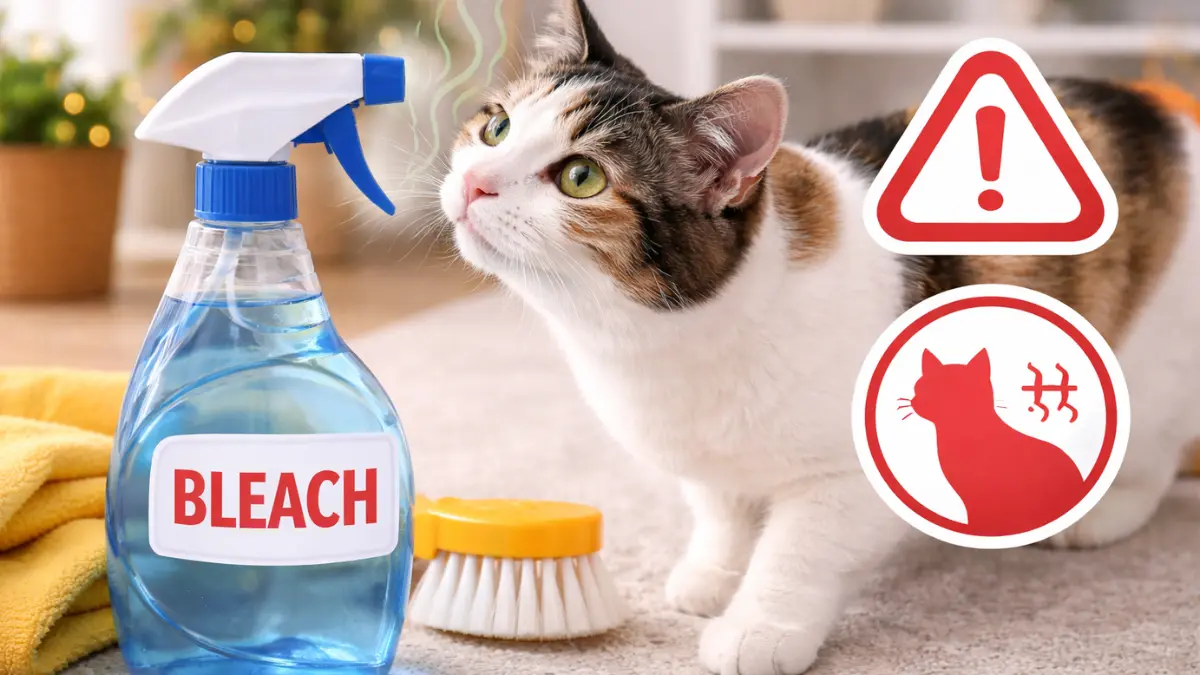
Yes, the smell of bleach can be harmful for cats, depending on how strong it is and how your cat is exposed. While many cats seem strangely attracted to bleach, veterinary sources agree that this attraction does not mean bleach fumes are safe. Understanding the difference between brief mild exposure and dangerous situations can help you protect your cat without panic.
Why Cat Owners Ask This Question
This question usually comes up after something confusing happens. A cat rolls on a freshly cleaned floor. Another sniffs the toilet bowl again and again. Some cats even act excited around bleach. Naturally, owners wonder if the smell is harmless or if it could secretly hurt their cat.
We see this confusion a lot because cat behavior and chemical safety overlap here. Cats can appear to enjoy the smell, yet vets consistently warn that bleach is still a chemical irritant and toxin.
Why Cats Are Attracted to the Smell of Bleach
Veterinary behavior experts explain that bleach contains chlorine, which smells similar to certain compounds found in cat urine and pheromones. This can trigger instinctive responses like rubbing, rolling, or intense sniffing.

This attraction is behavioral, not protective. It does not mean bleach relaxes cats or makes them feel good in a healthy way. It is similar to how some cats react to catnip, but bleach has no safety margin built into it.
One important thing to understand is that attraction and safety are not connected here. A cat being drawn to bleach does not reduce the risk of irritation or poisoning.
Is Bleach Smell Actually Safe for Cats
Bleach smell is conditionally unsafe for cats.
Brief exposure to a faint, well ventilated bleach smell after surfaces are fully rinsed and dried is usually considered low risk. However, strong fumes, repeated exposure, or poor ventilation increase the risk significantly.
Cats have sensitive airways. What smells mild to us can be irritating to them. Bleach fumes can inflame the eyes, nose, throat, and lungs, especially in enclosed spaces.
Different Ways Cats Can Be Exposed to Bleach
Not all exposure happens the same way, and this is where many articles lack clarity.
Smelling bleach fumes
This happens during cleaning or when bleach is used in bathrooms. Strong fumes can irritate the respiratory tract, even without direct contact.
Licking bleach residue
Cats may lick floors, drains, toilet rims, or paws after walking on treated surfaces. This is one of the most harmful exposure routes.
Skin and paw contact
Walking on wet bleach can irritate paw pads and skin, especially with higher concentrations.
Environmental exposure
Repeated low level exposure in poorly ventilated homes may increase irritation risk over time.
Symptoms of Bleach Exposure in Cats
Symptoms depend on exposure type and amount.
Common mild signs include sneezing, watery eyes, drooling, and temporary agitation.
Moderate signs may include vomiting, oral irritation, excessive salivation, coughing, or lethargy.
Serious symptoms are rare but harmful and include difficulty breathing, severe mouth burns, collapse, or seizures. These require immediate veterinary care.
When Bleach Exposure Becomes Harmful
Bleach exposure becomes harmful when concentration is high, ventilation is poor, or the cat can lick or ingest residue. Mixing bleach with other cleaners increases risk further due to toxic gas formation.
Repeated exposure is also a concern. Even if a single event seems mild, ongoing irritation can stress a cat’s respiratory system.
If your cat shows persistent symptoms or has likely ingested bleach, veterinary guidance should be sought without delay.
Common Myths About Bleach and Cats
A very common myth is that cats enjoy bleach because it is safe for them. This is false. Attraction does not equal safety.
Another myth is that diluted bleach is always harmless. Dilution lowers risk but does not remove it completely, especially for licking or inhalation.
Some people believe bleach makes cats “high.” There is no veterinary evidence supporting this. The behavior seen is a sensory response, not a safe neurological effect.
What Veterinarians Recommend for Cat Safe Cleaning
Veterinary sources consistently recommend using bleach cautiously and thoughtfully.
Cats should be kept out of the room while cleaning. Surfaces should be diluted correctly, thoroughly rinsed, and allowed to dry completely. Good ventilation is essential.
If you are already cautious about cleaners, you may have noticed similar guidance when reading about other common household products such as acidic cleaners or disinfectants used on floors and counters.
What to Do If Your Cat Is Exposed to Bleach
If exposure is limited to smell, move your cat to fresh air and ventilate the space. Monitor for irritation.
If your cat licked bleach, do not induce vomiting. Rinse the mouth gently with water if safe to do so and contact a veterinarian for advice.
If bleach contacted the skin or paws, rinse with clean water and watch for redness or discomfort.
Emergency care is needed if there are breathing problems, severe drooling, vomiting, or collapse.
Safer Cleaning Habits for Homes With Cats
Many owners look for ways to reduce chemical exposure overall. Good habits include spot cleaning, proper dilution, and avoiding unnecessary disinfecting.
Some people compare these risks to others found in everyday products, including plant based cleaners and even substances that seem natural but are still irritating to cats.
Related Household Safety Risks for Cats
Bleach is not the only product that raises safety questions. Similar concerns come up with disinfectants, plant products, and even cleaning solutions used for odor control. Understanding one risk often helps owners spot others early.
Final Safety Advice for Cat Owners
Bleach smell can attract cats, but attraction does not mean safety. Used carefully, bleach does not automatically harm cats, but misuse can lead to serious problems. The safest approach is awareness, ventilation, and keeping your cat away from treated areas until everything is dry and odor free.
Our goal is not to create fear, but to help you make informed choices that keep your cat healthy and comfortable.
Common Questions
Is bleach smell toxic to cats
It can be irritating and unsafe, especially with strong fumes or repeated exposure.
Why does my cat like the smell of bleach
The smell resembles pheromone related compounds, triggering instinctive behavior.
Can bleach fumes hurt cats
Yes. Strong fumes can irritate the respiratory system.
What if my cat licked bleach off the floor
This is harmful and veterinary advice should be sought immediately.
Is it safe to clean with bleach if I have a cat
It can be done safely with dilution, ventilation, rinsing, and keeping cats away during cleaning.