
Indoor cats are generally safer in winter than outdoor cats, but that does not mean they are completely unaffected by cold weather. Veterinary and animal welfare sources agree that winter changes inside the home can still impact a cat’s comfort, health, and daily behavior as part of broader household safety concerns for cats. Understanding these risks early helps cat owners prevent problems before they start.
Quick Answer for Cat Owners
Indoor cats do not usually face life threatening cold exposure, but winter can still create hidden risks. Cold drafts, dry air from heaters, reduced activity, and unsafe heat sources are the most common winter related concerns for cats kept indoors. Senior cats and cats with health conditions are more sensitive and need extra attention.
Table of Contents
Why Winter Can Still Affect Indoor Cats
Many homes feel warm to humans but not always to cats. Cats have a higher normal body temperature than people, and they spend much of their time resting close to the floor where cold air settles. Veterinary sources explain that sudden temperature changes, overnight thermostat drops, and drafty areas can cause discomfort even when a home seems heated.
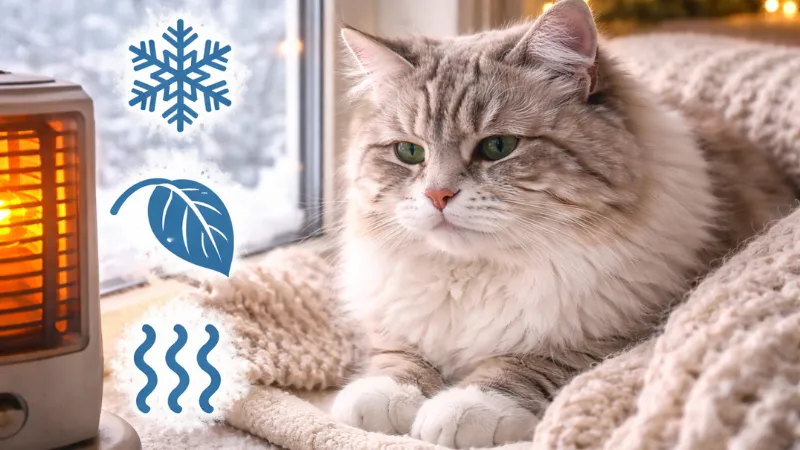
Indoor heating also changes air quality. Dry winter air can affect a cat’s skin and coat, leading to flakiness, static fur, and increased grooming. These changes are gradual, so many owners do not immediately connect them to winter conditions.
How Indoor Cats Are Commonly Exposed to Winter Risks
Indoor exposure usually happens in everyday situations rather than extreme events.
Cats often nap near windows where cold air leaks in.
They seek warmth near radiators or space heaters.
Basements and garages can be significantly colder than living areas.
These environments are not dangerous by default, but prolonged exposure can create stress or discomfort over time.
Do Cats Feel Cold Indoors
Yes, cats can feel cold indoors, especially during winter. Veterinary guidance consistently notes that older cats, thin cats, and cats with arthritis or chronic illness feel the cold more than healthy adults. You may notice your cat sleeping more, curling tightly, or choosing warm spots more often.
A common myth is that fur fully protects cats from cold. In reality, fur provides insulation but does not eliminate sensitivity to temperature changes.
Winter Related Changes Cat Owners Often Notice
Some changes are normal seasonal responses, while others deserve attention.
Common changes include increased sleeping, less interest in play, and seeking warm surfaces. Dry skin or a dull coat is also frequently reported during winter months.
Less common but important signs include stiffness when getting up, reluctance to jump, or avoiding cold rooms. These signs are more noticeable in senior cats and should not be dismissed as normal aging.
Heating and Household Hazards to Watch For
Heating devices create some of the most overlooked winter risks for indoor cats. Veterinary and safety organizations warn that cats are attracted to warmth and may sit too close to heaters, fireplaces, or heating pads.
Burns can occur if a cat rests against a hot surface for too long. Electric blankets and non pet specific heating pads are especially risky if left unattended. Maintaining a stable room temperature and blocking direct access to intense heat sources is safer than adding extra heat.
This is also why many vets caution against diffusing strong scents in winter, when homes are closed and ventilation is reduced. If you use scented products, you may want to review our guide on essential oils and cats to understand how winter conditions can increase exposure.
Special Winter Care for Senior and Vulnerable Cats
Senior cats and cats with arthritis, kidney disease, or low body weight need additional support during winter. Cold can worsen joint stiffness and reduce mobility, leading to discomfort and decreased activity.
Veterinary sources recommend focusing on comfort rather than drastic changes. Soft bedding placed away from drafts, easy access to food and litter, and gentle encouragement to move can make a noticeable difference.
Keeping Indoor Cats Active During Cold Weather
Reduced activity is one of the most common winter issues for indoor cats. Less movement can contribute to weight gain and boredom, which may later lead to behavior problems.
Simple indoor play, short interactive sessions, and rotating toys help maintain both physical and mental health. Activity is especially important when outdoor views and sunlight hours are reduced.
What Veterinarians Consistently Recommend
Across veterinary and animal welfare sources, several recommendations appear repeatedly. Keep indoor temperatures stable. Avoid direct heat sources. Monitor changes in behavior rather than waiting for visible illness. Adjust care for older cats rather than assuming winter affects all cats the same way.
Veterinarians also emphasize that prevention is easier than treatment. Small adjustments early in winter are often enough to keep cats comfortable.
Common Winter Myths About Indoor Cats
One common myth is that indoor cats do not need seasonal care. Another is that heating alone solves all winter issues. Veterinary guidance shows that indoor cats still experience seasonal stress, just in different ways than outdoor cats.
Understanding this difference helps owners respond calmly rather than reactively.
What to Do If Your Cat Seems Uncomfortable
If your cat seems mildly uncomfortable, small changes such as moving bedding, reducing drafts, or increasing playtime are often sufficient. If you notice ongoing stiffness, appetite changes, or lethargy, veterinary advice is recommended to rule out underlying conditions.
Related Household Safety Topics for Cat Owners
Winter safety is closely connected to other indoor risks. For example, reduced ventilation can increase exposure to household products. You may also want to read our health and safety section for guidance on everyday home risks, including plant safety and common substances cats encounter indoors. If you decorate your home during winter, our article on non toxic flowers for cats can help you make safer choices.
Common Question We Received
Do indoor cats need extra care in winter
Yes. While they are protected from extreme cold, indoor cats still benefit from seasonal adjustments focused on comfort and activity.
Do older cats feel the cold more
Veterinary sources agree that senior cats are more sensitive to cold and may show stiffness or reduced movement in winter.
Are cats less active in winter
Yes. Reduced daylight and colder temperatures often lead to lower activity levels, especially in indoor cats.
Can cold indoor air make cats sick
Cold air itself does not cause illness, but prolonged exposure to drafts and reduced activity can worsen existing conditions.
Final Winter Safety Advice for Indoor Cats
Winter safety for indoor cats is about awareness, not fear. Most cats do well with simple changes that keep their environment stable, warm, and engaging. Paying attention to subtle changes in behavior and comfort is one of the best ways to protect your cat during colder months.