

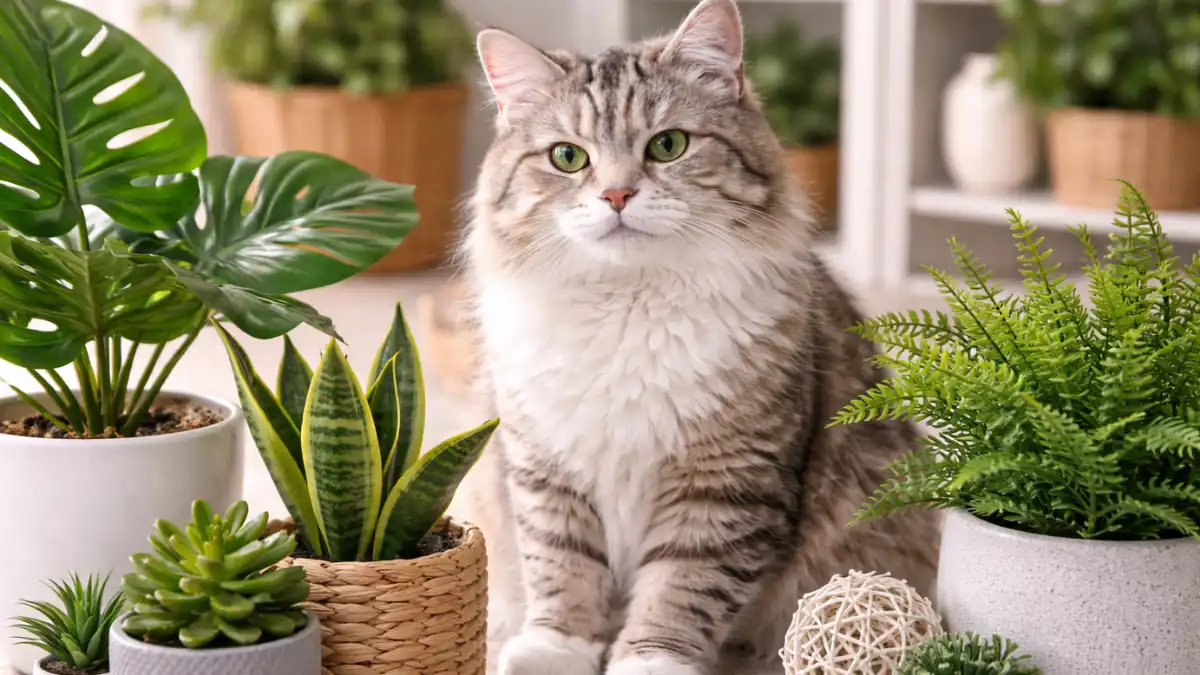
Fake artificial plants are not toxic to cats, but they are not completely risk free. Veterinary and pet safety sources agree that artificial plants remove the danger of plant toxins, but they can still cause physical harm if cats chew or swallow plastic parts. For this reason, artificial plants are considered conditionally safe rather than fully safe.
Why Cat Owners Worry About Fake Plants
Many cat owners turn to artificial plants after learning how dangerous some real houseplants can be. Toxic plants like lilies or aloe vera cause understandable fear, and fake plants often seem like a simple solution. At the same time, many owners notice their cats chewing plastic leaves or vines, which creates a new kind of concern.
This question usually comes from owners trying to balance home decor with cat safety, not from neglect or lack of care.
Table of Contents
What Fake Artificial Plants Are Made Of
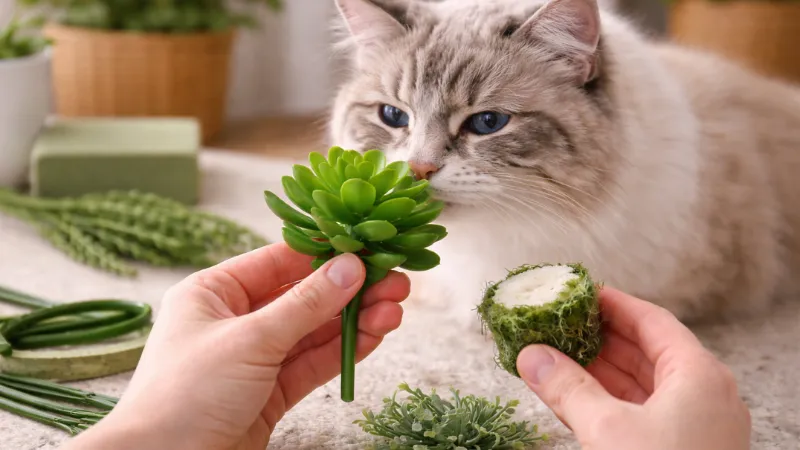
Most artificial plants are made from plastic based materials such as polyethylene, polyester, silk blends, or PVC. According to pet safety and decor guidance, these materials do not contain natural plant toxins that harm cats through ingestion or smell.
Problems arise not from toxicity but from quality and construction. Low quality artificial plants may have loose parts, wires, glue, or coatings that increase the risk of injury if a cat chews on them.
Are Fake Plants Toxic to Cats
From a medical standpoint, fake plants are not poisonous in the same way real toxic plants are. There is no evidence that cats become poisoned by smelling or lightly touching artificial plants.
The main risk is mechanical rather than chemical. If a cat chews, tears, or swallows parts of an artificial plant, those materials cannot be digested and may cause choking or intestinal blockage.
This distinction is important because many articles stop at saying fake plants are non toxic without explaining what risks still remain.
How Cats Are Commonly Exposed to Fake Plants
Most cats are exposed to artificial plants in simple everyday ways. Some cats sniff or rub against fake leaves, which is generally harmless. Others lick smooth plastic surfaces, which is usually low risk but can become a concern if coatings or dust are present.
Chewing is where the real danger begins. Cats may bite leaves out of boredom, stress, or curiosity. Hanging vines, artificial trees, and decorative attachments can be pulled down and broken into smaller pieces that are easy to swallow.
Why Some Cats Chew Plastic and Fake Plants
Veterinary and behavior focused sources suggest several reasons cats are drawn to plastic textures. Some cats enjoy the crinkly feel or smell of plastic materials. Others chew due to boredom or lack of stimulation.
In some cases, repeated plastic chewing may be linked to pica, a condition where cats chew non food items. This does not mean every cat that chews plastic has a medical problem, but persistent behavior should not be ignored.
Risks of Chewing or Swallowing Artificial Plants
When cats swallow plastic or decorative plant parts, the risk increases quickly. Small pieces can become lodged in the throat or intestines. Unlike food, plastic does not break down and may cause blockages that require veterinary treatment or surgery.
This risk is considered moderate to serious depending on the size and amount swallowed. It is very different from mild stomach upset and should always be taken seriously.
Signs to Watch for If a Cat Eats Fake Plant Material

Early signs may be subtle. Vomiting, gagging, reduced appetite, or hiding behavior are common warning signs. Some cats strain in the litter box or appear uncomfortable without obvious symptoms.
Repeated vomiting, lethargy, or refusal to eat can signal a blockage and should be treated as an emergency.
What Veterinarians Generally Agree On
Veterinary aligned guidance consistently emphasizes a few key points. Artificial plants are safer than toxic real plants, but they are not harmless. Chewing behavior should always be addressed, regardless of whether a plant is real or fake.
This same safety mindset applies to many everyday household items that sound harmless but still carry risks for cats, including certain cleaning products that owners often assume are safe.
How to Reduce Risk If You Use Artificial Plants
If you choose to keep artificial plants, quality and placement matter. Higher quality plants with securely attached leaves reduce the chance of pieces breaking off. Placing plants out of reach or in rooms your cat cannot access lowers risk further.
Providing safe alternatives like cat grass or interactive toys can also redirect chewing behavior.
Fake Plants Compared to Real Non Toxic Plants
Some cat owners prefer artificial plants to eliminate toxin risk entirely. Others find that real non toxic plants work better when cats are supervised and not prone to chewing. Others choose safer decorative options such as flowers that are considered non toxic for cats.
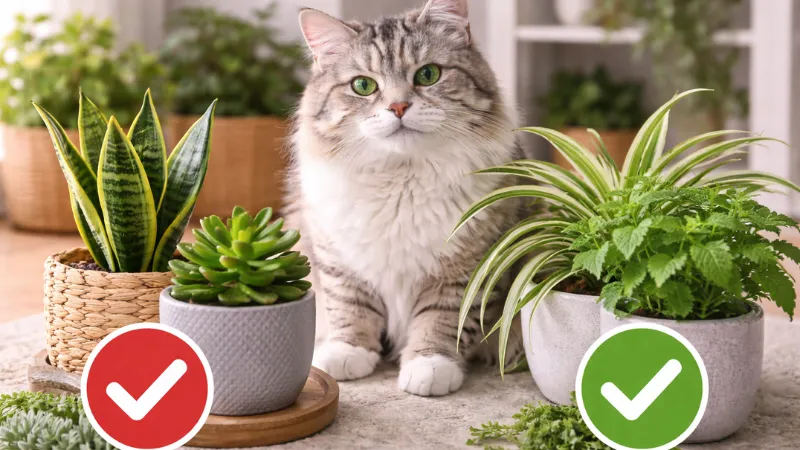
This choice depends on your individual cat’s behavior. A cat that ignores plants entirely may do well with real non toxic options, while a persistent chewer may be safer without any accessible greenery.
If you are already learning about plant safety, you may also want to read about common houseplants that are often misunderstood, such as aloe vera, which many people assume is safe but is not recommended for cats. Exploring broader household safety topics can also help, including how everyday products like vinegar are handled safely around cats.
Final Safety Advice for Cat Owners
Fake artificial plants are a reasonable alternative to toxic real plants, but they should never be treated as completely safe. The absence of plant toxins does not remove the risk of choking or intestinal blockage.
Awareness, supervision, and thoughtful placement make the biggest difference. When it comes to cats, safety is rarely about one item alone but about understanding how cats interact with their environment.
Common Questions
Are fake artificial plants toxic to cats
No. Fake artificial plants do not contain natural plant toxins and are not considered poisonous to cats. Veterinary and pet safety sources agree that the main concern is not toxicity but physical risk if cats chew or swallow parts of the plant.
Can cats chew or lick fake plants safely
Licking or briefly touching artificial plants is usually low risk. Chewing is different. If a cat chews plastic leaves, wires, or decorative parts, there is a risk of choking or intestinal blockage, which can become a medical emergency.
What happens if a cat eats part of a fake plant
If a cat swallows part of an artificial plant, the material cannot be digested. Small pieces may pass, but larger pieces can cause vomiting, loss of appetite, or intestinal blockage. Persistent symptoms require veterinary attention.If a cat swallows part of an artificial plant, the material cannot be digested. Small pieces may pass, but larger pieces can cause vomiting, loss of appetite, or intestinal blockage. Persistent symptoms require veterinary attention.
Are fake plants safer than real plants for cats
In many cases, yes. Fake plants remove the risk of exposure to toxic plant compounds found in many real houseplants. However, they still carry physical risks if cats chew or swallow parts, so supervision is important.
Why do some cats chew plastic or fake plants
Cats may chew plastic due to boredom, stress, curiosity, or attraction to certain textures. Repeated plastic chewing should not be ignored, as it can increase the risk of injury and may signal a behavioral issue.
When should I contact a vet about fake plant exposure
Contact a veterinarian if your cat shows repeated vomiting, lethargy, loss of appetite, straining in the litter box, or you suspect your cat swallowed a piece of an artificial plant. Early advice can prevent serious complications.
Sources and Veterinary References
This article is based on pet safety guides, veterinary aligned advice, decor safety resources, and behavior focused discussions from the sources you provided, along with general veterinary consensus on ingestion and obstruction risks in cats.


3 Responses