

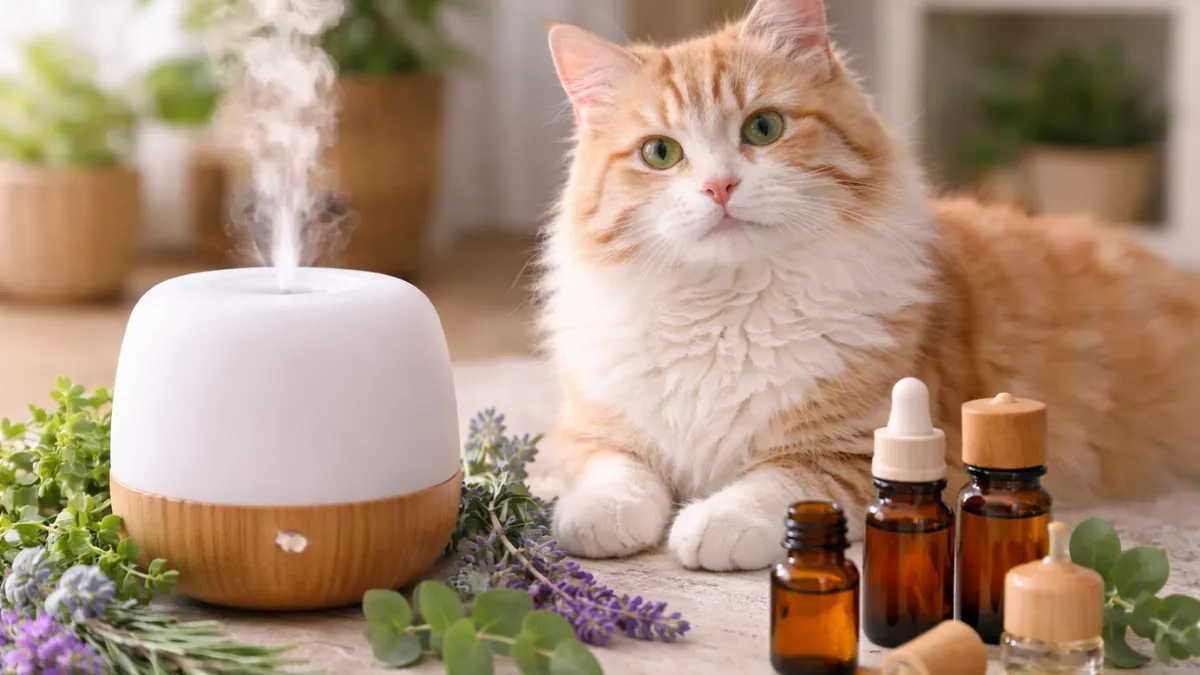
There are no essential oils that are completely safe for cats when used in diffusers. Veterinary sources agree that even oils often described as low risk can still cause health problems for cats, especially with repeated or prolonged exposure. The safest option for cat households is to avoid diffusing essential oils altogether or use extreme caution with strict limits.
Table of Contents
Why Cat Owners Look for Cat Safe Essential Oils
Many cat owners use essential oil diffusers to make their homes smell pleasant or to create a calming environment. Diffusers are often marketed as natural and gentle, which leads people to assume they are harmless. When cats live in the home, this assumption becomes risky.
Veterinary guidance shows that cats process scents very differently than humans. What feels mild to us can be overwhelming or even dangerous to them.
How Cats Are Commonly Exposed to Essential Oils
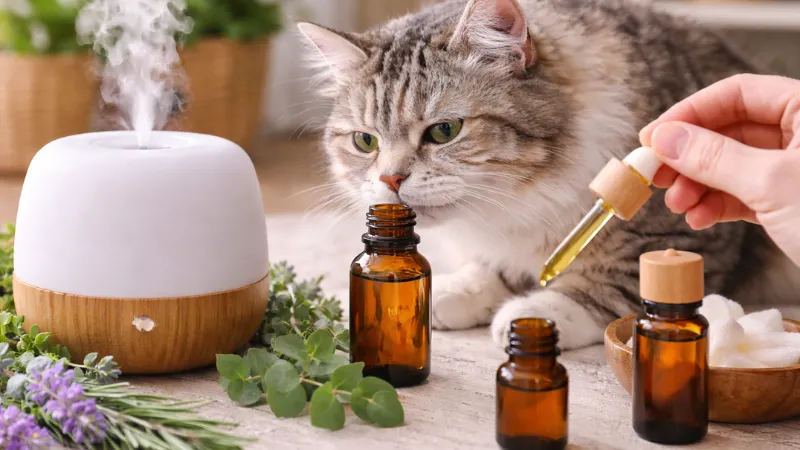
Exposure does not happen only when a cat eats something. In real homes, cats are exposed in several ways.
When a diffuser runs, microscopic oil particles are released into the air. Cats breathe these particles in, especially in small or poorly ventilated rooms. The same particles can settle on fur and paws. During normal grooming, cats then lick these oils and ingest them without the owner realizing it.
Accidental spills are another risk. A knocked over bottle or diffuser can leave concentrated oil on surfaces that cats walk across.
Why Essential Oils Affect Cats Differently
Veterinary sources explain that cats lack certain liver enzymes needed to safely break down compounds commonly found in essential oils, especially phenols. Because of this, oils that humans tolerate easily can build up in a cat’s body and lead to toxicity.
This is why the phrase natural does not mean safe is especially important when it comes to cats and essential oils.
Are Any Essential Oils Truly Safe for Cats in Diffusers
Some sources mention oils such as lavender or chamomile as better tolerated at very low concentrations. However, veterinary clinics and poison control experts consistently caution that tolerance does not equal safety.
No essential oil is considered completely safe for cats. Even oils described as low risk can cause respiratory irritation or digestive issues if exposure is frequent or ventilation is poor. This is why many veterinarians recommend avoiding diffusers entirely in homes with cats.
Essential Oils Veterinarians Warn Against Using Around Cats
Veterinary references consistently list several essential oils as dangerous to cats. These include oils commonly found in diffusers such as tea tree, eucalyptus, peppermint, citrus oils, cinnamon, clove, pine, wintergreen, ylang ylang, and oregano.
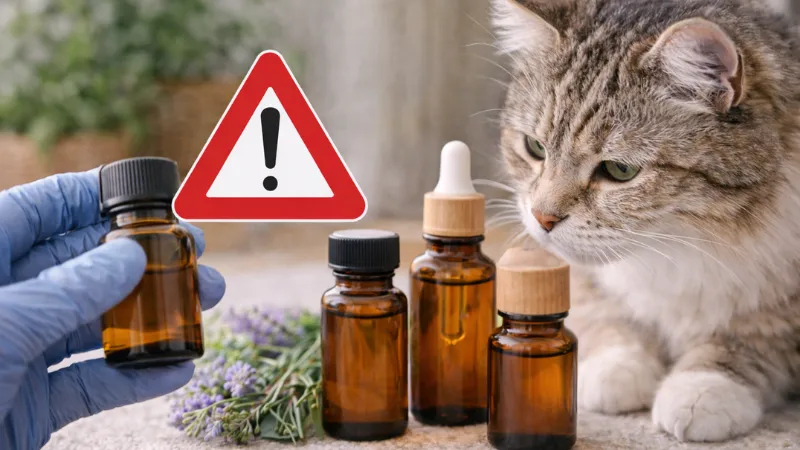
These oils can cause symptoms ranging from mild irritation to serious poisoning, depending on exposure level and duration.
Possible Symptoms of Essential Oil Exposure in Cats
Symptoms vary, but common signs reported by veterinarians include drooling, vomiting, lethargy, unsteady walking, and skin irritation. Respiratory symptoms such as coughing, sneezing, or difficulty breathing may also occur.
More serious reactions can include tremors, seizures, and liver damage. Cats are known to hide discomfort, so symptoms may not be obvious at first.
What Veterinarians Recommend for Cat Friendly Homes
Veterinary guidance consistently emphasizes prevention. Avoiding essential oil diffusers is considered the safest choice. If a diffuser is used despite the risks, it should only run for short periods in well ventilated spaces, and cats should always be able to leave the room freely.
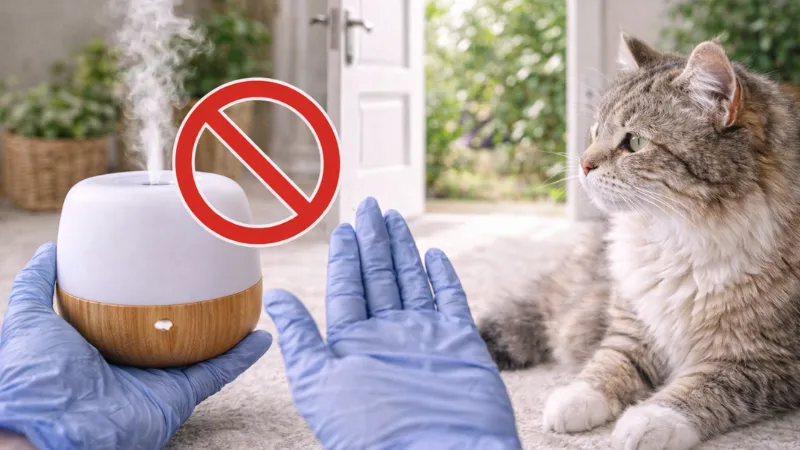
This cautious approach is similar to how veterinarians advise handling other everyday household substances that are often assumed to be safe. You may notice the same pattern when learning about common cleaning products that seem harmless but still require care around cats.
What to Do If Your Cat Is Exposed to Essential Oils
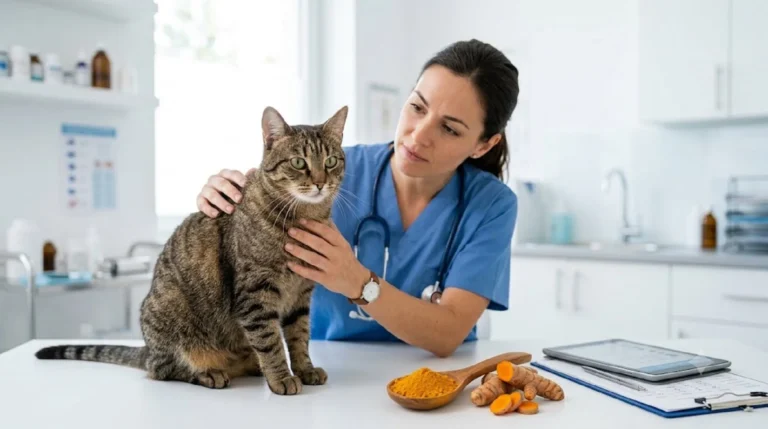
If you suspect exposure, turn off the diffuser immediately and move your cat to fresh air. If oil is on the fur or skin, gently wash the area with mild soap and water if safe to do so.
Contact your veterinarian or a pet poison helpline if any symptoms appear or if you are unsure which oil was involved. Early advice can prevent more serious complications.
Safer Alternatives to Essential Oils for Cat Owners
Many cat owners choose alternatives that do not involve airborne chemicals. Regular cleaning, fresh air, and unscented products reduce odor without adding risk. Some people prefer non oil based home fragrance options or simply focus on ventilation.
For a broader understanding of hidden household risks, it can also help to explore other safety topics related to plants and cleaning products that are commonly misunderstood by cat owners.
Final Safety Advice
The idea of cat safe essential oils is misleading. Veterinary evidence shows that cats are uniquely sensitive to essential oils, especially when diffused into the air. While some oils may seem mild, no diffuser use is completely without risk.
When it comes to cats, choosing caution over fragrance is the safest and most responsible decision.
Common Questions
Are essential oil diffusers safe for cats?
No. Essential oil diffusers are not considered safe for cats. Veterinary sources explain that diffused oils can be inhaled, settle on fur, and later be ingested during grooming, which may lead to health problems.
Are there any essential oils that are completely safe for cats
No. There are no essential oils that are completely safe for cats. Some oils may be better tolerated at very low concentrations, but even these carry risks with repeated or prolonged exposure.
Is lavender essential oil safe for cats in a diffuser
Lavender oil is sometimes described as low risk, but veterinarians caution that it can still cause respiratory irritation or digestive issues in cats. It should never be considered fully safe.
Can cats be in the same room as an essential oil diffuser
Cats should not remain in rooms where essential oil diffusers are running. If exposure occurs, cats should always have the ability to leave the area and access fresh air.
Why are essential oils dangerous for cats
Cats lack certain liver enzymes needed to process compounds commonly found in essential oils. Because of this, oils can build up in their bodies and lead to toxicity.
What happens if a cat inhales essential oils
Inhalation can irritate a cat’s airways and may cause coughing, sneezing, drooling, lethargy, or difficulty breathing. Symptoms may worsen with continued exposure.
What are the signs of essential oil poisoning in cats
Common signs include vomiting, drooling, weakness, trouble walking, skin irritation, and breathing difficulties. Severe cases may involve tremors or seizures.
What should I do if my cat is exposed to essential oils
Turn off the diffuser immediately and move your cat to fresh air. If oil is on the fur or skin, gently clean it. Contact your veterinarian or a pet poison helpline if symptoms appear or if the oil type is unknown.
Are natural or organic essential oils safer for cats
No. Natural or organic essential oils can still be dangerous for cats. The source of the oil does not reduce the risk caused by the chemical compounds it contains.
What is the safest way to make my home smell nice with cats
The safest options include good ventilation, regular cleaning, and avoiding scented products that release chemicals into the air. These methods reduce odor without risking your cat’s health.
Sources and Veterinary References
PetMD: https://www.petmd.com/cat/are-essential-oils-safe-cats
Cats UK: https://www.cats.org.uk/cats-blog/cats-and-essential-oils
LYNBROOK Vet: https://lynbrookvet.com.au/essential-oils-pets/
OutWardHound: https://outwardhound.com/furtropolis/health-wellness/pet-safe-essential-oils-for-a-diffuser


4 Responses